Austria is a Central European country known for its natural beauty, rich history, and cultural heritage. From impressive mountain panoramas to historic cities, Austria offers a wide variety of experiences within a short travel distance.

In this article, I share a 7-day Austria itinerary designed to help you explore the country’s main highlights in one week.
Austria is an ideal destination for many types of travelers. You’ll find breathtaking Alpine peaks, crystal-clear lakes, and beautiful mountain roads, but also historic cities and charming villages filled with traditional architecture, museums, and landmarks. Just think of Vienna, Salzburg, or Hallstatt, each home to well-known UNESCO World Heritage sites.
Ready to travel to Austria?
Here are our quick tips on what to book for a 7-day trip to Austria:
The best places to stay:
- In Vienna: Austria Trend Hotel Maximilian
- Near Hallstatt: Seehotel Grüner Baum
- In Salzburg: Hotel Zum Hirschen Salzburg
- In Innsbruck: The PENZ Hotel
- In the Zillertal: VAYA Zillertal
- In Zell am See: Nikolaus by AvenidA Panoramic Wellness Suites Zell am See
The best activities for your trip:
- Vienna: Skip-the-Line Schonbrunn Palace and Gardens Tour
- Vienna: Big Bus Hop-On Hop-Off Tour by Open-Top Bus
- Salzburg: River Cruise, Dinner & Fortress Concert
- Wattens: Swarovski Crystal Worlds Entrance Ticket
If you want to rent a car: DiscoverCars.com
If you want to book a flight: Kiwi.com
One thing is guaranteed: you won’t get bored during a week in Austria. Whether you enjoy hiking in nature, scenic drives, or city sightseeing, there’s always something worth seeing.
Putting together a realistic 7-day itinerary wasn’t easy. Austria deserves more time, but not everyone has two or three weeks to explore it properly. This route is made for travelers who want a clear plan that actually works, especially if you’re visiting Austria for the first time.
I’ve visited all the places in this itinerary many times, and I also lived in Austria for a while. I spent most of my life close to the Austrian border, so Austria has always felt like a second home to me. That’s why this guide is based on real personal experience. Throughout the article, I share practical tips and local insights to help you plan a smooth and enjoyable trip.

First, I’ll give you a quick overview of the route, show you the itinerary on a map, and explain how the road trip flows. After that, we’ll go through the travel itinerary day by day in detail. At the end of the article, you’ll also find a FAQ section with answers to common questions, in case you want to plan your trip to Austria more deeply.
Overview of the 7-day Austria road trip itinerary
Here’s a quick overview of this one-week Austria road trip and the main stops along the way:
- Day 1: Vienna
- Day 2: Austrian Lake District (Salzkammergut)
- Day 3: Hallstatt
- Day 4: Salzburg
- Day 5: Innsbruck & Schlegeisspeicher
- Day 6: Kaprun & Grossglockner High Alpine Road
- Day 7: Return to Vienna
Map of the 7-day Austria road trip
To make planning easier, I’ve also added a map showing the full route of this 7-day Austria itinerary.
7-day Austria itinerary: One-week road trip route
Below, you’ll find the full 7-day Austria itinerary. I’ll walk you through each day step by step, showing you the best places to visit and sharing useful tips from my own travels and time spent in Austria.
Day 1: Vienna
This 7-day Austria road trip starts in Vienna, mainly because most international flights arrive here. The city is also easy to reach by car from neighboring countries in eastern Austria.
I visited Vienna regularly for almost a decade, often on a weekly basis. Even though it wasn’t always for tourism, I had plenty of time to explore the city. Based on many years of experience, I’ll show you the best places to see in Vienna in one day.
Vienna is Austria’s capital and largest city, and it’s a perfect first stop. You’ll find historic landmarks, elegant architecture, world-class museums, and excellent Austrian food. With good planning, you can see the city’s main highlights and start your road trip with a strong first day.
Getting around Vienna
If you’re traveling by car, you can also use it in Vienna. There are many underground parking garages, and short-term street parking is possible in some areas.
However, during weekdays and working hours, traffic can be heavy. At those times, public transport is often faster and easier.
Vienna City Card
The Vienna City Card is a convenient option for getting around. It includes unlimited public transport, Hop-on Hop-off buses, and discounts at attractions and restaurants. It’s a good choice if you plan to use public transport a lot.
How much can you fit into one day in Vienna?
In one day, I recommend choosing 3–4 main sights, depending on your interests. This is a realistic pace for Vienna.
If you want to see more museums or take things slower, adding a second day in Vienna is a good idea.
Schönbrunn Palace takes the most time, especially if you visit the interior. If you only see the palace and gardens from the outside, plan about 1–2 hours.
Many other attractions are close to each other and easy to visit on foot. Prater, however, is a bit farther away, so it’s worth checking if it fits into your day.
What to see in Vienna in one day
Here are the main sights worth visiting in Vienna if you only have one day. Choose a few based on your interests and location.
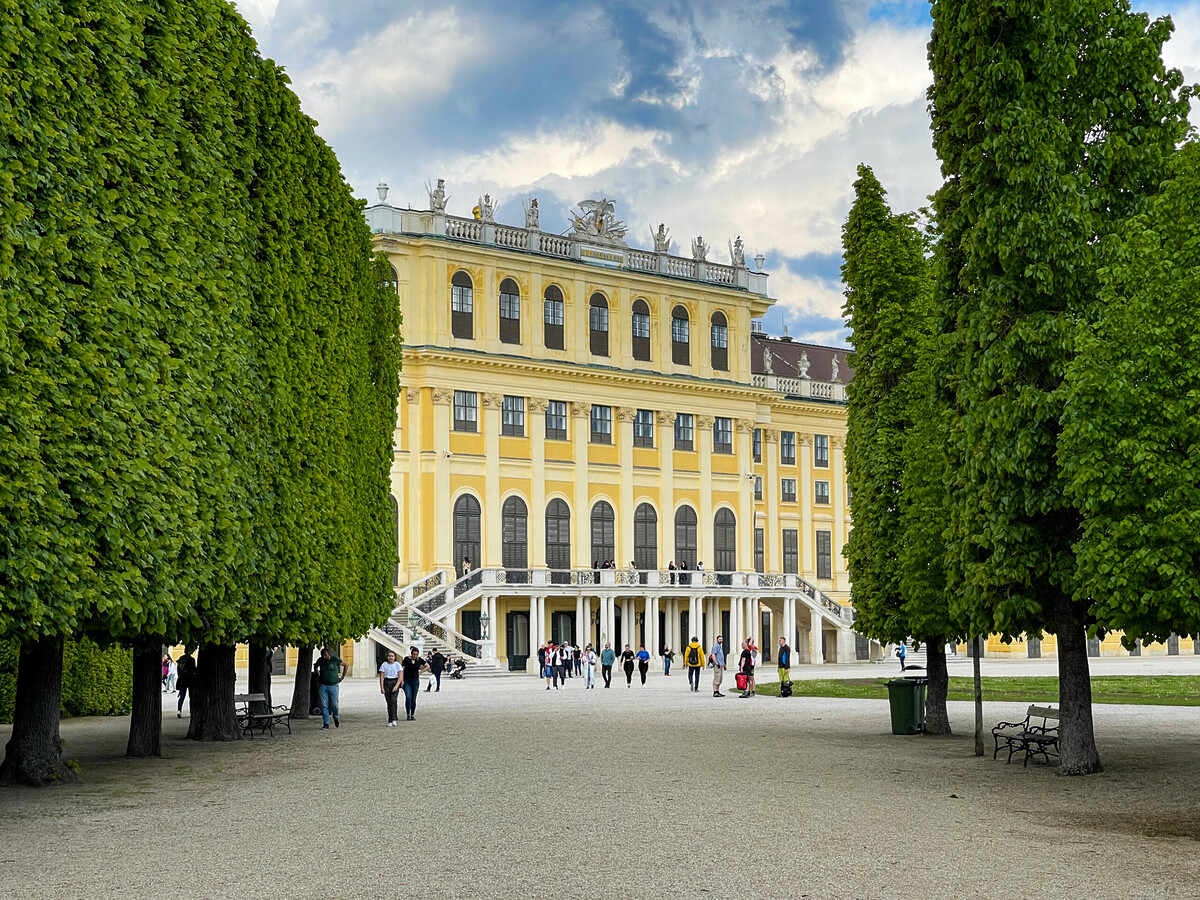
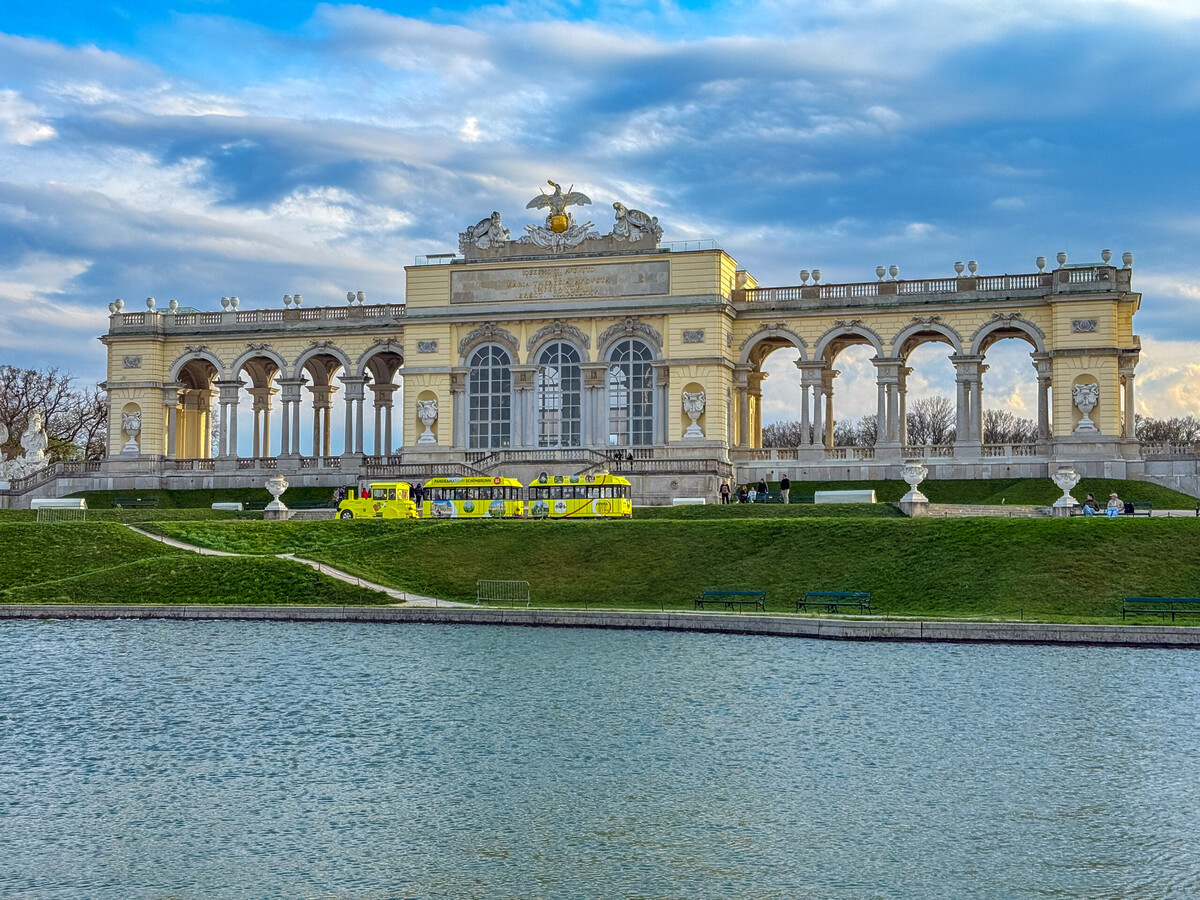
Schönbrunn Palace
Schönbrunn Palace is Vienna’s most famous attraction and the former summer residence of the Habsburg imperial family.
The gardens are free to visit and absolutely worth it. From the palace, you can walk up to the Gloriette, where you’ll get one of the best views over the palace and the city.
The interior of the palace requires a ticket. Inside, you can see how the imperial family lived, including their rooms and halls. Visiting the palace takes time, but if you’re interested in history, it’s one of the top things to do in Vienna.
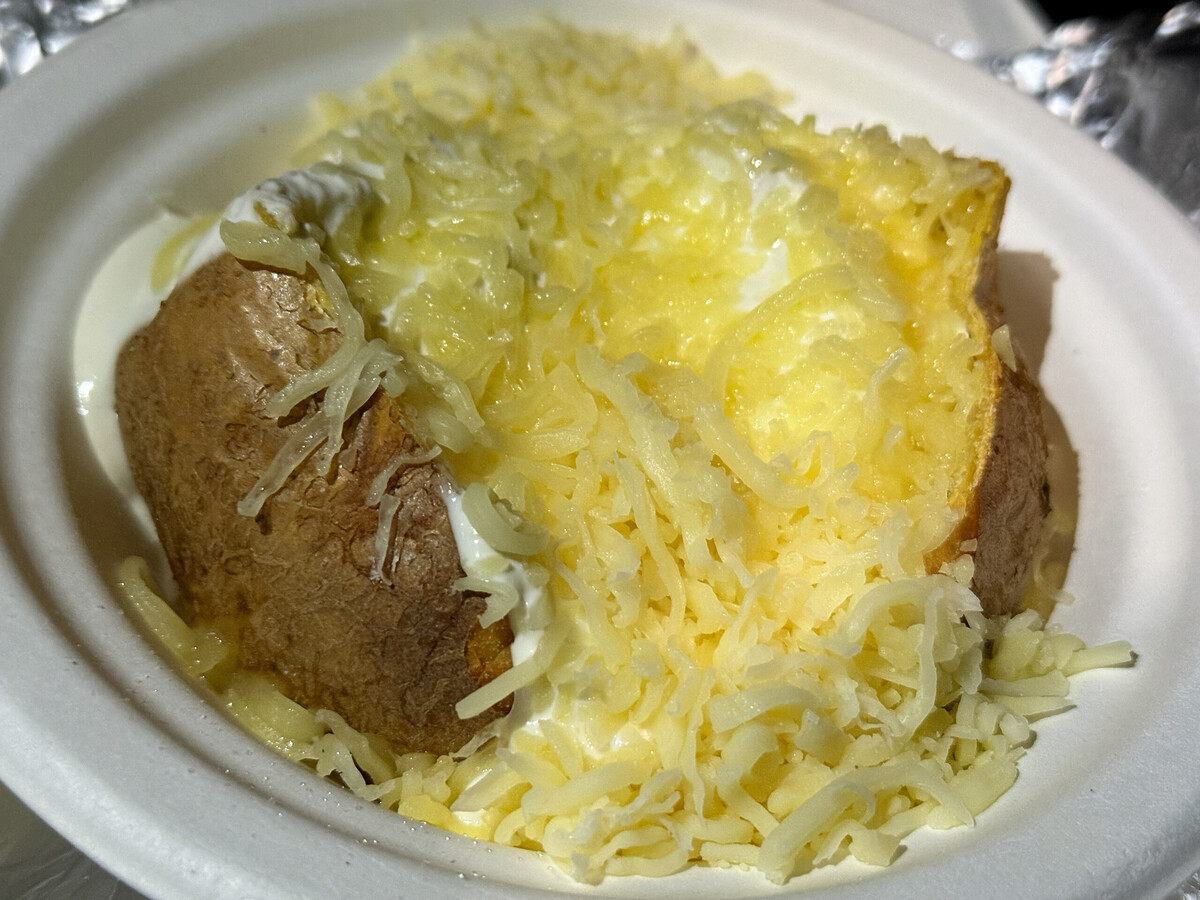
If you’re visiting Vienna around Easter or Christmas, don’t miss the seasonal markets in front of Schönbrunn Palace. They are some of the most beautiful markets in the city, with high-quality handmade products and plenty of local food. I personally love browsing the craft stalls here, and my favorite snack is the Ofenkartoffel (baked potato).

Hofburg Palace
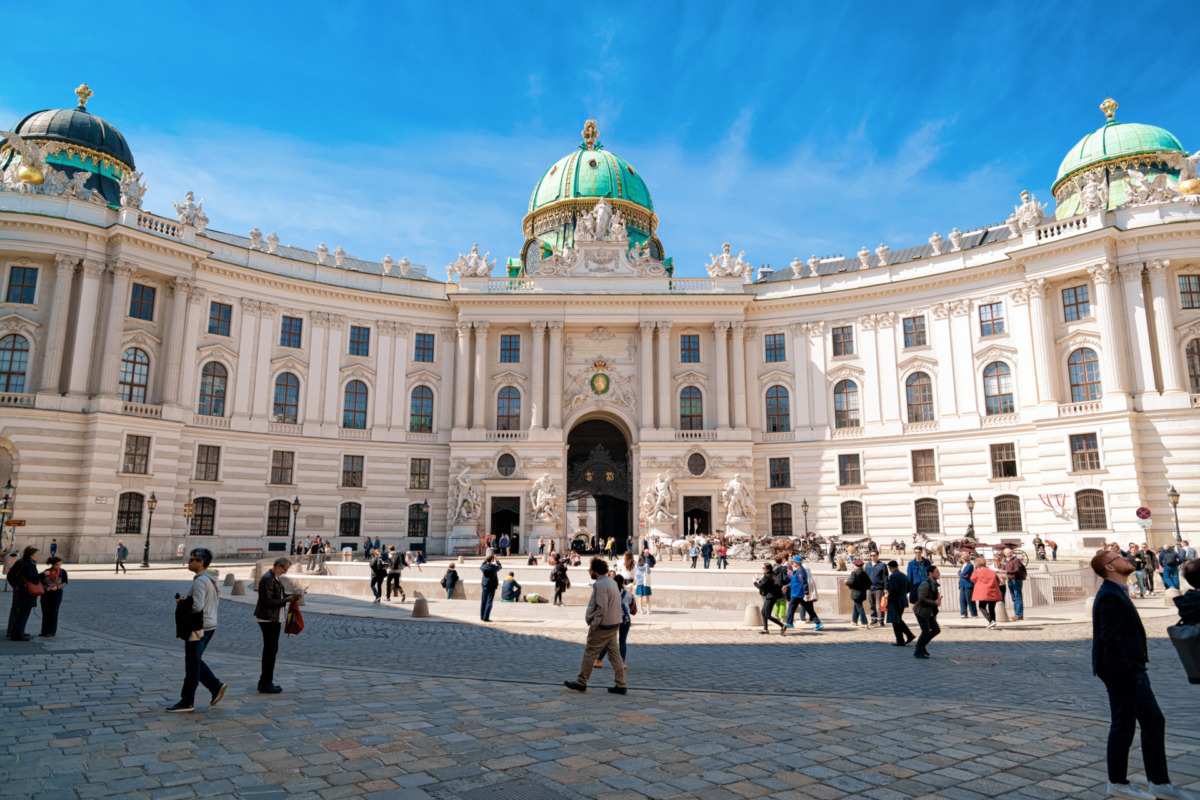
The Hofburg is located right in the city center and was the main residence of the Austrian emperors.
Today, it houses several museums, the Austrian National Library, and exhibitions related to the Habsburg dynasty, including the imperial regalia. Even if you don’t go inside, it’s worth seeing from the outside while walking through the center.
St. Stephen’s Cathedral
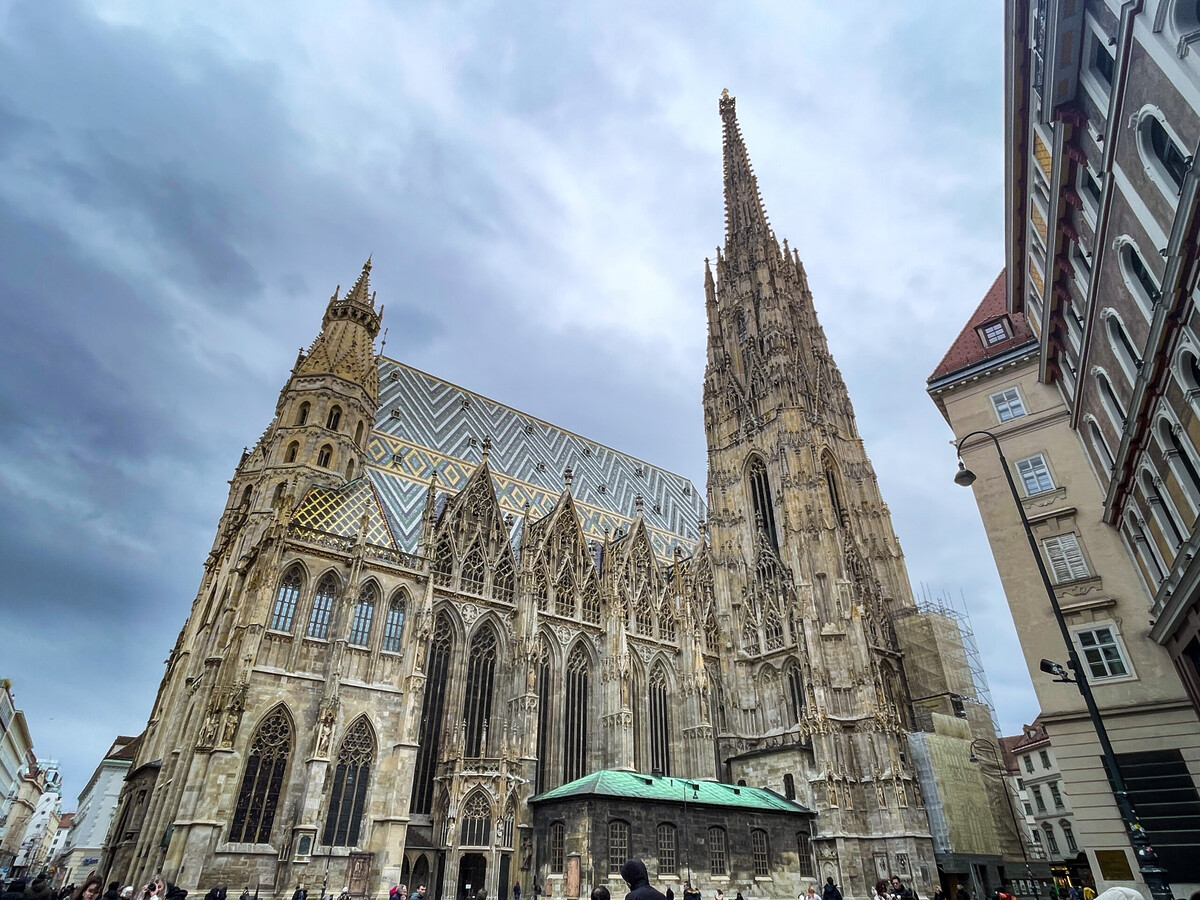
A short walk from the Hofburg, St. Stephen’s Cathedral is Vienna’s most famous church and one of Austria’s key landmarks.
You can step inside quickly, or simply admire the building and its colorful tiled roof from the square outside.
Rathausplatz
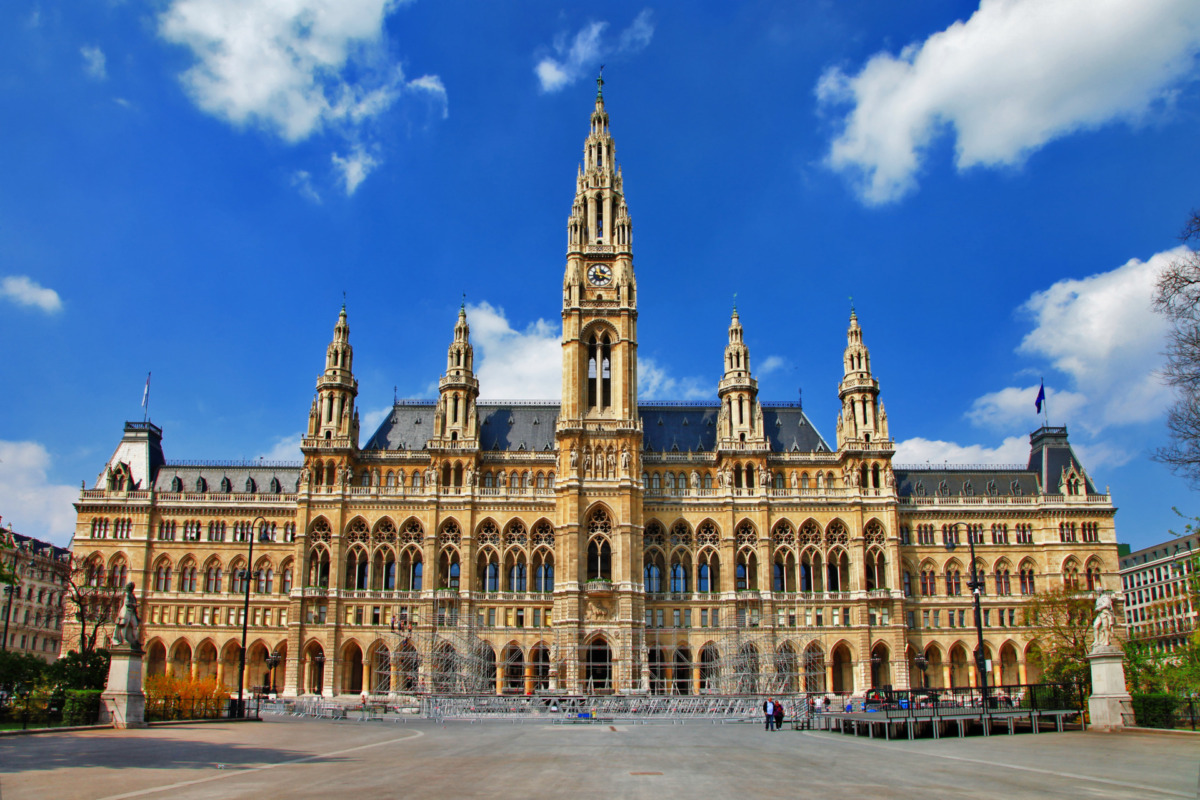
Rathausplatz is a large central square, home to Vienna’s City Hall. It’s a common location for events, open-air festivals, and seasonal markets, including one of Vienna’s most famous Christmas markets.
The City Hall building itself is very impressive and worth a short stop for photos.
Austrian Parliament
Close to Rathausplatz, you’ll pass the Austrian Parliament, a striking building with a very different architectural style. It’s a quick photo stop and fits easily into a walking route through the city center.

Optional places if you have extra time
If you still have time and energy, consider one of these:
Belvedere Palace
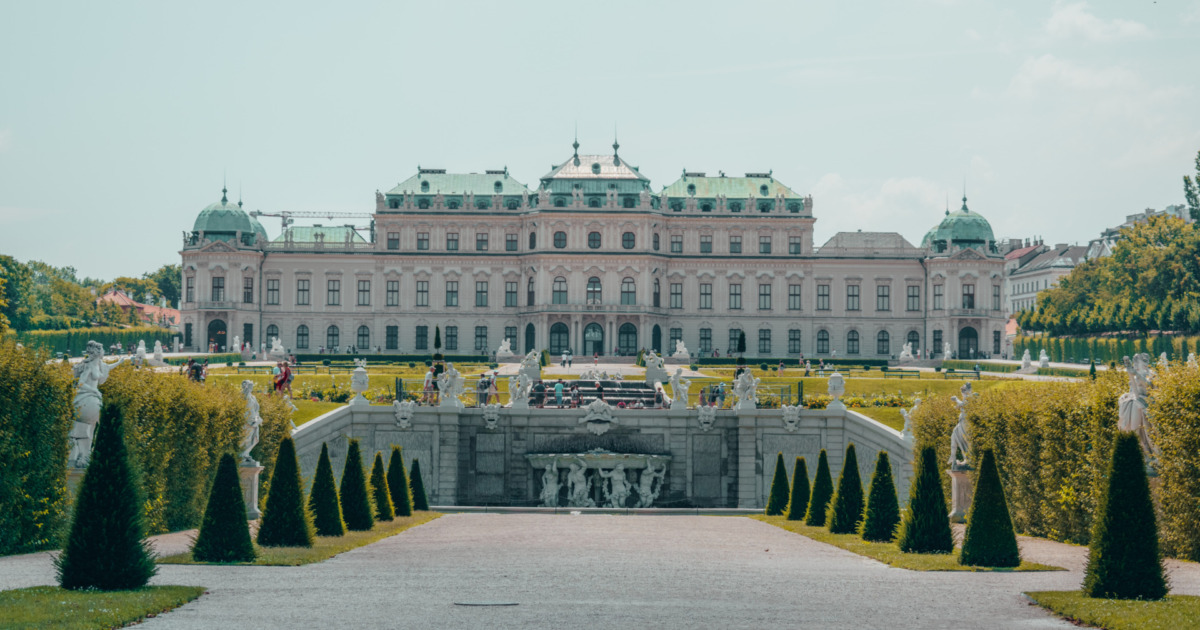
The Belvedere Palace is a beautiful 18th-century complex known for both its architecture and its art collection.
It’s especially famous for works by Gustav Klimt. The palace gardens are also worth a walk, even if you don’t visit the museum inside.
Prater
The Prater is Vienna’s famous amusement park, home to the iconic Giant Ferris Wheel.
It’s a fun option if you want a different side of the city. Just keep in mind that it’s a bit farther from the historic center.

Along the way
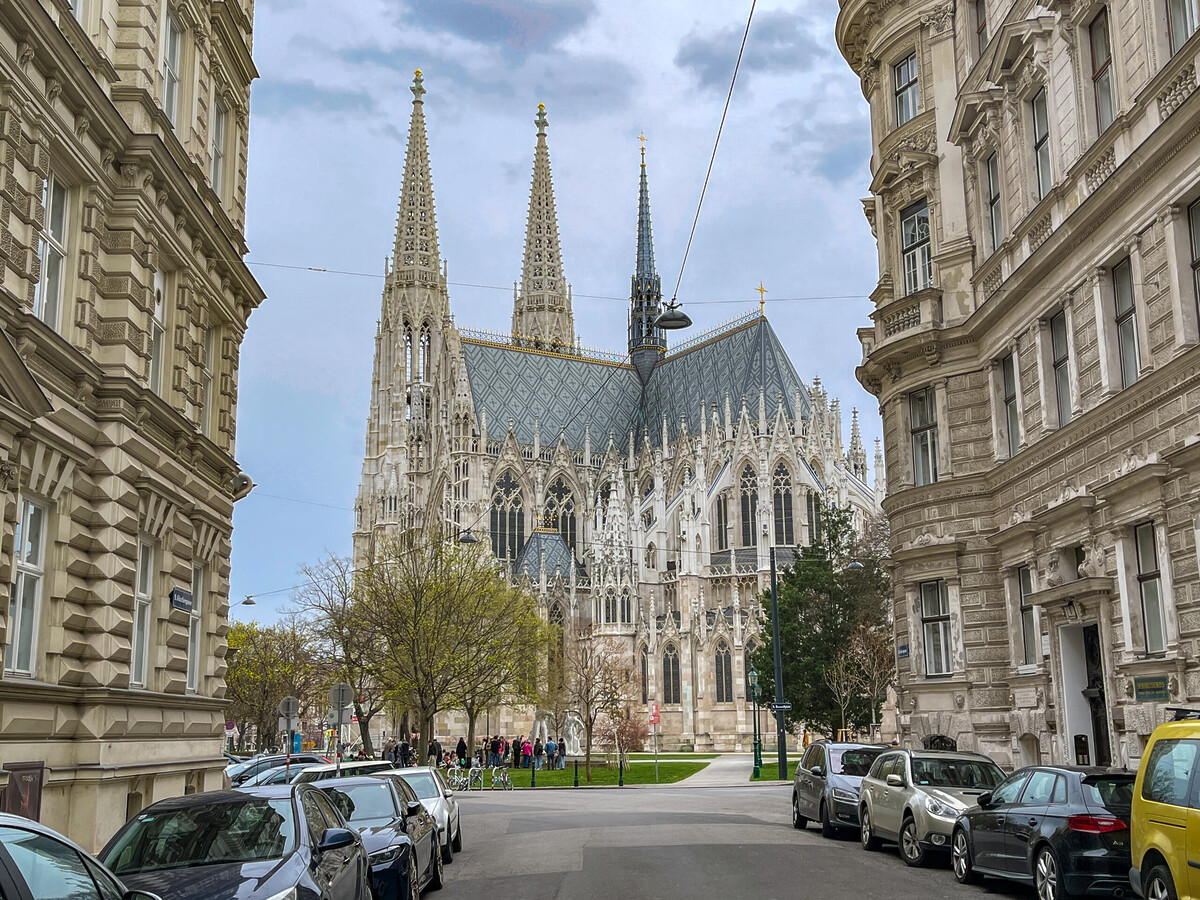
While walking between these sights, you’ll also pass landmarks like the Vienna State Opera, Volksgarten, Votiv Church and the museums of MuseumsQuartier. If something catches your interest, feel free to adjust your route.
Vienna is also a great place to enjoy traditional food. Stop by a classic restaurant or café and try Wiener Schnitzel, Sachertorte, or Kaiserschmarrn.
If you feel like shopping in Vienna, you have several great options. The biggest shopping area is SCS Shopping City Süd, located just outside the city. Also, Huma Eleven and Donau Zentrum are excellent choices, with a wide range of shops, restaurants, and cafés.
Spend the night in Vienna. The next day, the road trip continues into Austria’s countryside.
Where to stay in Vienna
Vienna is full of great hotels, here are a few of them:
- Austria Trend Hotel Bosei Wien: A modern four-star hotel a little further out from the historic city center, good value for money.
- Austria Trend Hotel Maximilian: Four-star hotel at a good price, close to Schönbrunn Palace.
- Andaz Vienna Am Belvedere – a concept by Hyatt: Run by a well-known hotel chain, close to the Belvedere Palace and the Main Train Station, a five-star hotel with modern elegance at affordable prices, and it has a wonderful roof terrace.
- The Ritz-Carlton, Vienna: The perfect choice for those looking for true luxury, it is a 5-star luxury hotel in the city center, next to the City Park and close to several major attractions.
Day 2: Traunsee, Gosauseen, Hallstatt
On day two, you leave Vienna behind and head into the Austrian countryside, towards the world-famous Hallstatt.
Vienna → Hallstatt: approx. 290 km (180 miles), around 3 hours by car
Take the A1 highway towards Linz. Along the way, you’ll pass beautiful scenery, including the Danube Valley near Melk and the shores of Lake Traunsee.
Stop in Gmunden (optional)
If you have time, I recommend a short stop in Gmunden. Walk along the lakeside and see Schloss Ort, one of the most photogenic castles in Austria.

Gosauseen lakes in the afternoon
The drive from Hallstatt to Gosau takes about 25 minutes one way, so plan your time accordingly.
The Gosauseen consist of three alpine lakes. With this packed itinerary, I recommend visiting only the first lake (Vorderer Gosausee).
Walking around the first lake takes about 1–2 hours and is a perfect late-afternoon activity. This is one of my personal favorite places in Austria, a spot I return to every year for hiking and photography.
Comfortable shoes are enough for this walk, but having hiking shoes is always a good idea in Austria.

Evening in Hallstatt
In the evening, drive to Hallstatt, take a relaxed walk through the village, and if possible, stay for sunset. The light is beautiful at this time of day.
Get some rest, day three is all about Hallstatt, and it will be just as special.
Where to stay near Hallstatt
- Seehotel Grüner Baum: A traditional Austrian hotel with wonderful views, in the center of Hallstatt.
- Hotel Sommerhof: A four-star hotel in Gosau, ideal for families.
- Narzissen Vital Resort Bad Aussee: 25 minutes’ drive from Hallstatt, affordable four-star hotel.
Day 3: Hallstatt
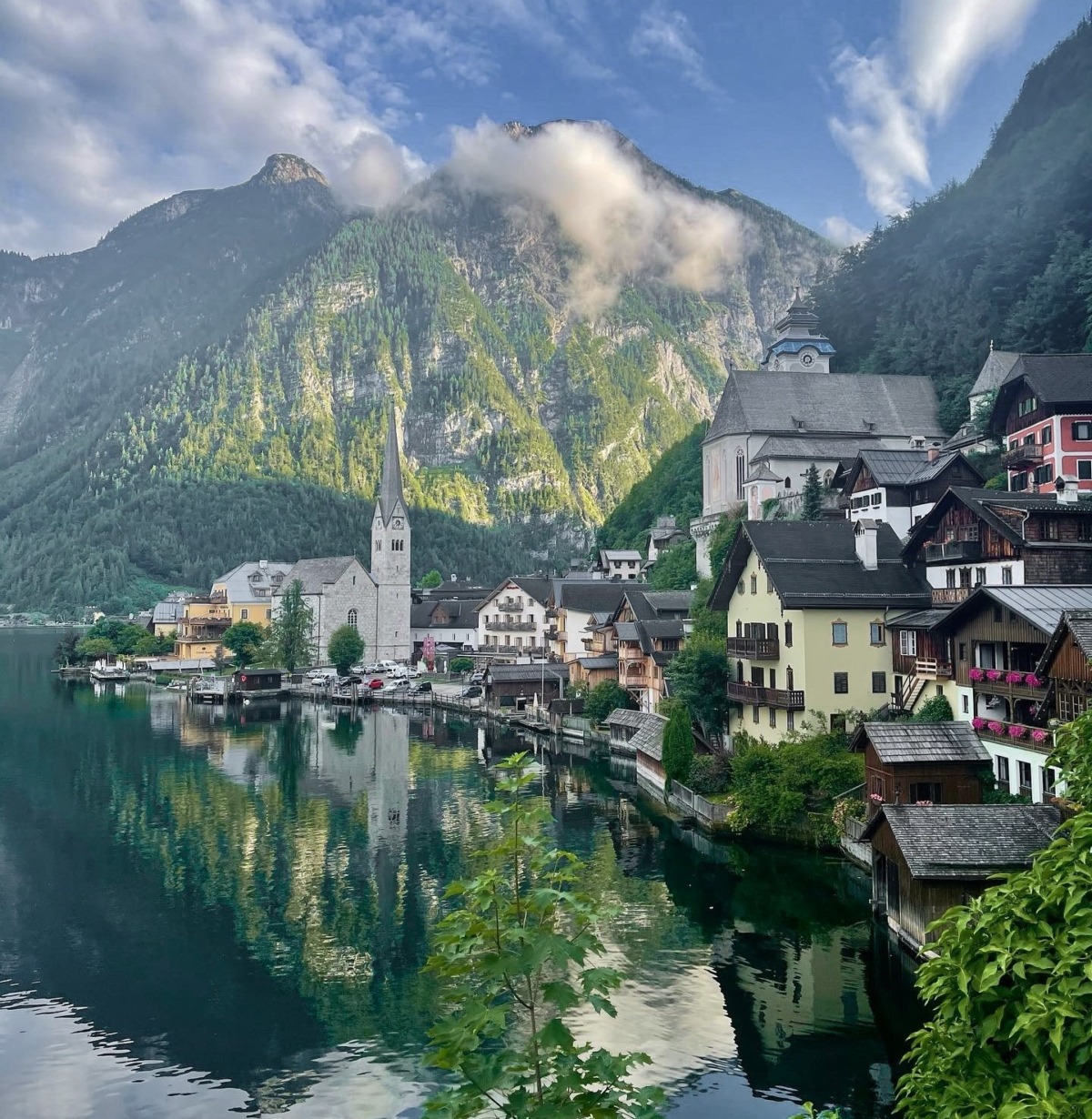
Day three is all about Hallstatt, one of Austria’s most iconic destinations. Most people have seen photos of this fairytale village by the lake, with its colorful houses and church framed by mountains. Today, you finally get to experience it in person.
Top things to do in Hallstatt
Take photos at the viewpoints
Hallstatt has many beautiful viewpoints, so take your time walking through the village and along the lakeshore.
Some of the best photo spots are along Kirchenweg, Müllerstiege, and the famous Viewpoint Hallstatt. These spots offer classic views of the town, especially in the morning or late afternoon.
Salzbergbahn Hallstatt (funicular)
One of the most popular activities in Hallstatt is taking the Salzbergbahn Hallstatt funicular up the mountain.
At the top, you’ll find a viewing platform with panoramic views over Lake Hallstatt and the surrounding Alps. I’ll be honest, the ride up felt a bit scary for me, but the view is absolutely worth it.
You can also visit the historic salt mines and a small exhibition about Hallstatt’s salt history. Ticket prices and opening times depend on the season.
There’s also a restaurant at the top, Rudolfsturm, where you can try local food with a great view.

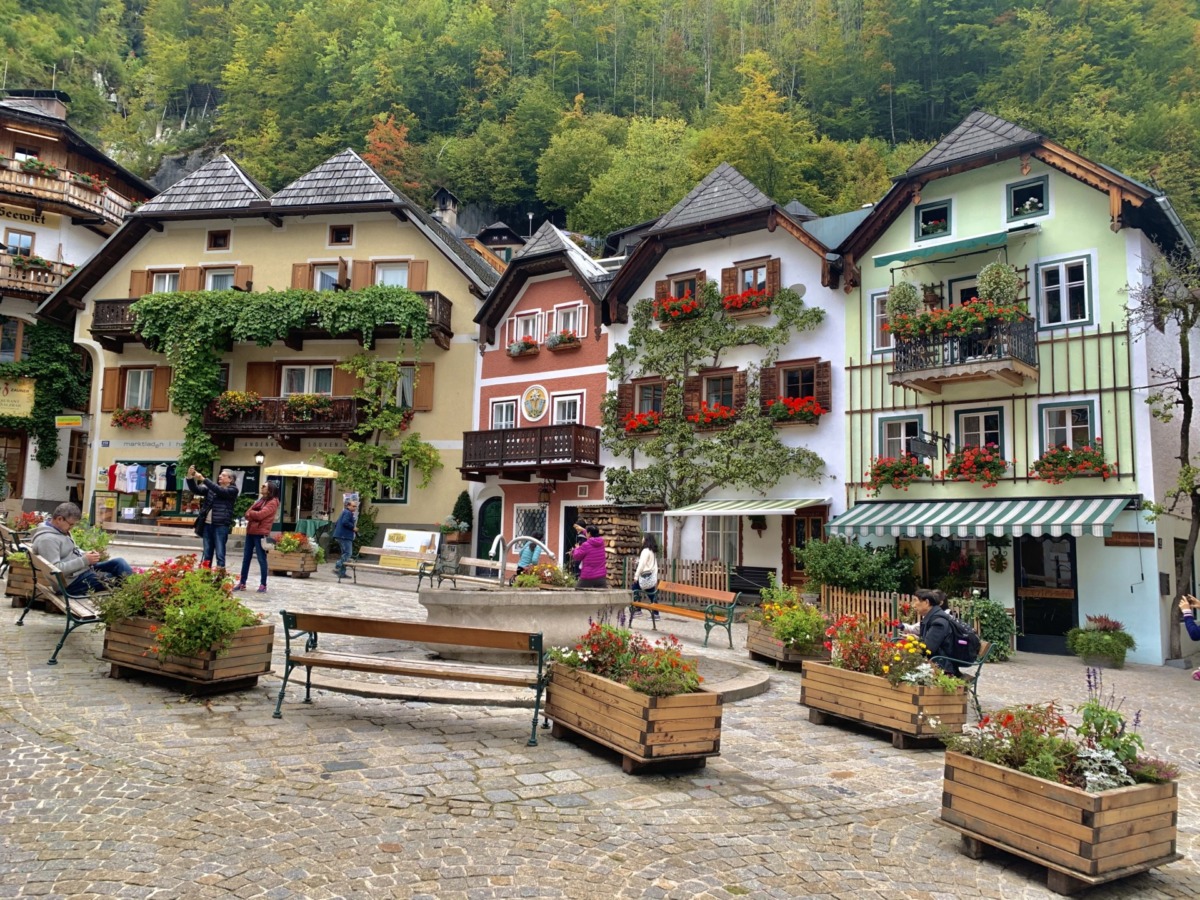
Visit Marktplatz Hallstatt
Marktplatz is Hallstatt’s small main square and one of the most photographed areas in town. The colorful houses and nearby church create the classic Hallstatt atmosphere.
You’ll also find several local restaurants and cafés in this area, making it a good place for lunch or a short break.
Boating on Lake Hallstatt
By the lakeshore, you can rent electric boats or pedal boats and explore the lake on your own.
If you prefer a guided experience, you can also book group boat tours, for example through GetYourGuide.
Optional: 5 Fingers observation deck
Another popular attraction nearby is the 5 Fingers observation deck, located above Obertraun.
It’s reached via the Dachsteinbahn cable car. This is a more time-consuming activity, so I recommend it only if you have extra time and energy.
Where to stay after Day 3
You have two options: stay overnight in Hallstatt, or continue driving to Salzburg in the evening.
Since Hallstatt has limited evening activities, I personally recommend driving on to Salzburg and staying there overnight.
Hallstatt → Salzburg: 74 km (46 miles), about 1 hour 15 minutes
Where to stay in Salzburg
In Salzburg, I recommend the following hotels:
- Hotel Zum Hirschen Salzburg: A four-star hotel in the city center of Salzburg, offering affordable prices.
- Hotel Sacher Salzburg: A five-star top hotel also located in the city center, for those seeking the best.
Day 4: Salzburg
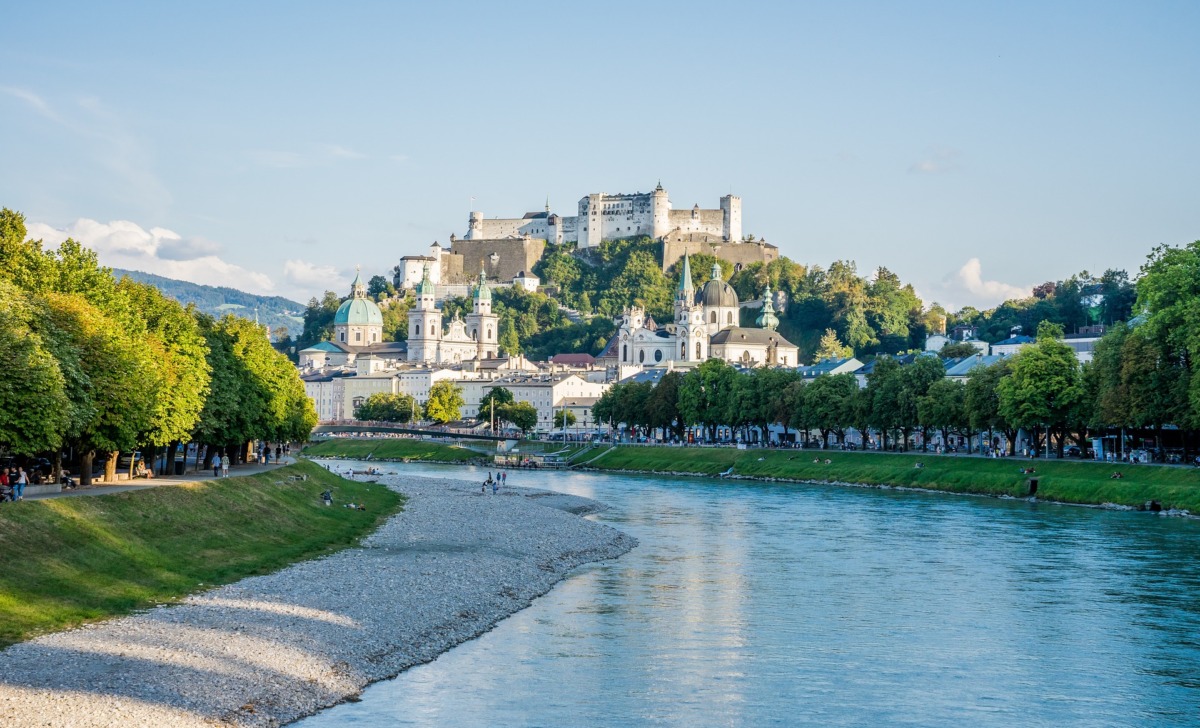
Day 4 focuses on Salzburg, Austria’s second most famous city.
If you’re driving from Hallstatt to Salzburg this day, you can still stop at a few beautiful lakes in the Salzkammergut along the way. Lake Wolfgang or Lake Mondsee are both easy and worthwhile short stops for photos or a quick walk by the water.
Salzburg is the fourth-largest city in Austria, set at the edge of the Alps. It’s known for its well-preserved historic center, elegant architecture, and strong musical heritage. This is the birthplace of Wolfgang Amadeus Mozart, and music is still part of the city’s identity today.
Plan to spend at least half a day here, but if you have time, a full day in Salzburg is even better.
Best places to visit in Salzburg
Fortress Hohensalzburg
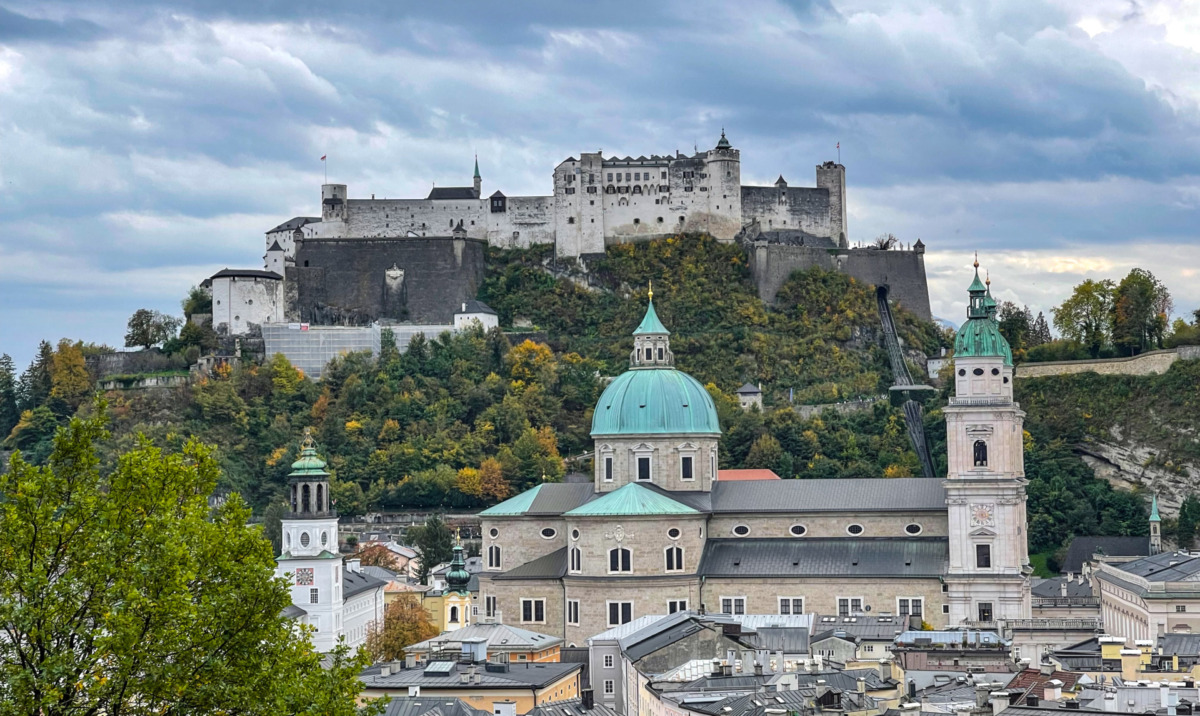
The Fortress Hohensalzburg towers above the city and is Salzburg’s most famous landmark. It’s one of the best-preserved medieval fortresses in Europe and offers fantastic views over the old town and the Alps. You can walk up or take the funicular, which makes the visit easy and quick.
Kapuzinerberg
On the opposite side of the Salzach River, Kapuzinerberg is a great spot for a short walk with views. The viewpoints here offer a beautiful perspective over Salzburg’s rooftops, the river, and the fortress. It’s quieter than the old town and well worth the climb.

Mirabell Palace
Mirabell Palace dates back to the 17th century, but the real highlight is the garden. The Baroque gardens are beautifully maintained, with fountains, sculptures, and flower beds. Entry is free, and if you’re short on time, I recommend focusing on the gardens rather than the palace interior.

Evening drive to Innsbruck
In the evening, continue your road trip towards Innsbruck.
Salzburg → Innsbruck: 190 km (118 miles), about 2 hours 15 minutes
Be aware that this route briefly crosses into Germany before entering Tyrol again. In recent years, Germany has introduced border checks, so short delays are possible.
Plan to spend the night in Innsbruck, where the Alpine part of the itinerary continues the next day.
Where to stay in Innsbruck
- The PENZ Hotel: A four-star modern hotel with private garage, located in the city center.
- Leipziger Hof Innsbruck: Nice four-star hotel in alpine style, a little further from the city center, at affordable prices, with parking.
Day 5: Innsbruck, Schlegeisspeicher
Innsbruck
Start the day in Innsbruck, the capital of Tyrol and the heart of the Austrian Alps.
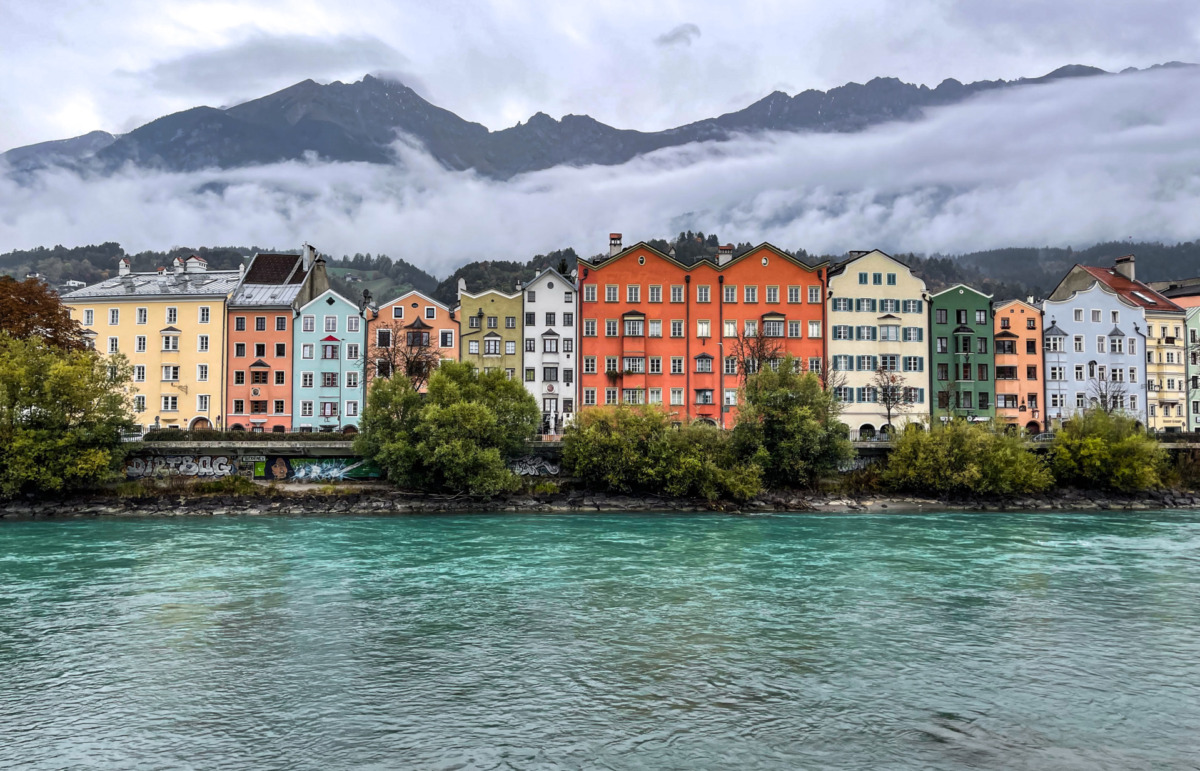
One of the most beautiful spots in Innsbruck is the riverside promenade near the Innbrücke, close to the old town. From here, you get a classic view of the Inn River, colorful Tyrolean houses, and the mountains rising behind the city. It’s one of the best photo locations in Innsbruck.
Other highlights are all close together and easy to explore on foot:
- Innsbruck Old Town
- Golden Roof (Goldenes Dachl)
- City Tower (Stadtturm)
- Triumphal Arch (Triumphpforte)
Even a short walk through the city center gives you a great feel for Innsbruck’s alpine atmosphere and architecture.
Schlegeisspeicher (Schlegeis Reservoir)
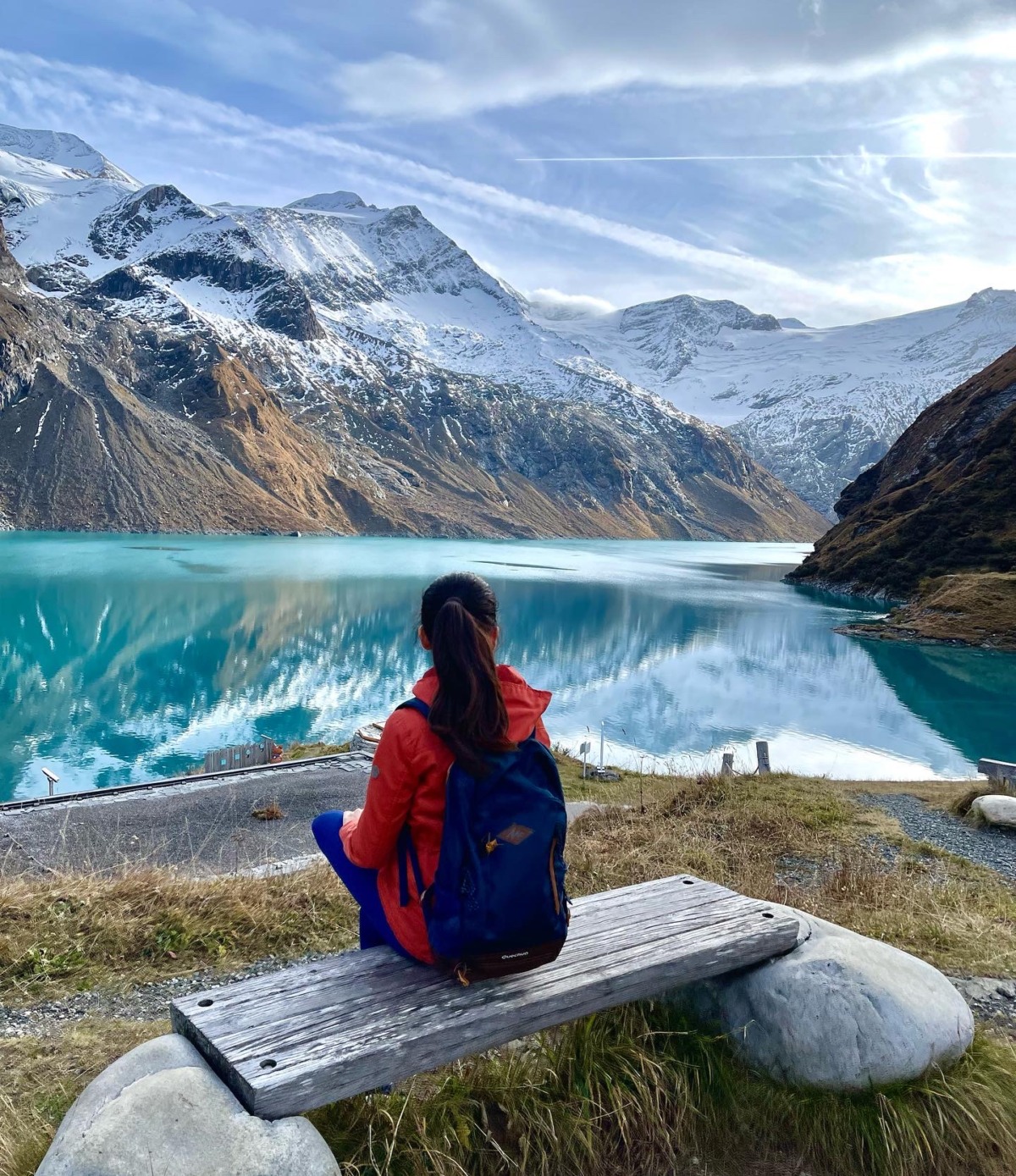
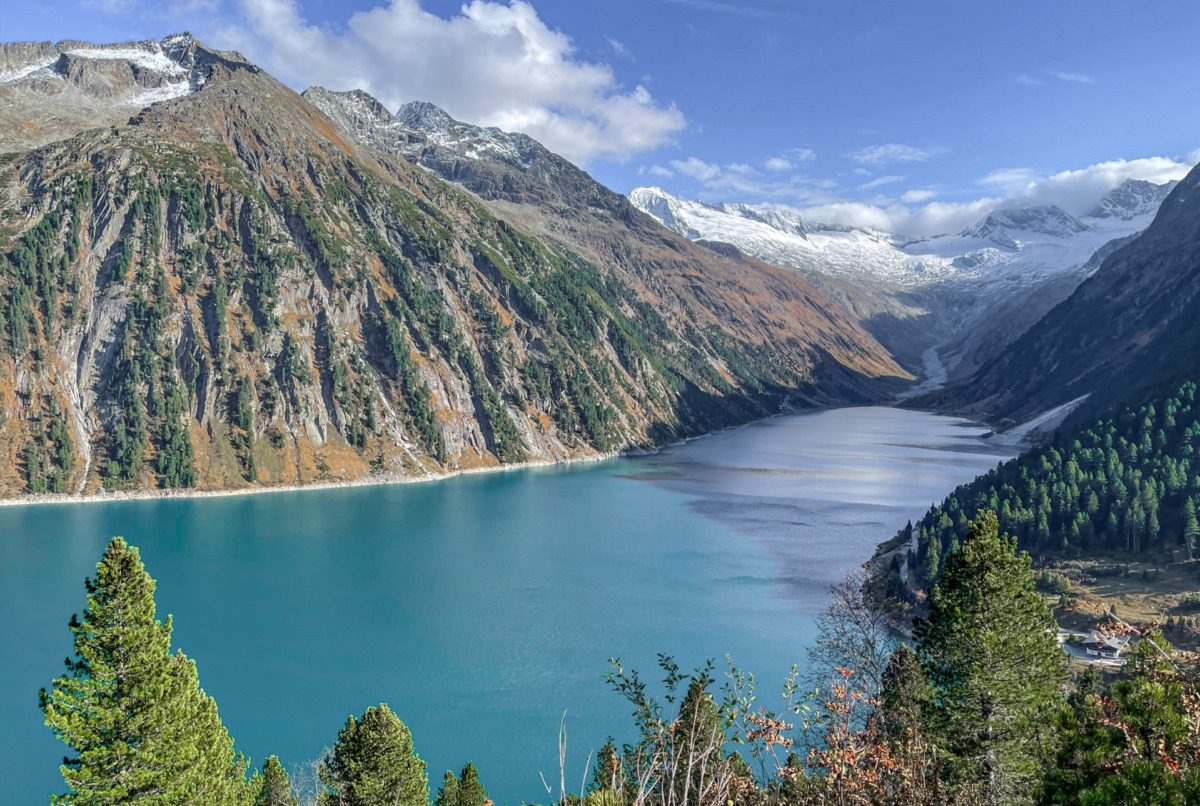
In the early afternoon, continue into the Tyrolean mountains to visit Schlegeisspeicher, one of the most impressive mountain reservoirs in Austria.
Austria has many large reservoirs in the Alps, built for hydroelectric power, but Schlegeisspeicher is one of the most scenic and easiest to reach.
Innsbruck → Schlegeisspeicher: 92 km (57 miles), about 1 hour 40 minutes
The drive takes you along the A12 highway and then into the Zillertal, Tyrol’s most famous valley. Along the way, you’ll pass traditional villages, mountain farms, hiking areas, and winter ski resorts.
After the last village, the road becomes a toll road (around €15 per car), payable online or on the spot. The access road is only open in summer, so always check opening times in advance. The final section includes tunnels, and once you reach the lake, there are several parking areas.
Schlegeisspeicher itself is stunning: a deep turquoise lake surrounded by high alpine peaks and the massive dam. You can walk along the shore, take photos, or simply enjoy the mountain scenery.
Optional: Olpererhütte
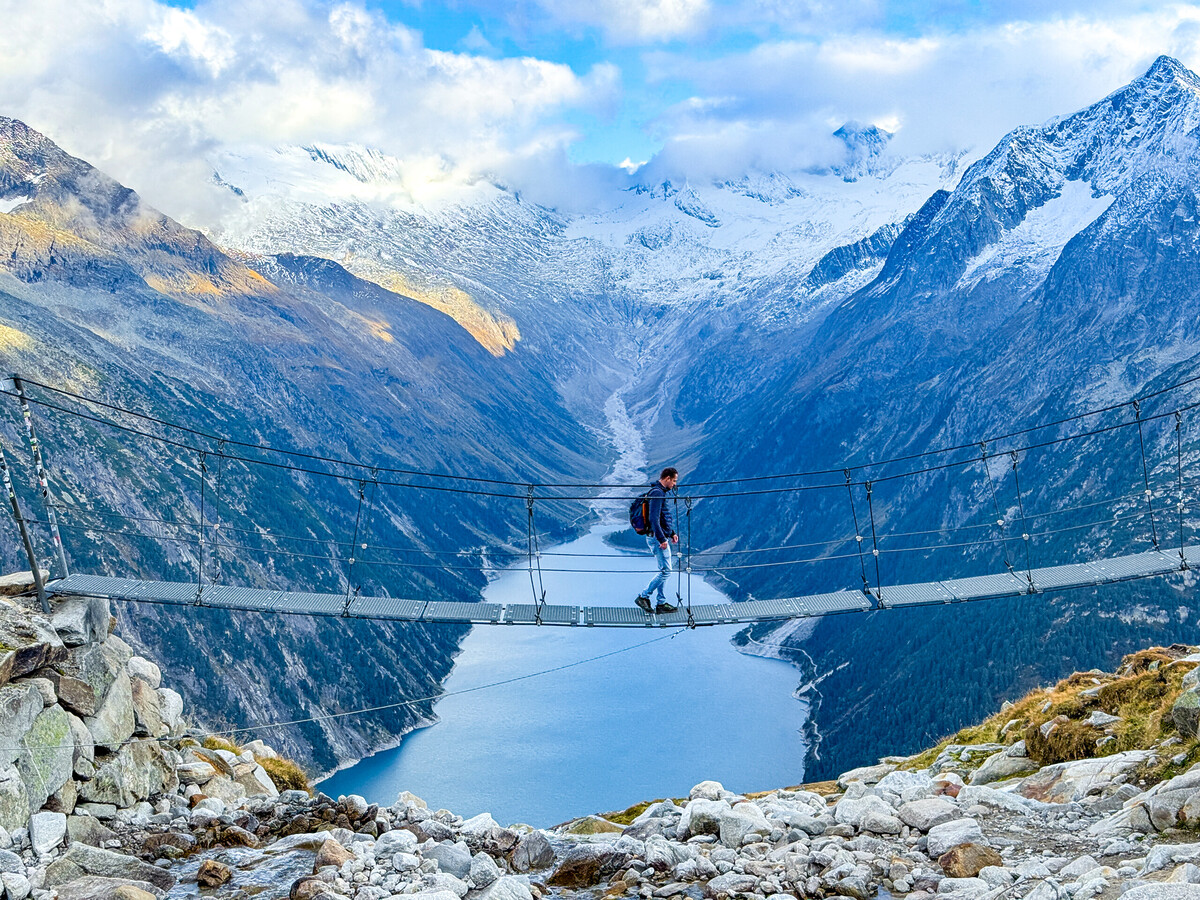
Near Schlegeisspeicher, you can hike up to the Olpererhütte, a mountain hut with food and accommodation. Next to it is the famous suspension bridge overlooking the lake, which has become very popular on social media.
However, from experience, this hike is difficult. The trail climbs steeply from the road above the lake, so good hiking shoes, basic gear, and enough time are important. But if you’re prepared, the views from the top are absolutely worth the effort.
You can spend the night either in Innsbruck again or, even better, stay in the Zillertal, which is closer to the next day’s route and offers a quieter alpine setting.
Where to stay in the Zillertal
- VAYA Zillertal: A modern renovated four-star hotel in Tyrolean style.
- ZillergrundRock Luxury Mountain Resort: A luxurious, modern hotel in a quiet location with a fantastic pool.
Day 6: Kaprun, Grossglockner
Day 6 is all about Austria’s high mountains, including the area around Grossglockner, the country’s highest peak.
Today you’ll explore Kaprun’s famous reservoirs, enjoy alpine scenery around Zell am See, and—if time and weather allow—drive one of Austria’s most spectacular mountain roads.
Kaprun & the Alpine reservoirs
Start the day by driving from the Zillertal towards Kaprun.
Zillertal → Kaprun: 93 km (58 miles), about 1 hour 50 minutes
Kaprun
Next to Zell am See lies the small alpine village of Kaprun, a great hiking destination in summer and a well-known ski resort in winter.
If you’re traveling in summer, the two reservoir lakes of Kaprun are definitely worth a visit.
By car, you can drive up to the upper parking area, where buses and a funicular take you further up to the lakes.
The lower lake is Stausee Wasserfallboden, which is less popular and usually viewed from the bus. The upper lake, Stausee Mooserboden, is the real highlight and truly breathtaking.
The bus stops at the upper lake, giving you plenty of time to walk around and relax. From here, you can enjoy stunning alpine scenery, with high mountain peaks and views toward Austria’s highest mountain, the Grossglockner, in the background.
If you visit the upper lake, don’t miss the Höhenburg Stauseen Kaprun viewpoint, which offers a perfect panoramic view of the reservoir and the surrounding mountains.
Right next to Stausee Mooserboden, the Bergrestaurant Mooserboden is a great place for lunch, where you can try traditional Tyrolean dishes with a beautiful mountain view.

Optional: Grossglockner High Alpine Road
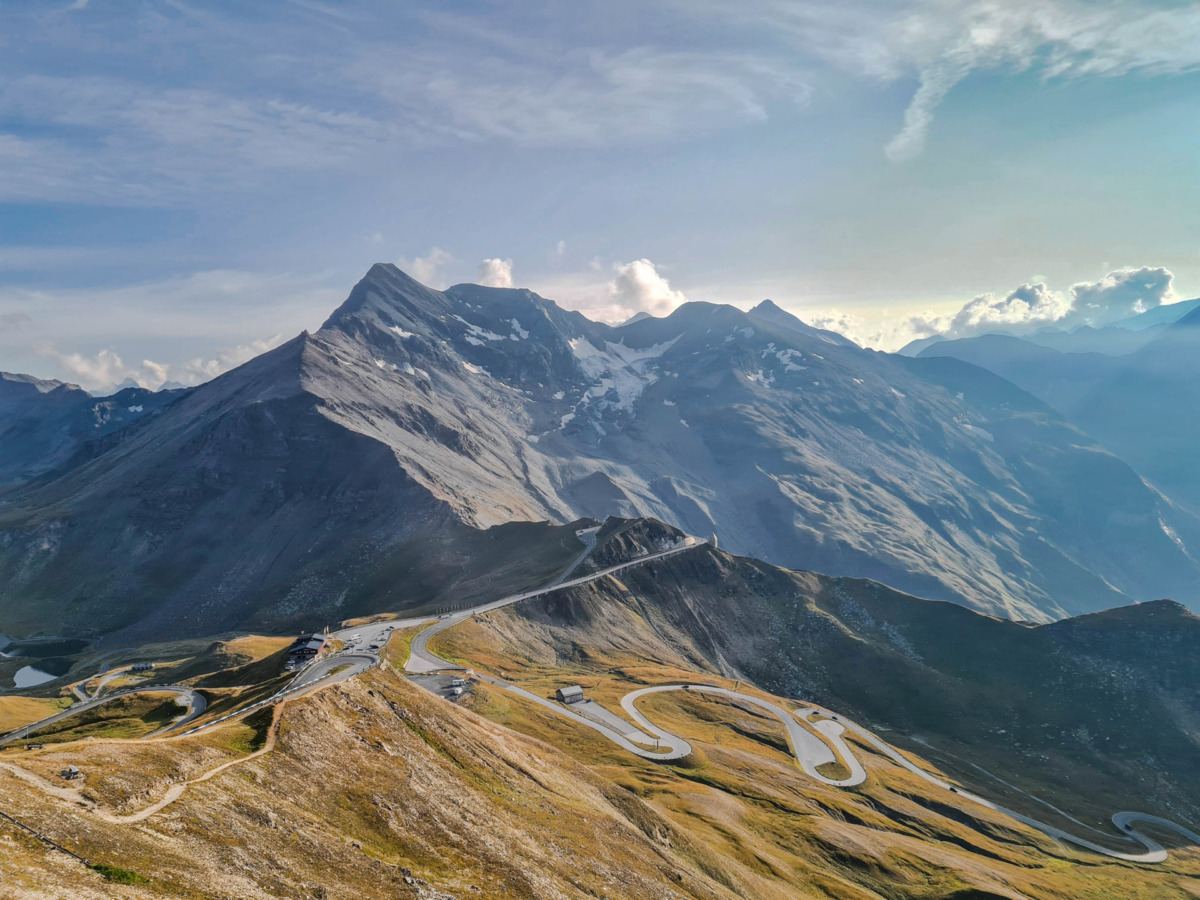
If you still have time and energy, continue to the Grossglockner High Alpine Road, one of Austria’s most famous scenic mountain passes.
This road is long, winding, and incredibly scenic, with glaciers, alpine lakes, and wide mountain views along the way. The Edelweißspitze viewpoint, a short detour from the main road, offers one of the best panoramas of the entire route.
Important to know that the road is only open in summer, there is a high toll fee (over €30 per car), and the drive takes time, so plan accordingly.
From experience, it’s absolutely worth it if the weather is clear. You may even spot marmots near the road on quieter sections.
If you continue on the route toward Lienz, stop briefly in Heiligenblut, one of Austria’s most picturesque alpine villages.
Alternative: Zell am See
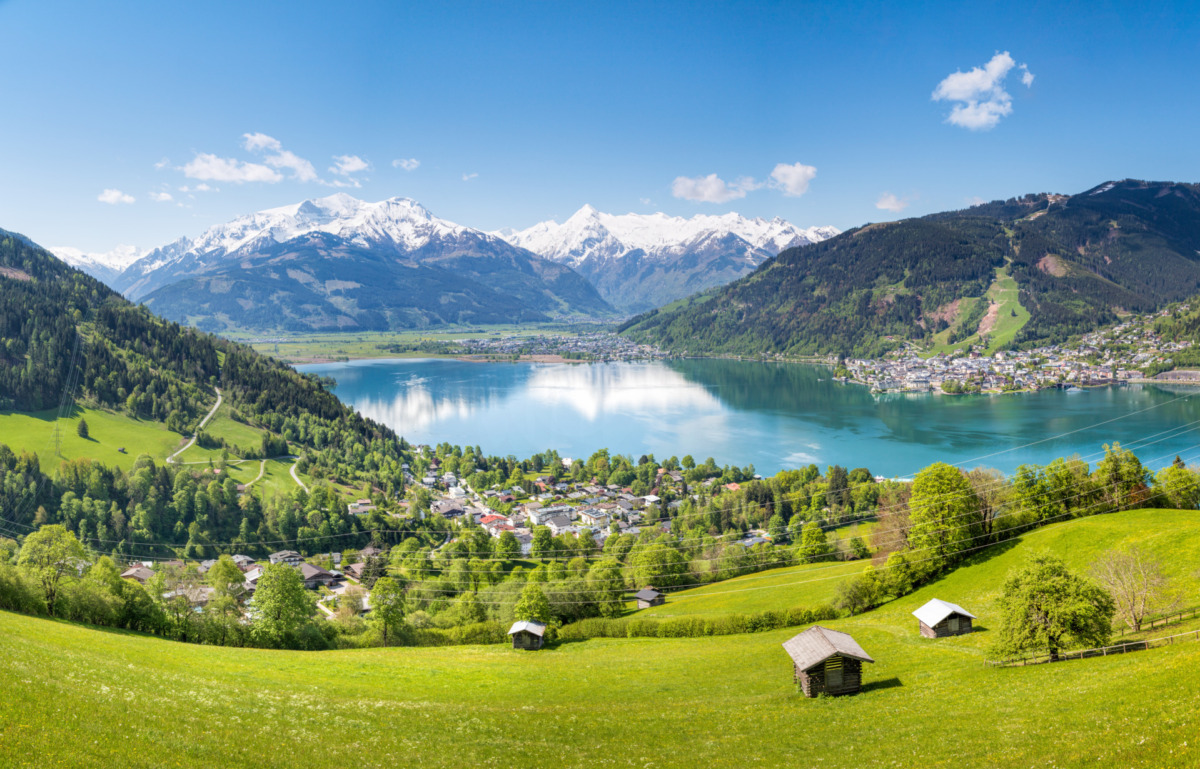
If you decide to skip the Grossglockner High Alpine Road, spend more time in Zell am See instead. Walk along the lakeside, enjoy the viewpoints above town, or simply relax by the water with mountain views all around.
Spend the night in Zell am See or Lienz, depending on whether you crossed the Grossglockner High Alpine Road and which route you choose for the next day.
Where to stay in Zell am See
- Nikolaus by AvenidA Panoramic Wellness Suites Zell am See: Modern four-star hotel with panoramic views of Lake Zell and private sauna.
- The House Zell am See: Stylish aparthotel which is ideal for families.
Where to stay in Lienz
- Dolomitengolf Suites: A five-star hotel at an affordable price, close to Lienz, in a quiet location.
- Hotel Moarhof: A renovated, traditional Austrian-style hotel at a good price in Lienz.
Day 7: Return to Vienna
On the seventh day, the route leads back to Vienna, where this 7-day Austria road trip began. For the final day, I’ve planned two return options, depending on where you spent the previous night in the mountains.
Route A
If you crossed the Grossglockner High Alpine Road the day before and stayed overnight in Lienz, you can return to Vienna through southern Austria. This option allows you to see parts of the country that are not included earlier in the itinerary.
The route goes via Lienz → Spittal an der Drau → Villach → Klagenfurt → Graz → Vienna, covering about 464 km (288 miles) and taking nearly 5 hours of driving time.
Along the way, you can:
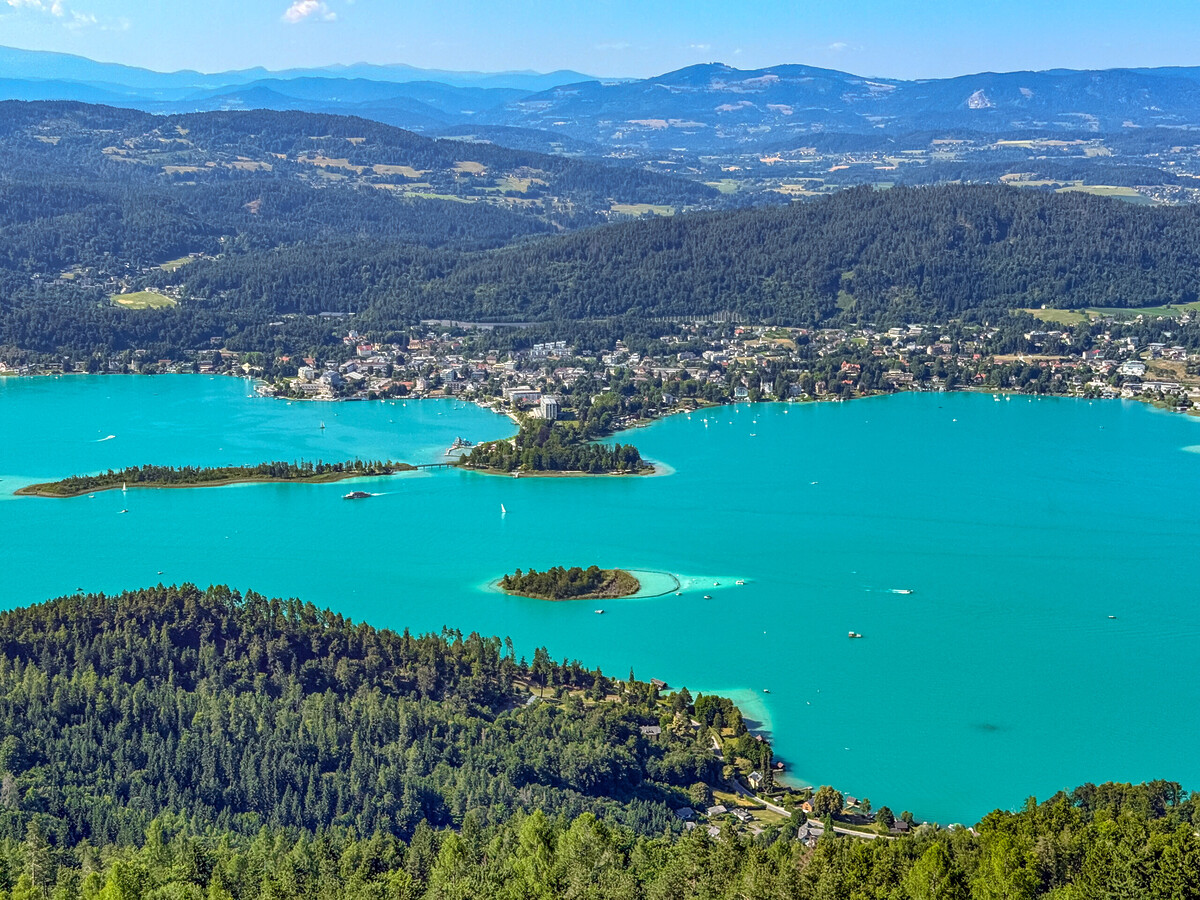
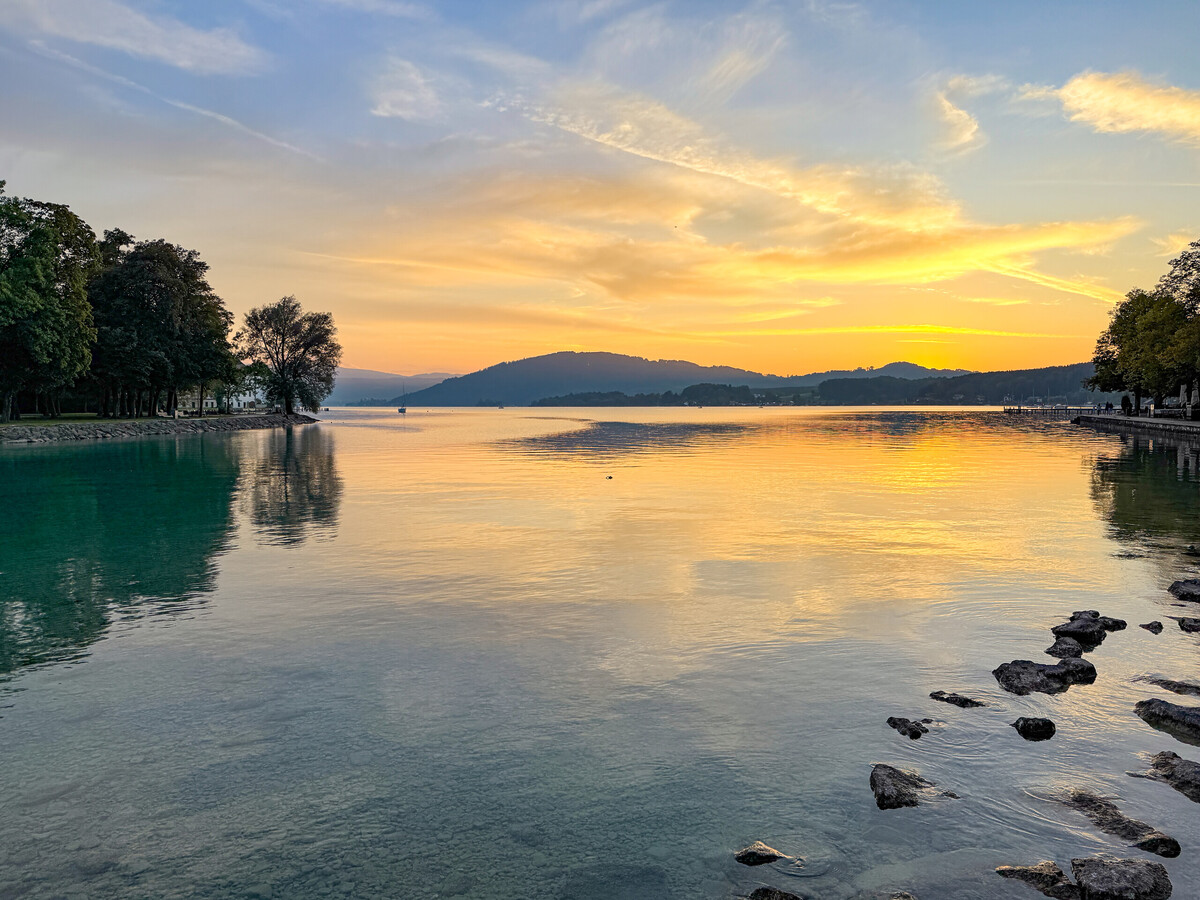
- stop briefly at Lake Wörth,
- explore Klagenfurt or Graz,
- or, if you enjoy shopping, visit SCS Vösendorf, Austria’s largest shopping mall, located just outside Vienna.
This route is ideal if you want to turn the drive back into another sightseeing day.
Route B
If you stayed overnight in Zell am See, the fastest way back to Vienna is via Salzburg and Linz (not Lienz, the two places are often confused).
This route follows Zell am See → Salzburg → Linz → Vienna, with a total distance of about 395 km (245 miles) and a driving time of roughly 4 hours and 15 minutes.
With this option, you can revisit Salzburg if you missed something earlier, or add a scenic stop along the way.
You may choose to visit lakes such as
- Lake Mondsee,
- Lake Attersee,
- or Lake Traunsee
if you skipped them before.
Optional: Bavarian Alps
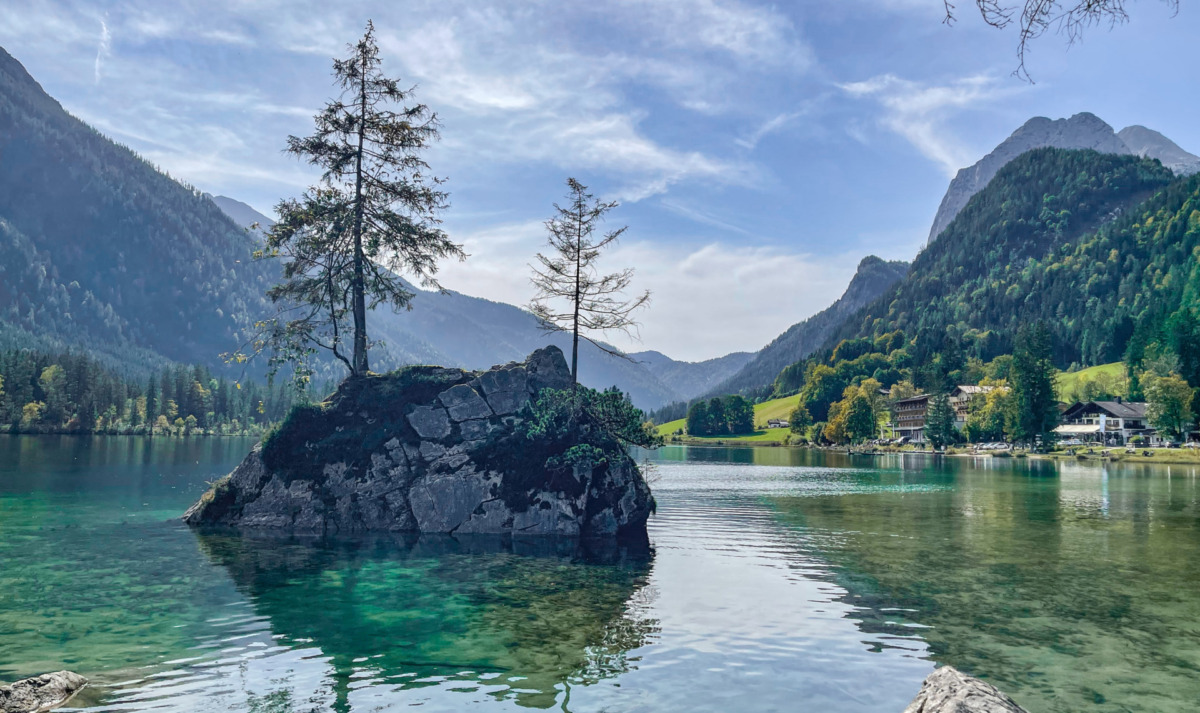
You can also make a short detour into the Bavarian Alps in Germany and visit places like Königssee or Hintersee.
Both return routes offer beautiful landscapes and worthwhile stops, so the best choice depends on your pace and interests.
By the evening of the seventh day, you’ll arrive back in Vienna, bringing this 7-day Austria road trip to an end.
But there’s more useful information coming, so if you want to plan your Austria trip properly, keep reading.
Other day trip destinations in Austria to add to your itinerary
Austria has many more great places to explore, but some of them need extra time. This 7-day itinerary is quite full, so these destinations work best if you add one or two extra days to your trip.
Here are a few excellent day trip ideas to extend your Austria travel itinerary:
Lake Neusiedl in Burgenland
Lake Neusiedl lies in eastern Austria, close to the Hungarian border, and is the country’s largest natural lake. It’s a popular summer spot with beaches, bike paths, restaurants, and campsites.
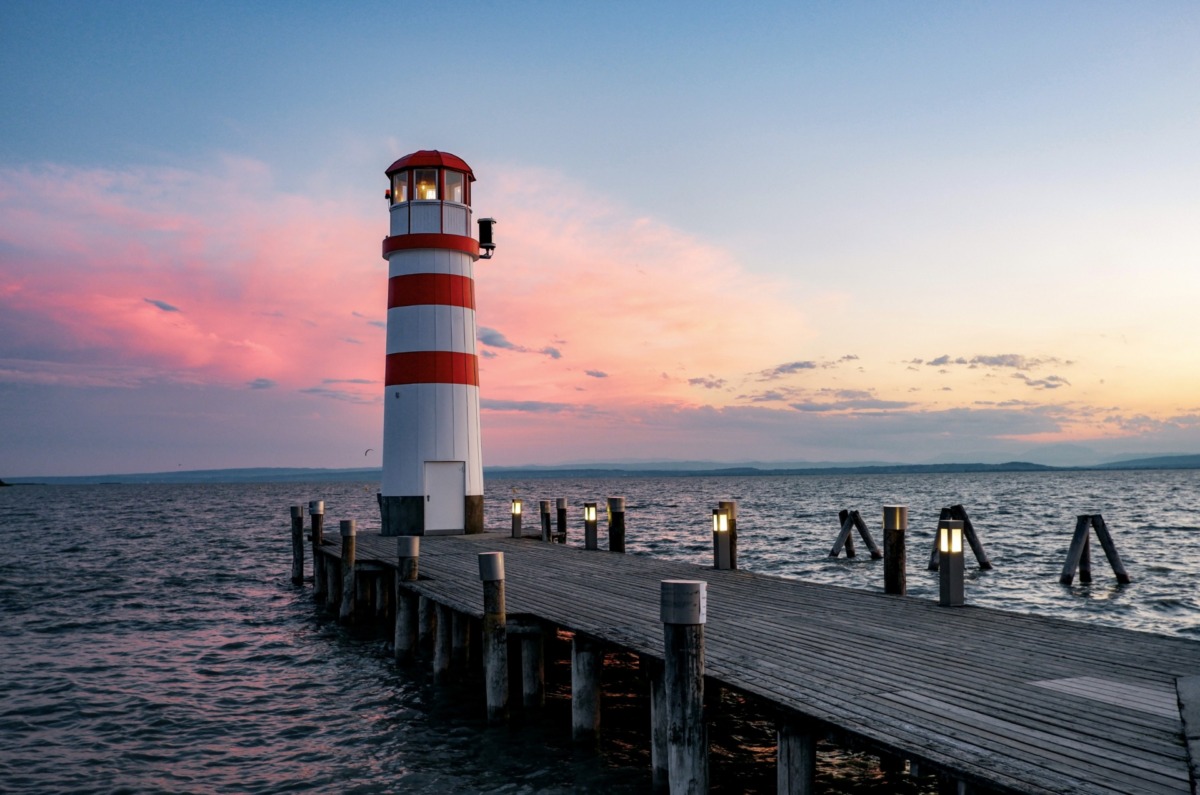
My favorite spot here is the Podersdorf lighthouse, a great photo location, especially at sunset. You can walk along the lake and enjoy water sports in summer.
Green Lake in Styria
Green Lake or Grüner See is one of my favorite hiking spots in Austria, and I visit it often. It’s located in northern Styria, about an hour from Graz, and is famous for its clear, emerald-green water.
I usually walk around the lake and go hiking in the surrounding area. The water level changes throughout the year, which makes every visit feel a bit different.

Lake Seebensee in Tyrol
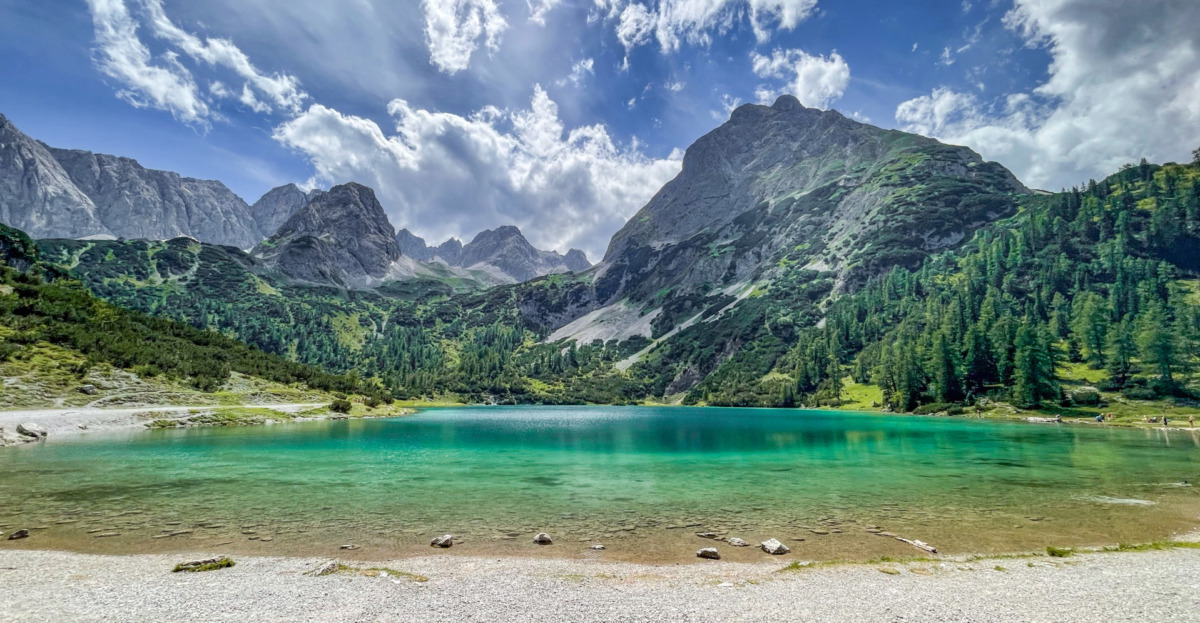
Lake Seebensee, near Ehrwald in Tyrol, is a stunning alpine lake surrounded by dramatic mountain peaks. The water is crystal clear and turquoise-green, making it one of the most beautiful lakes in Austria.
If you still have energy, you can continue to Lake Drachensee, which is just above Seebensee and equally impressive.
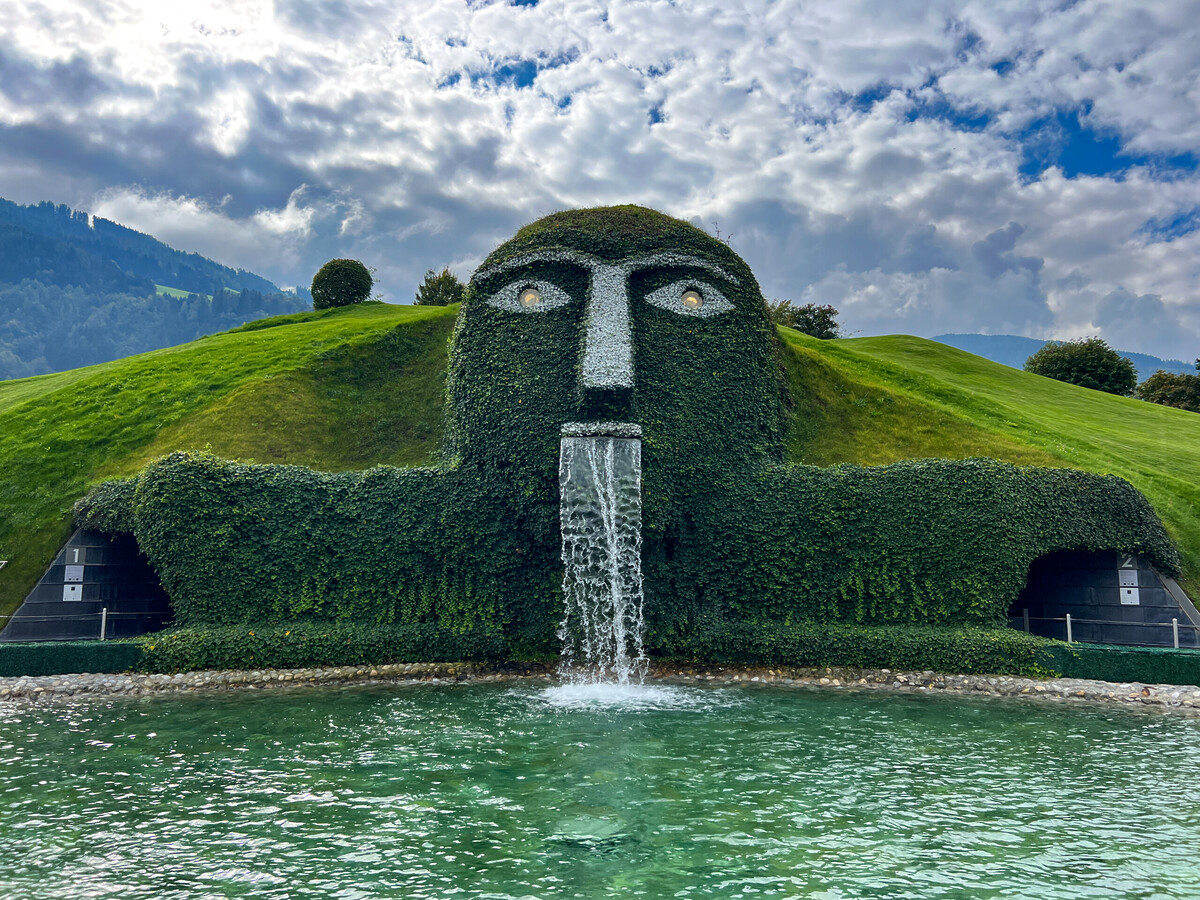
Swarovski Kristallwelten in Tyrol
Swarovski Kristallwelten is one of Tyrol’s most famous attractions, located in the town of Wattens.
This was one of my personal surprises in Tyrol. I only visited it after several trips, but it’s definitely worth it if you have extra time in the region.
Inside, you’ll find unique crystal exhibitions, artistic installations, and themed rooms created with Swarovski crystals.
At the end, there’s a large Swarovski shop, and the outdoor garden is also worth a short walk.
Lake Lünersee in Vorarlberg
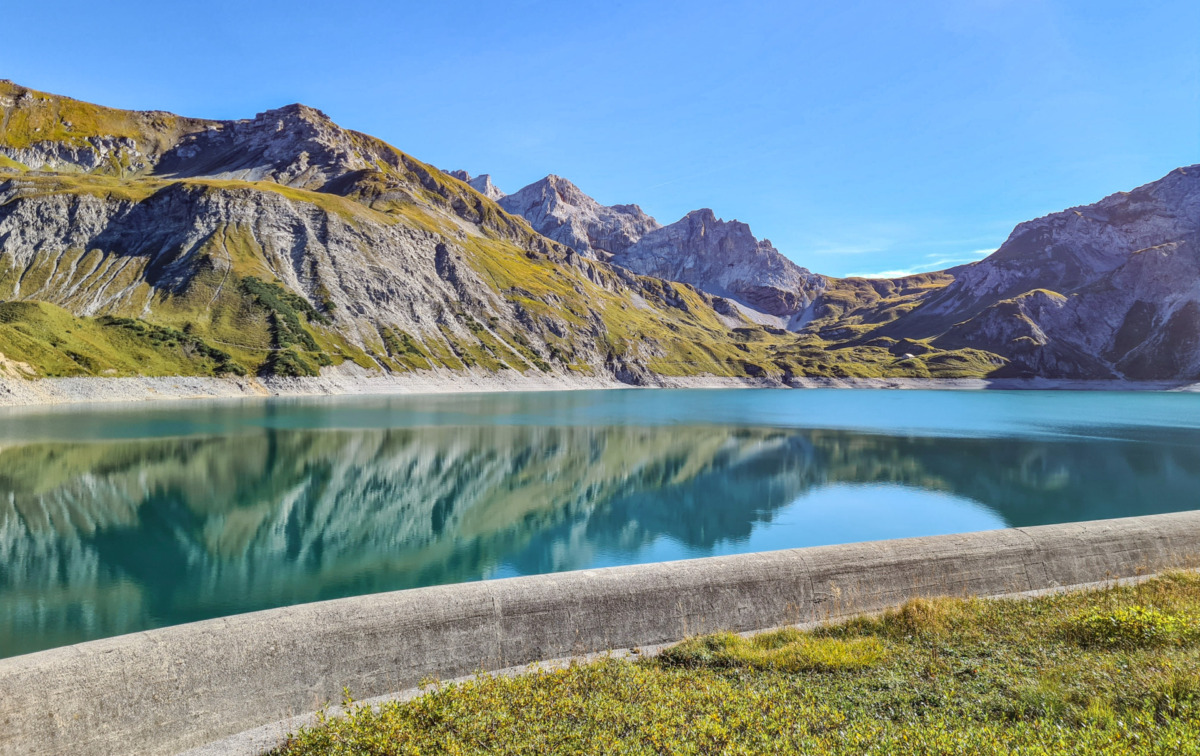
Lake Lünersee is located in western Austria, in the Vorarlberg region. It’s one of the largest high-altitude lakes in the Alps, surrounded by steep rocky mountains.
For the best views, walk along the southern or eastern side of the lake and climb slightly uphill. There’s also a restaurant near the lake where you can enjoy local food with a beautiful alpine view.
FAQ: What to know before a 7-day Austria road trip
After the itinerary, let’s go through the most important questions you might have when planning a 7-day road trip in Austria:
Is one week in Austria enough?
Yes, one week is enough to see many of Austria’s main highlights and get a good overview of the country.
In 7 days, you can explore top sights in Vienna, visit Hallstatt, experience Alpine scenery, and enjoy Austria’s landscapes and food.
This itinerary is packed, but it gives you a strong first impression of Austria in a short time.
Is Austria good for a road trip?
Yes, Austria is an excellent country for a road trip.
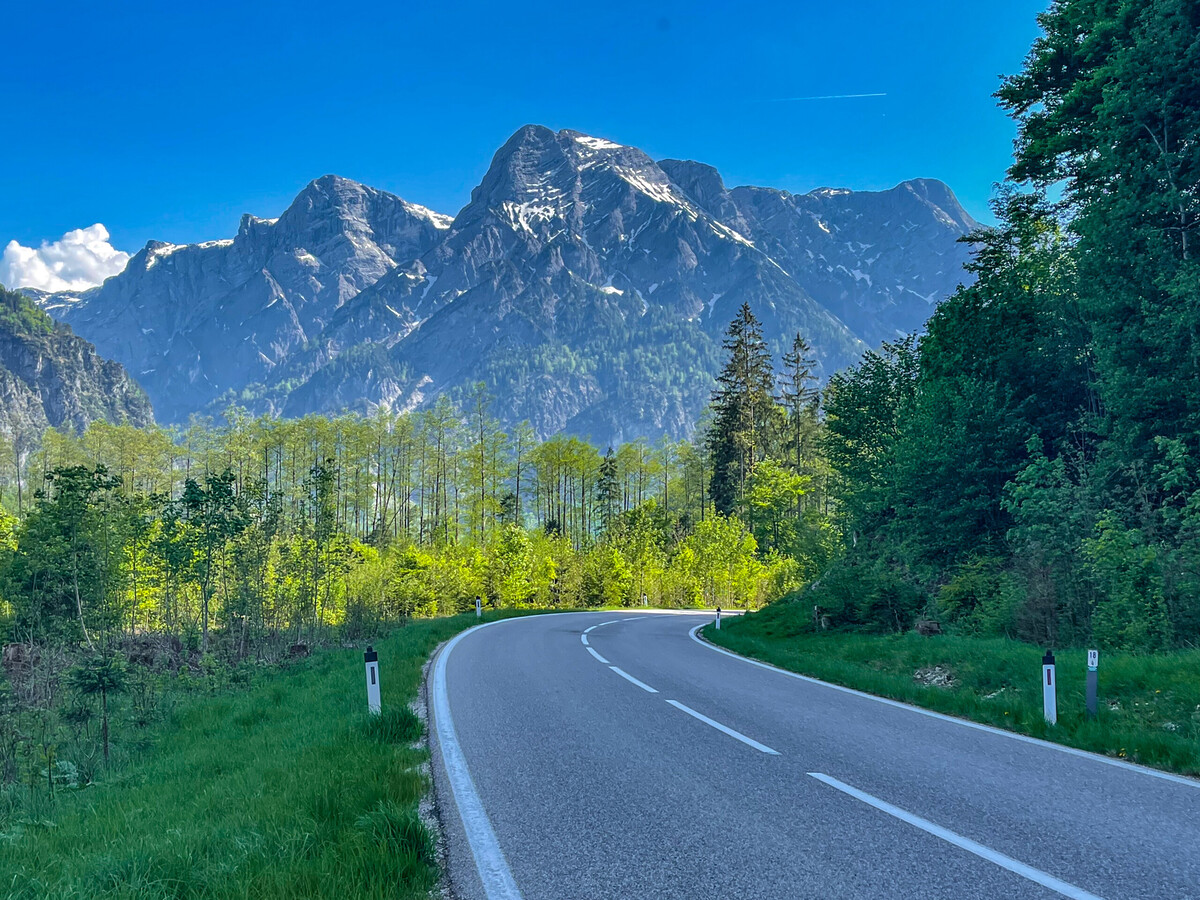
The roads are great, distances are manageable, and you’ll enjoy beautiful scenery almost the entire time.
After nearly 15 years of driving in Austria and many thousands of kilometers on the road, I can honestly say that traveling around Austria by car is comfortable and very enjoyable.
Getting to Austria
You can reach Austria easily by plane or by car.
Most travelers arrive at Vienna International Airport, which has direct flights from many countries. Austria’s national airline is Austrian Airlines.
That’s why this itinerary starts in Vienna, but you can begin your trip anywhere depending on your arrival point.
Austria is also easy to reach by car from neighboring countries. It’s part of the Schengen Area, so border crossings are usually smooth, though short checks can still happen. If you’re arriving from outside the EU, be sure to check visa rules in advance.
Getting around in Austria
By car
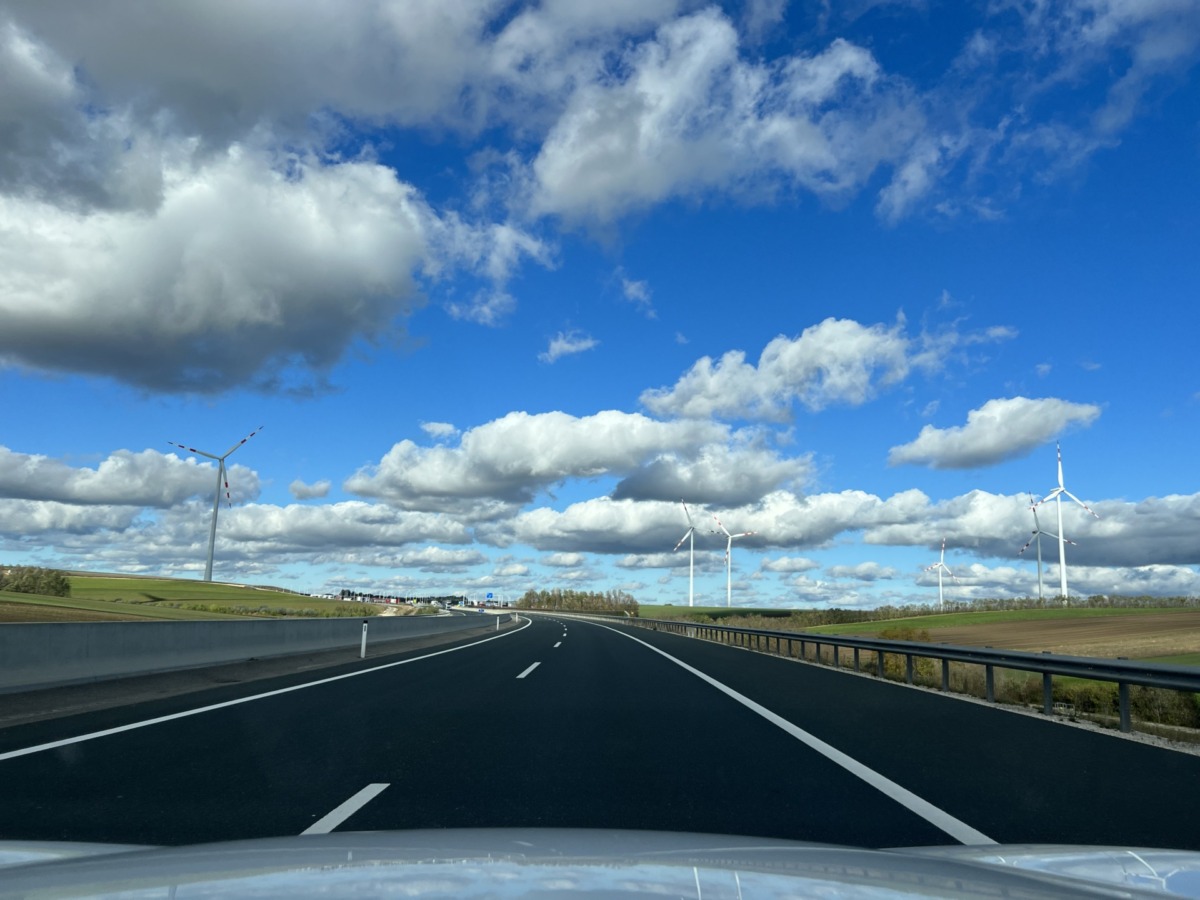
This 7-day itinerary is planned as a road trip, and a car really makes things easier. Austria has excellent roads, clear signage, and very good infrastructure, so driving here is straightforward and enjoyable. All travel times in this guide are based on driving.
Do you need a car for a 7-day Austria itinerary?
Yes, I highly recommend it. A car gives you the freedom to reach mountain roads, lakes, and viewpoints that are difficult or slow to access by public transport. Trains work well between cities, but with only 7 days, relying only on public transport would mean skipping some great spots.
Car rental in Austria
If you’re renting a car, Rentalcars and Discovercars are both easy to use and helpful for comparing prices.
Since this route includes mountain roads, I recommend choosing a comfortable car with enough power for Alpine driving.
Road tolls and vignette in Austria
Most highways require a vignette, which you can buy online or at gas stations. Up-to-date prices and details are available on the ASFINAG website.
Some scenic mountain highways have extra tolls (usually €5–20), and certain smaller mountain roads leading to lakes or hiking areas can cost around €10–30.
Driving in Austria isn’t the cheapest option, but the road quality is high, drivers are disciplined, and the views along the way are spectacular.
By public transport
Public transport works very well for cities. Trains connect Vienna, Salzburg, and Innsbruck efficiently, and buses cover many regional areas.
That said, if you rely only on public transport, you’ll need to adjust this itinerary and focus more on cities. Reaching lakes and mountain areas within a packed 7-day schedule is much easier by car.
Best time to visit Austria for a 7-day road trip
For a road trip in Austria, I strongly recommend visiting between June and October.
This period offers the best conditions for driving, hiking, and sightseeing. The weather is generally better, and most mountain roads are fully open.
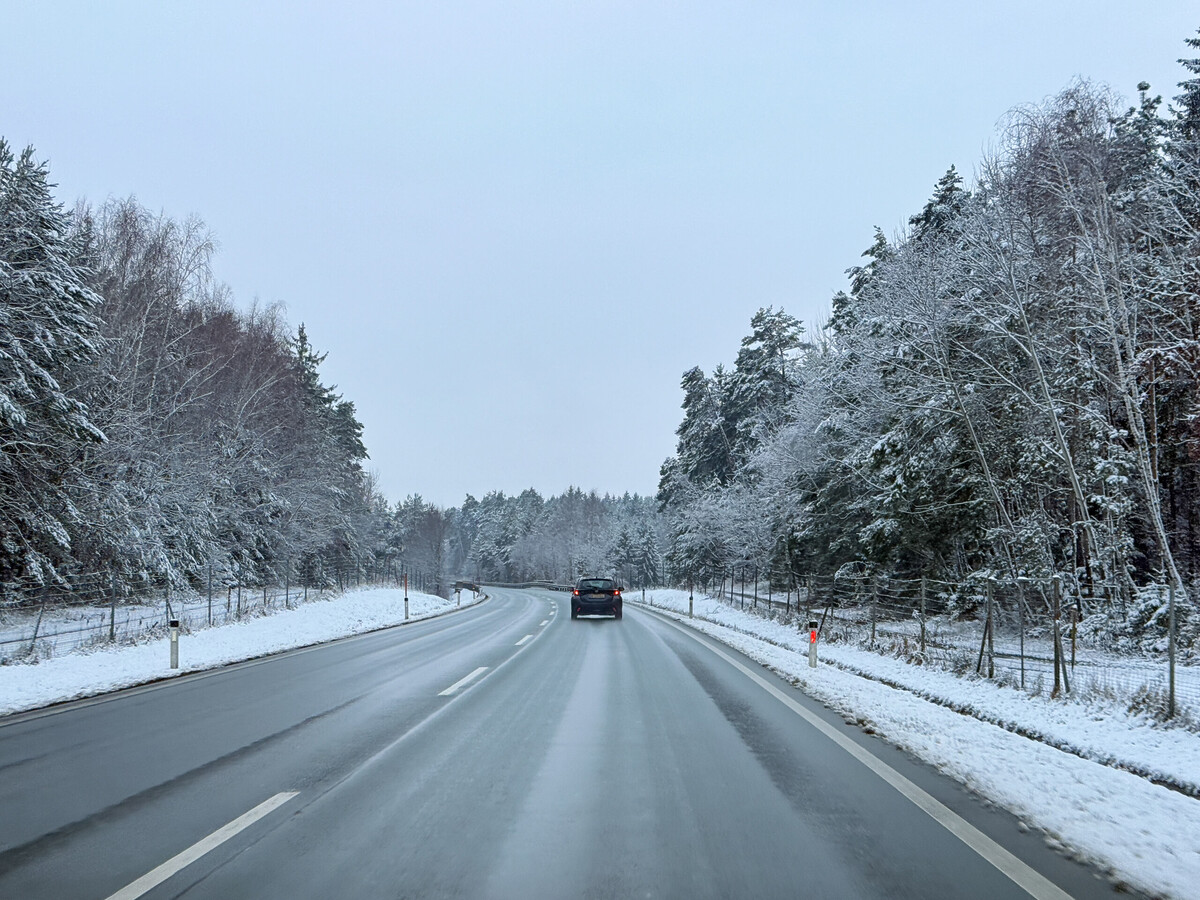
Outside of these months, it can be colder, wetter, and some roads or attractions may be closed, especially at higher elevations.
If you want to enjoy Austria’s lakes, Alpine views, and mountain drives without restrictions, summer and early autumn are the best choice.


Why I don’t recommend a winter road trip in Austria
Austria is a wonderful destination in winter as well, especially for skiing and Christmas markets, which are very popular across the country.
However, this itinerary isn’t made for winter travel. It’s designed for exploring Austria by car, enjoying scenic mountain roads, hiking, lakes, and spending time outdoors. From experience, all of this is much easier in summer, when everything is fully accessible.
If your goal is to see Austria’s most beautiful places and enjoy the landscape without limitations, a summer or early autumn road trip is the best choice.
Where and what to eat during 7 days in Austria
Austria has its own local cuisine, and it’s well worth trying when you travel around the country.
You’ll find classic Austrian dishes like Wiener schnitzel, Käsespätzle, and Tiroler Gröstl, as well as foods that are also popular in nearby countries, such as goulash, Apfelstrudel, Kaiserschmarrn, and many types of sausages and spreads (Aufstrich).
One of my personal favorites is the schnitzel served with a slice of lemon, fries, and cranberry jam. This combination is very typical in Austria, and they really do it best. I also recommend trying their salads, especially the potato salad with pumpkin seed oil, which is common in Austria and surprisingly good.
In addition, you’ll also find Italian and Asian food almost everywhere in Austria.
Besides traditional restaurants, it’s very easy to find quick and affordable food. McDonald’s is available in almost every city, and large supermarkets like Interspar and Billa Plus often offer warm meals in their in-store restaurants. These are practical, budget-friendly options when you’re driving from place to place.
If you’re looking for gluten-free food, you’ll see plenty of places offering gluten-free options. However, based on my own experience, always ask about cross-contamination. Many places are not truly safe for people with celiac disease, and I personally had several issues with this in Austria. So while gluten-free options exist in theory, only a few places are really suitable in practice.
Overall, eating in Austria is easy and enjoyable, whether you want to try traditional dishes or just grab something simple while road-tripping.

So, this was my 7-day road trip itinerary in Austria, covering some of the best places in the country. I hope this guide gives you a clear idea of what you can see and experience in Austria in one week.
Austria offers stunning landscapes, great roads, charming cities, friendly people, and delicious food. Whether you follow this itinerary exactly or adapt it to your own pace, it’s a fantastic way to explore the country.
If this itinerary inspired you, don’t hesitate to start planning your Austria road trip, book your accommodations and activities, and head out to explore. Austria has everything you need for an unforgettable journey!

Hi! I’m Adri, the creator of Traveltipzone.com and Italianwanderlust.com.
I’ve explored over 30 countries so far and travel to around 15 each year — some new places and others I love returning to. I’m especially passionate about Southern Europe, particularly Italy, and the United Arab Emirates.
Follow my journeys for firsthand travel tips and inspiration!