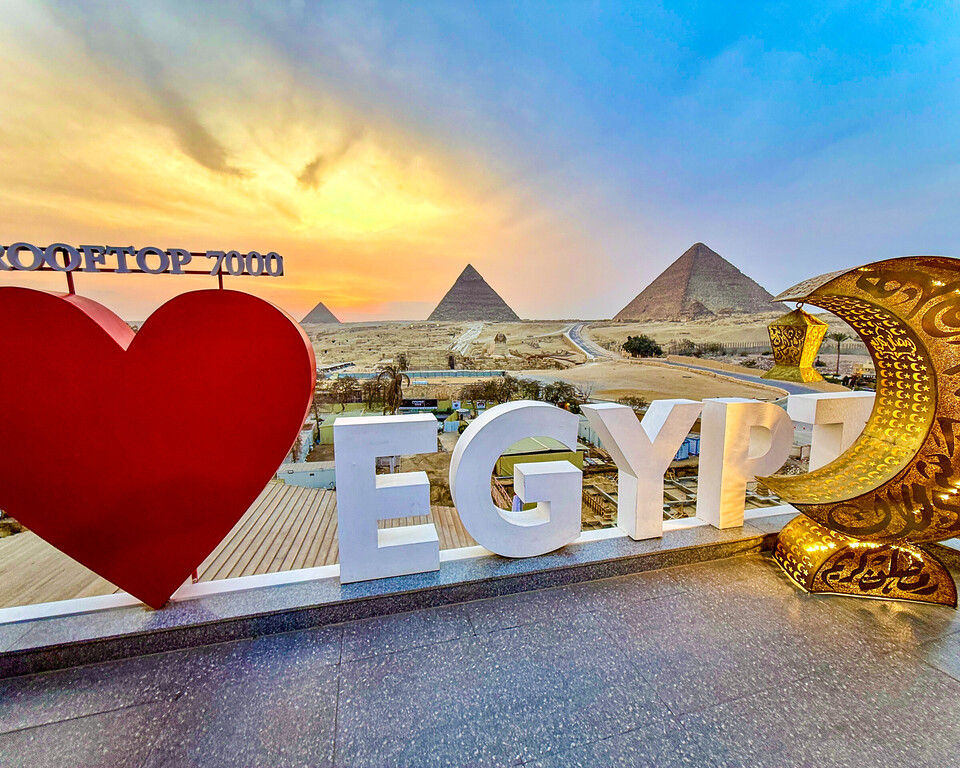

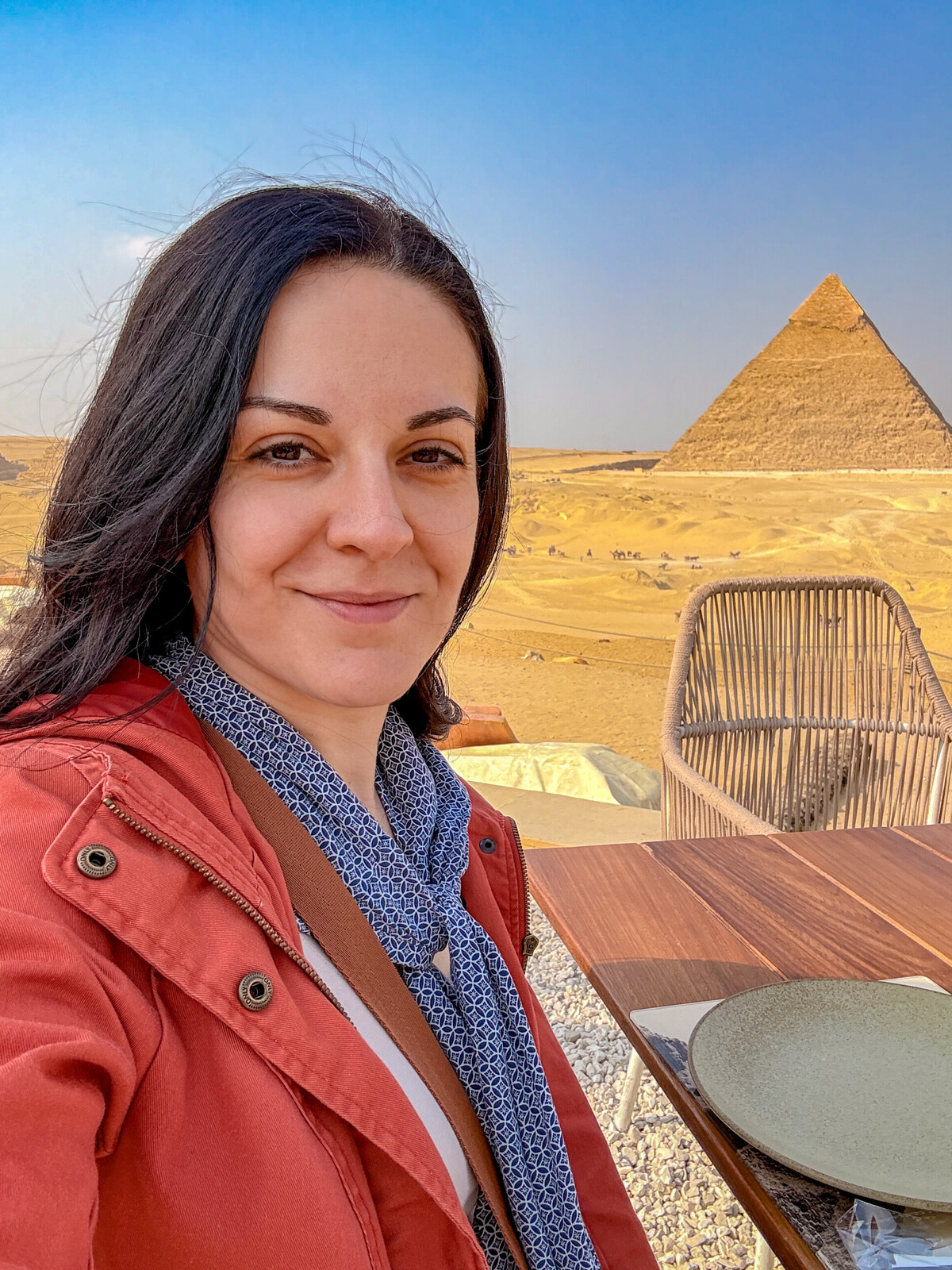
Egypt is on the bucket list of many travelers around the world, and for good reason. The country is home to world-famous landmarks and a truly unique culture. I also believe it’s a place everyone should see at least once in their lifetime.
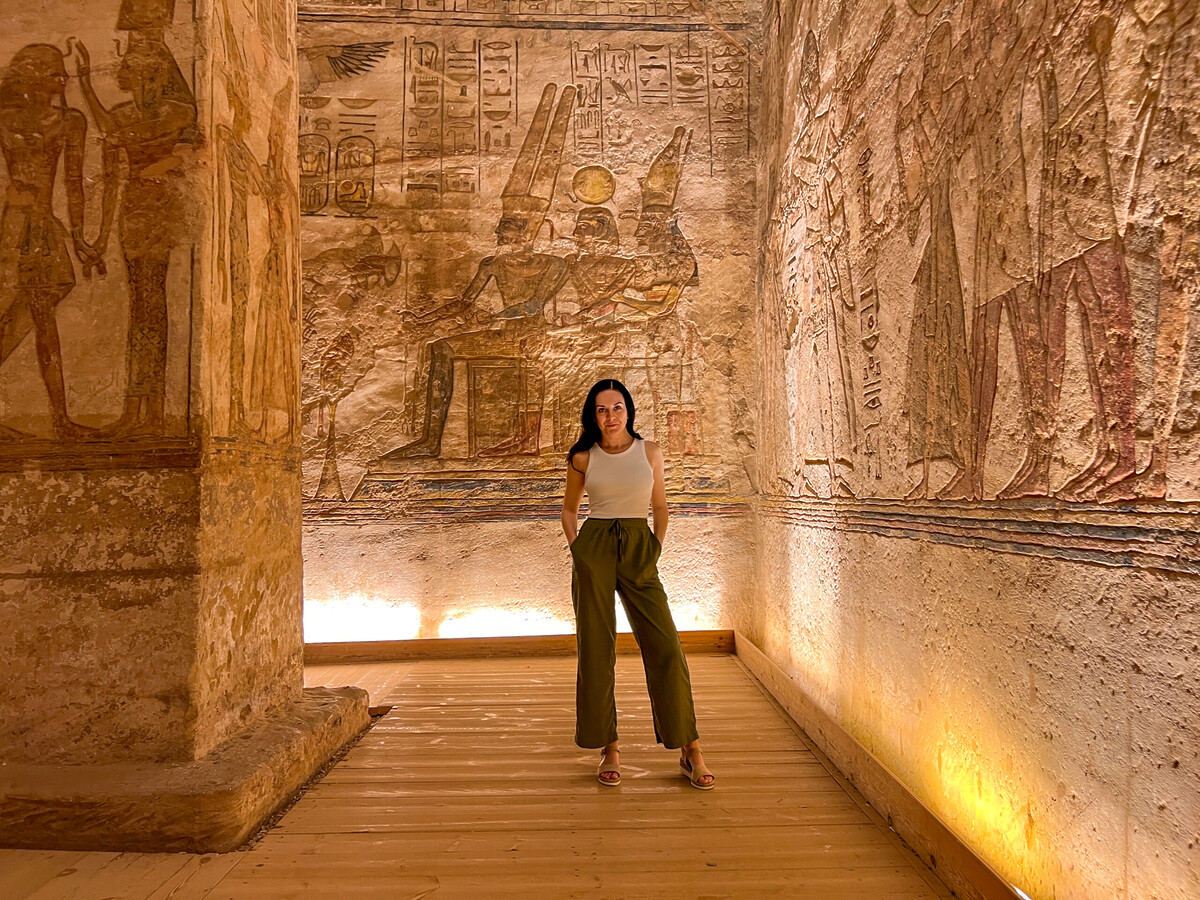
Just imagine having lunch while looking at the Pyramids of Giza, exploring the temples of Luxor and the beautifully decorated tombs of the Valley of the Kings, visiting the impressive Abu Simbel temples on the shores of Lake Nasser, or taking a relaxing boat trip on the Red Sea while admiring the coral reefs. All of this can be part of one unforgettable trip.
Ready to travel to Egypt?
Here are some quick recommendations on what to book for your trip:
Best places to stay:
- In Giza: Hyatt Regency Cairo West
- In Cairo: Le Méridien Cairo Airport
- In Abu Simbel: Azal Lagoons Resort Abu Simbel
- In Luxor: Steigenberger Resort Achti
- In Hurghada / El Gouna: CREEK Hotel & Residences El Gouna
Best activities:
Some travelers are lucky enough to visit Egypt again and again, but for most of us the time to explore the country is limited. That’s why, after a lot of planning and research, I created what I believe is the perfect 7-day Egypt itinerary, which I’m sharing in this guide.
I’ll show you how I explored Egypt’s most iconic places, where I stayed, where I ate, and how I traveled. I’ll also share practical tips for planning a similar trip on your own and what to be prepared for.
First, you’ll find a quick overview of the itinerary, followed by a step-by-step guide through the entire route.
My goal is to share practical travel tips from my own experience, rather than focusing too much on historical details.
At the end of the guide, you’ll also find answers to common questions about planning a trip to Egypt, so you can feel more confident organizing your own adventure.
Overview of this 7-day Egypt itinerary
Day 1: Grand Egyptian Museum and Cairo
Day 2: Pyramids of Giza and Cairo
Day 3: Abu Simbel
Day 4: Aswan and travel to Luxor
Day 5: Luxor temples and tombs
Day 6: Travel to Hurghada
Day 7: Hurghada and the Red Sea
Isn’t this too much for just one week in Egypt?
Yes, this Egypt itinerary is quite packed. But if you only have one week in Egypt and want to see the main highlights, this route actually works very well. That’s exactly how I explored Egypt on my own trip.
Is it worth traveling to Egypt on your own?
I have to admit that many people tried to talk me out of planning our Egypt trip on our own.
They warned that we wouldn’t be able to pass police checkpoints, might be stopped for hours at night, and that traveling freely without a guide was almost impossible because of supposed permits.
Looking back, none of this turned out to be true.
As a travel blogger, I couldn’t understand why I shouldn’t travel independently to a country that millions of tourists visit every year.
So despite all the warnings, my husband and I decided to organize this 7-day Egypt trip ourselves, and we didn’t regret it for a second.
That’s also why I encourage you not to give up on your own travel style. Don’t let scary stories stop you from exploring the world freely!
What should first-time visitors to Egypt be prepared for?
That said, I have to be honest: planning a trip to Egypt on your own is not always easy, and there are several things you should prepare for in advance.
Airport procedures, transportation, food, hygiene, crowds, and tourist scams can all affect your experience.
I’ll explain these in more detail later, but here are some important things to know:
- You need a visa to enter Egypt, which currently costs 30 USD. You’ll also need to fill out forms when entering and leaving the country, so bring a pen and be prepared for slow airport procedures.
- Tap water is not safe to drink, and many places can be dusty or dirty. Because of hygiene issues, many travelers get sick, so it’s safer to choose reliable restaurants and 4–5 star hotels.
- Egypt is often thought to be cheap, but in reality it can be quite expensive, especially when you add transportation, entrance fees, and tips.
- Carry cash, as tipping is expected in many situations.
- Travel insurance is highly recommended in case of medical issues or theft.
- Egyptians are generally kind and welcoming, but tourists are sometimes seen as easy sources of money.
- Even at 20–25°C, the sun can be very strong, so use sunscreen and wear a hat.
- Many places remain open during Ramadan, but opening hours may be shorter. We traveled during this time, but I wouldn’t necessarily recommend it.
Detailed 7-day Egypt itinerary: How I spent one week in Egypt
Now let’s take a look at how I spent 7 days in Egypt, while still managing to explore the country’s main highlights and see many of its most iconic sights and experiences in just one week.
Yes, this itinerary moves at a fairly fast pace. If you prefer a slower trip, you can easily extend it to 9–10 days or even two weeks, but it’s absolutely possible to complete it in 7 days as well.
So here is the detailed 7-day Egypt itinerary:
Day 1: The Grand Egyptian Museum
After arriving in Cairo or Giza, head straight to one of the city’s newest and most famous museums, the Grand Egyptian Museum.
This museum only opened in 2025, but thanks to its special exhibitions and huge collection of treasures, it quickly became one of the most visited places in Egypt.
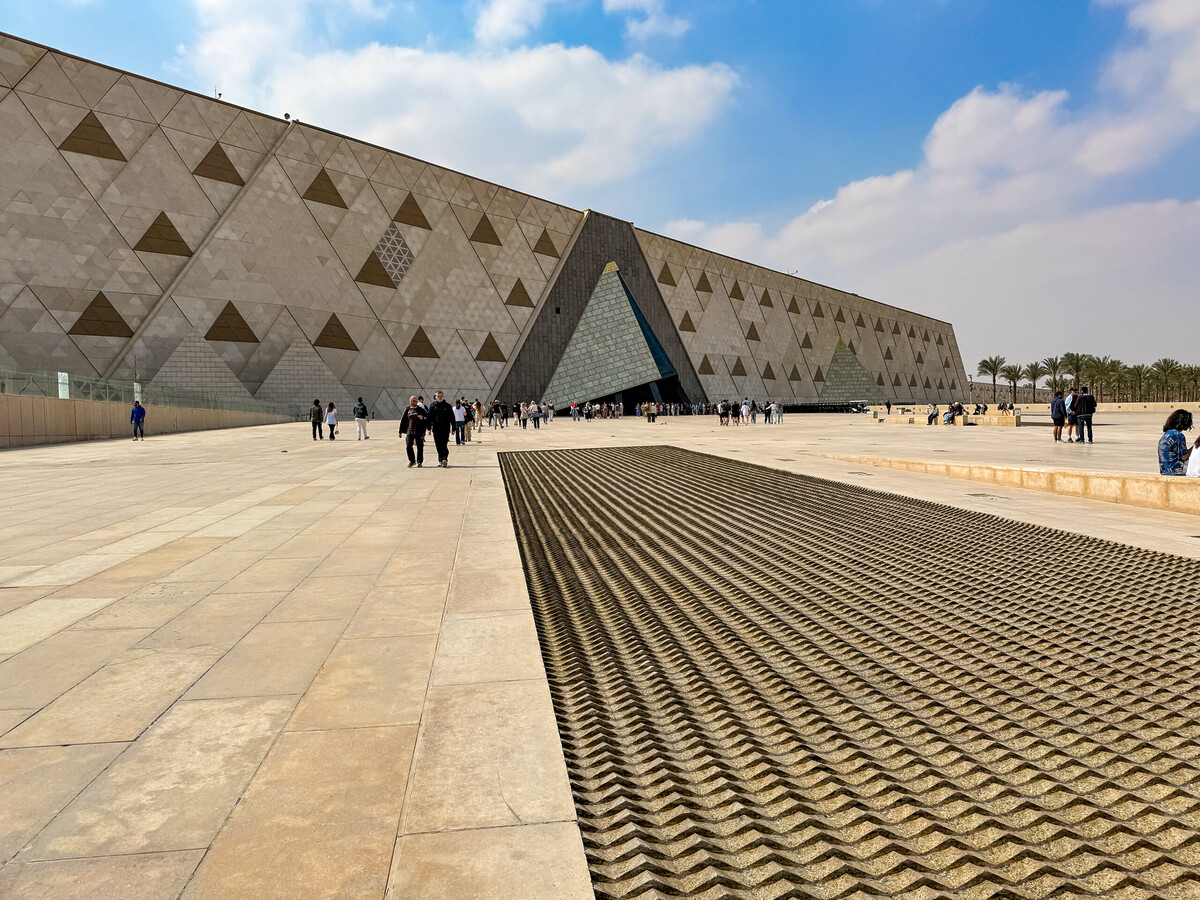
You can buy your tickets online or on site. After the security check and ticket control, you’ll find yourself in a huge open area, and after passing the obelisk, you’ll see the impressive entrance.
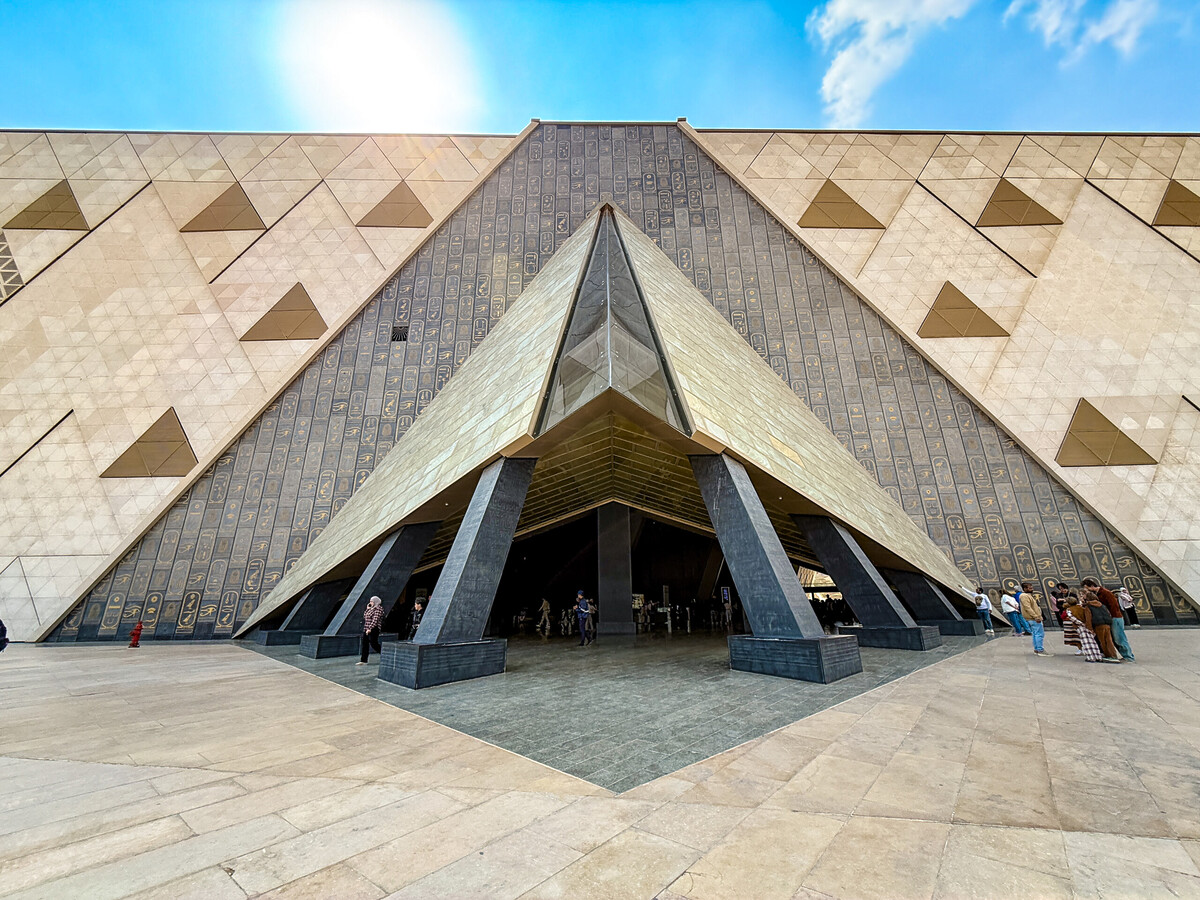
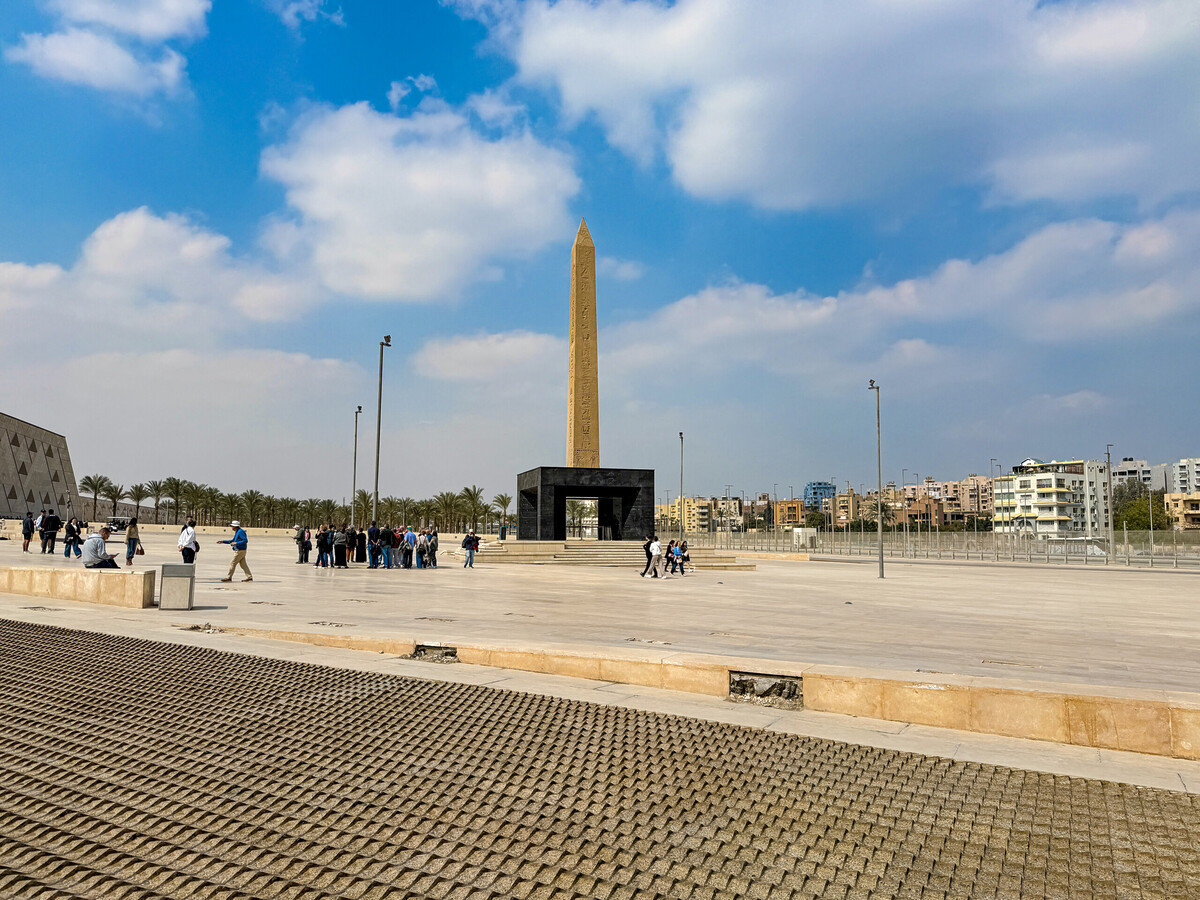
The building is massive inside. Right at the entrance, you are welcomed by a huge Ramses II statue, and as you continue, you’ll find the souvenir shop, restaurants, and cafés.
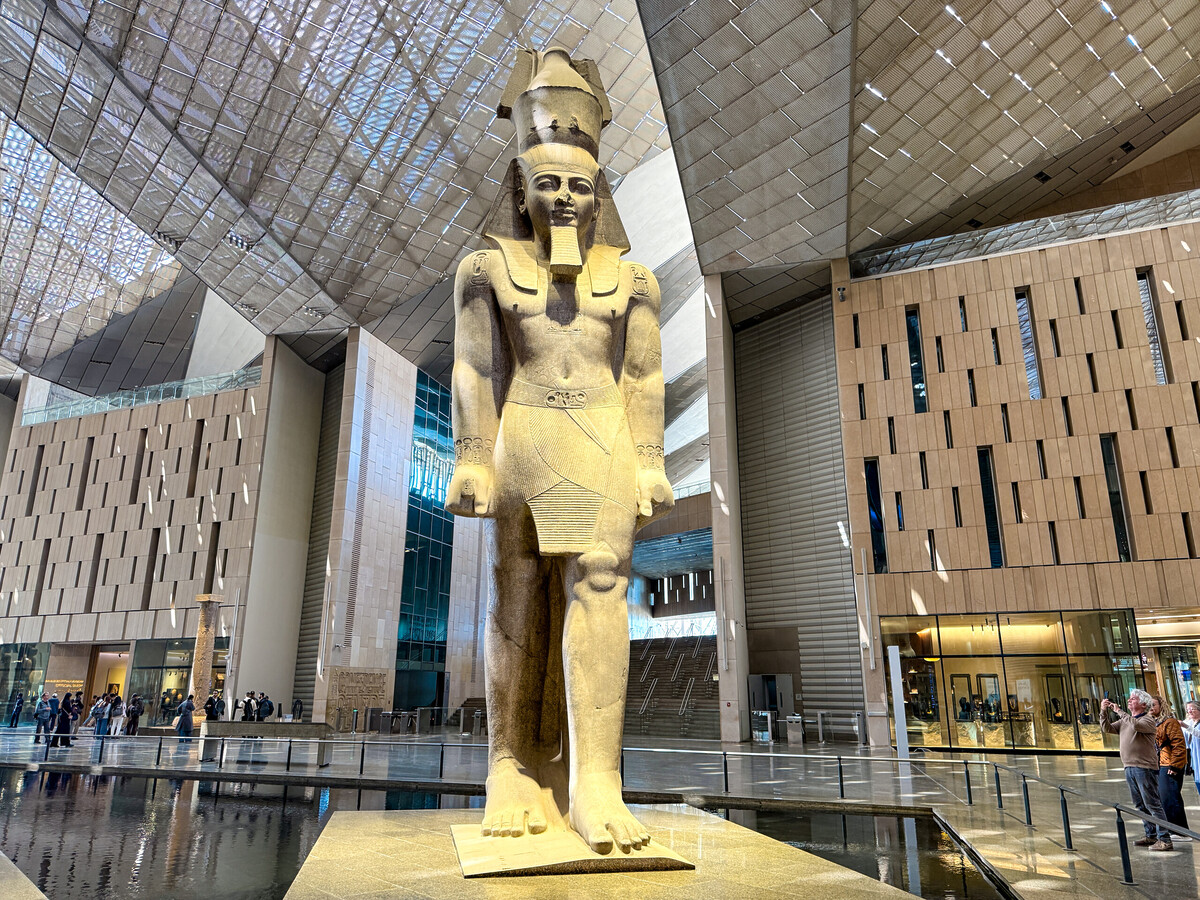
As you go up, you’ll find stairs where you can either walk up or use the moving walkway that takes you upward. Along the way, you can admire the huge stone statues and sarcophagi displayed along the stairs.
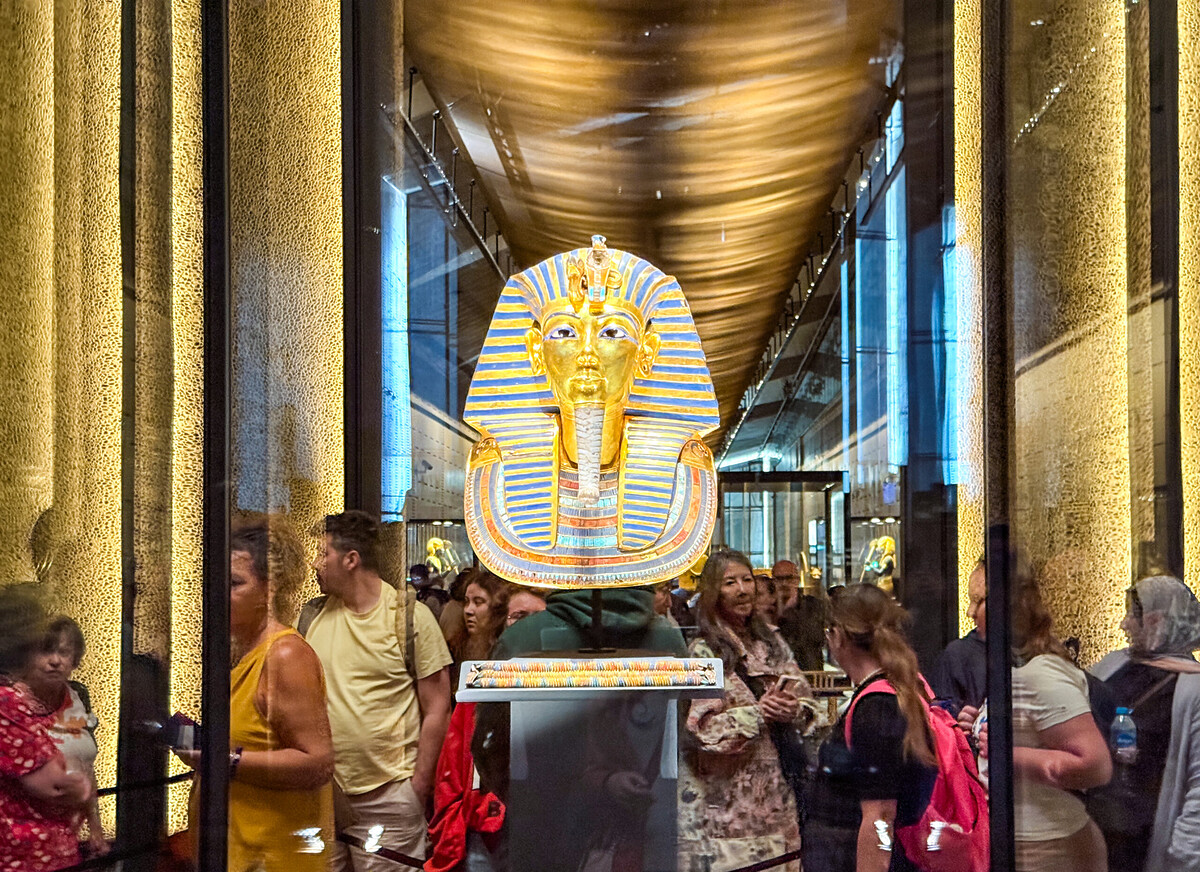
On the upper level, you’ll find the entrance to the exhibitions, where there are 12 halls with exhibitions from different historical periods, as well as the huge Tutankhamun exhibition.
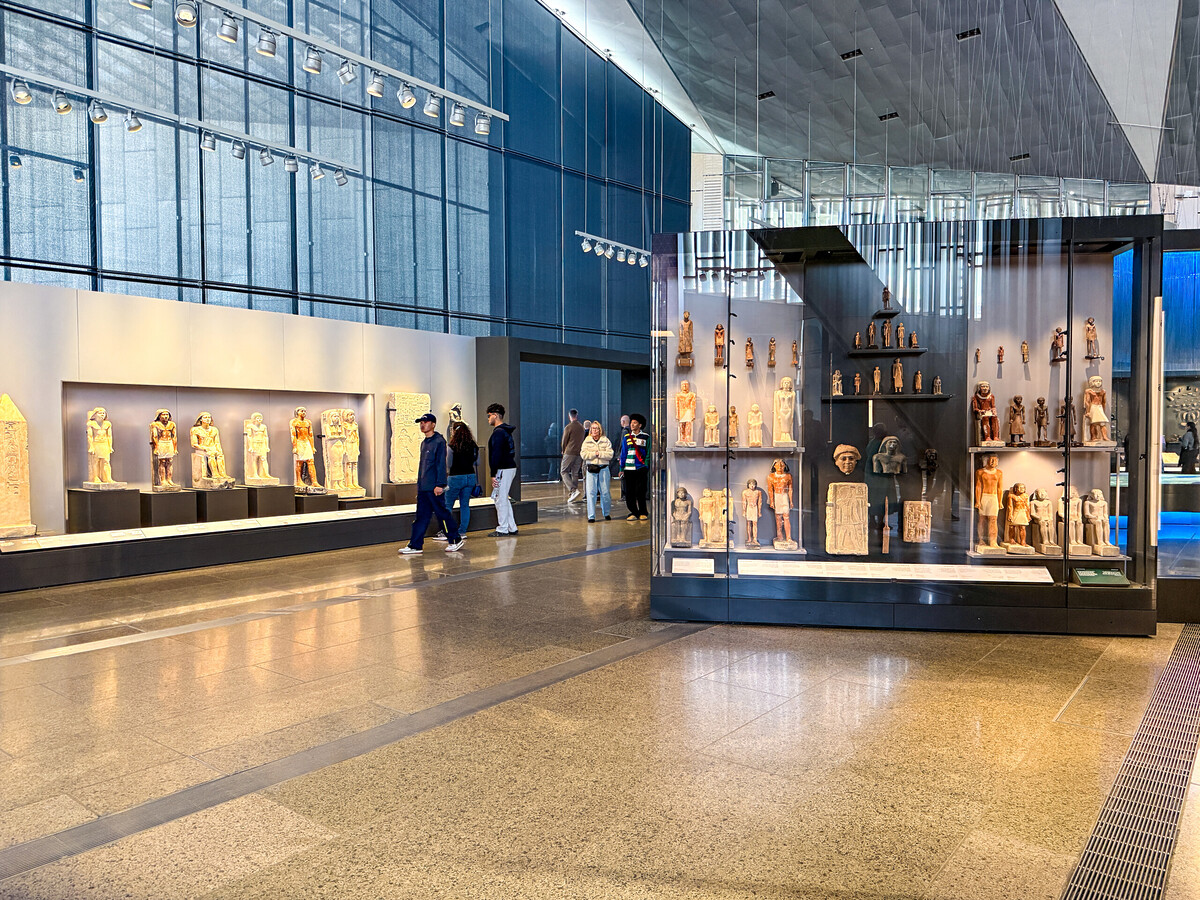
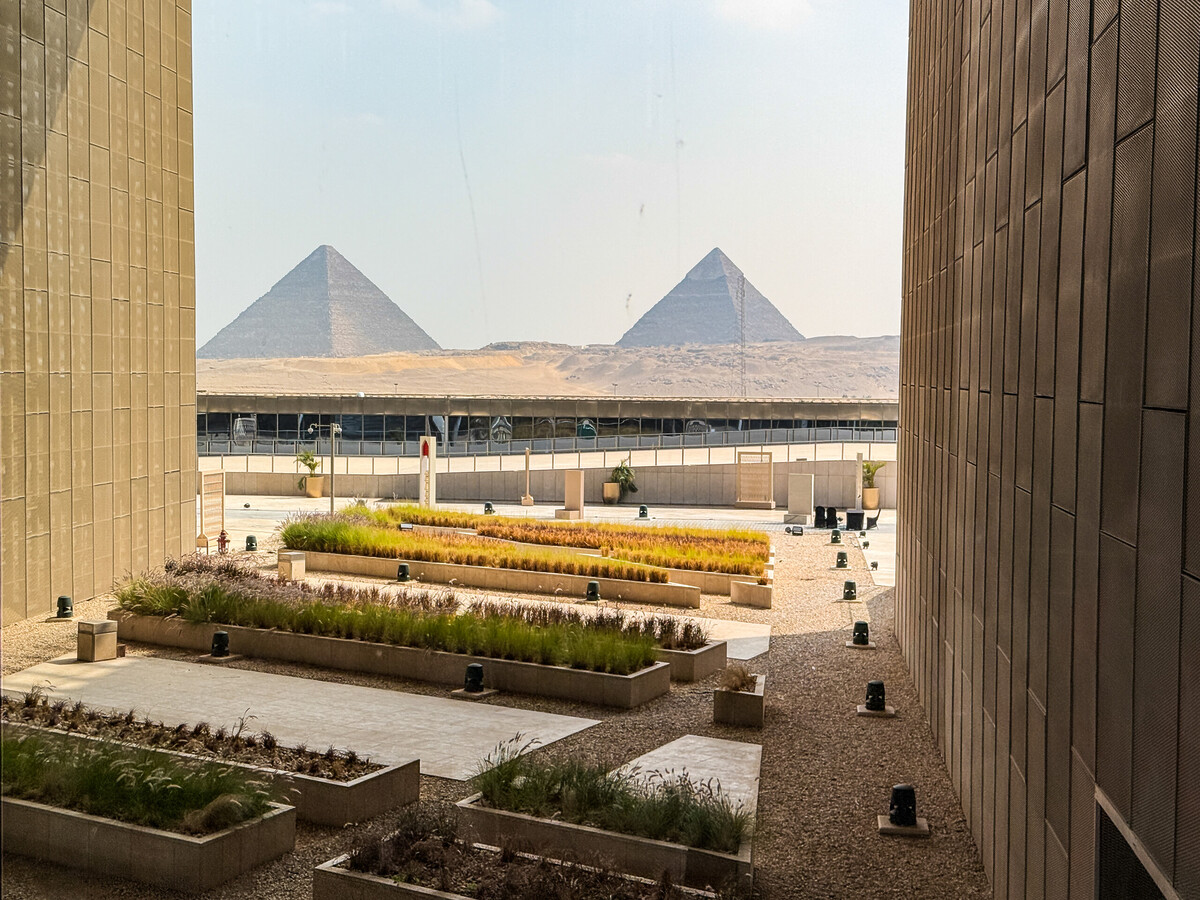
There is also a resting area upstairs with a view of the Pyramids of Giza.
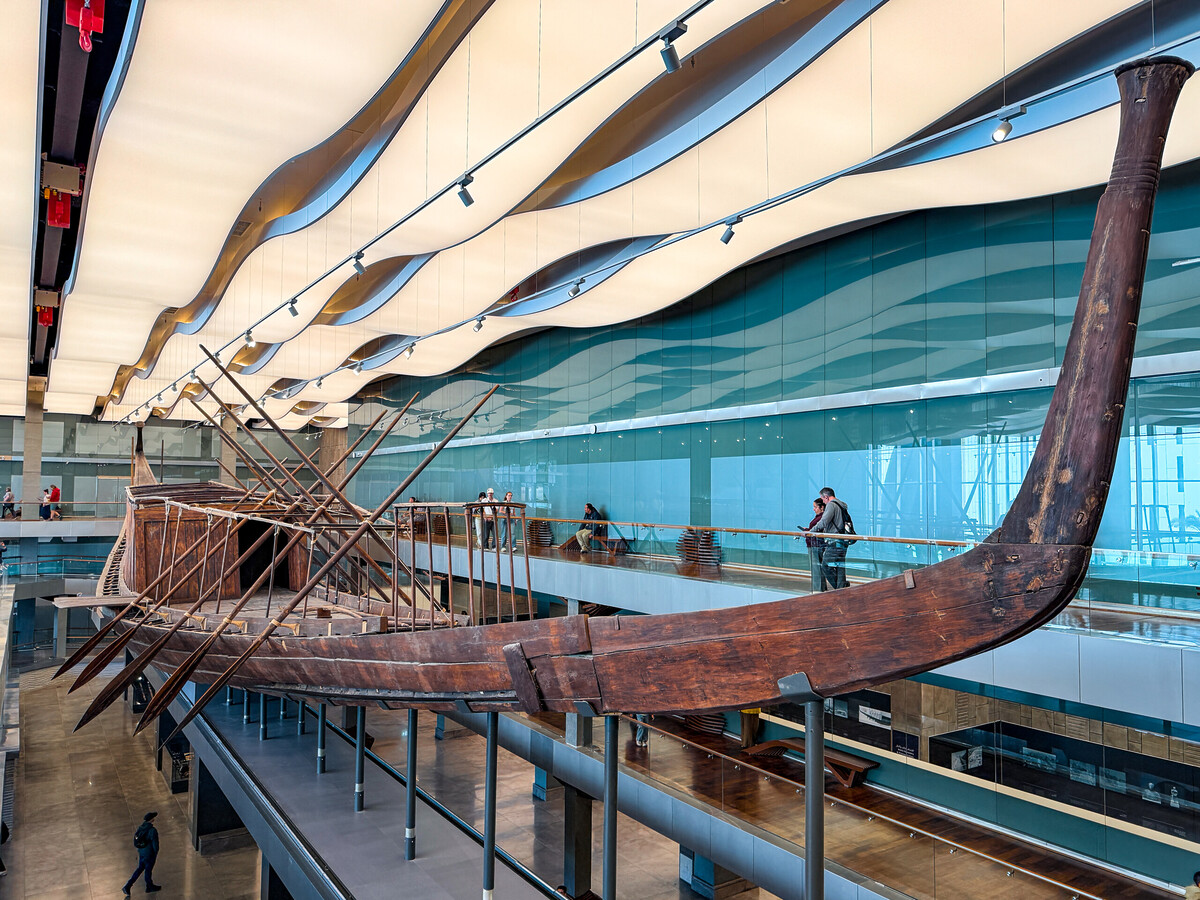
After the long walk, it’s worth sitting down in one of the restaurants to rest a little, then also visiting the boat exhibition in the other building.
The place is huge. We visited it in about 3–4 hours, but in a fairly rushed way. If you are really interested in history, you may easily need half a day here.
Other attractions in Giza
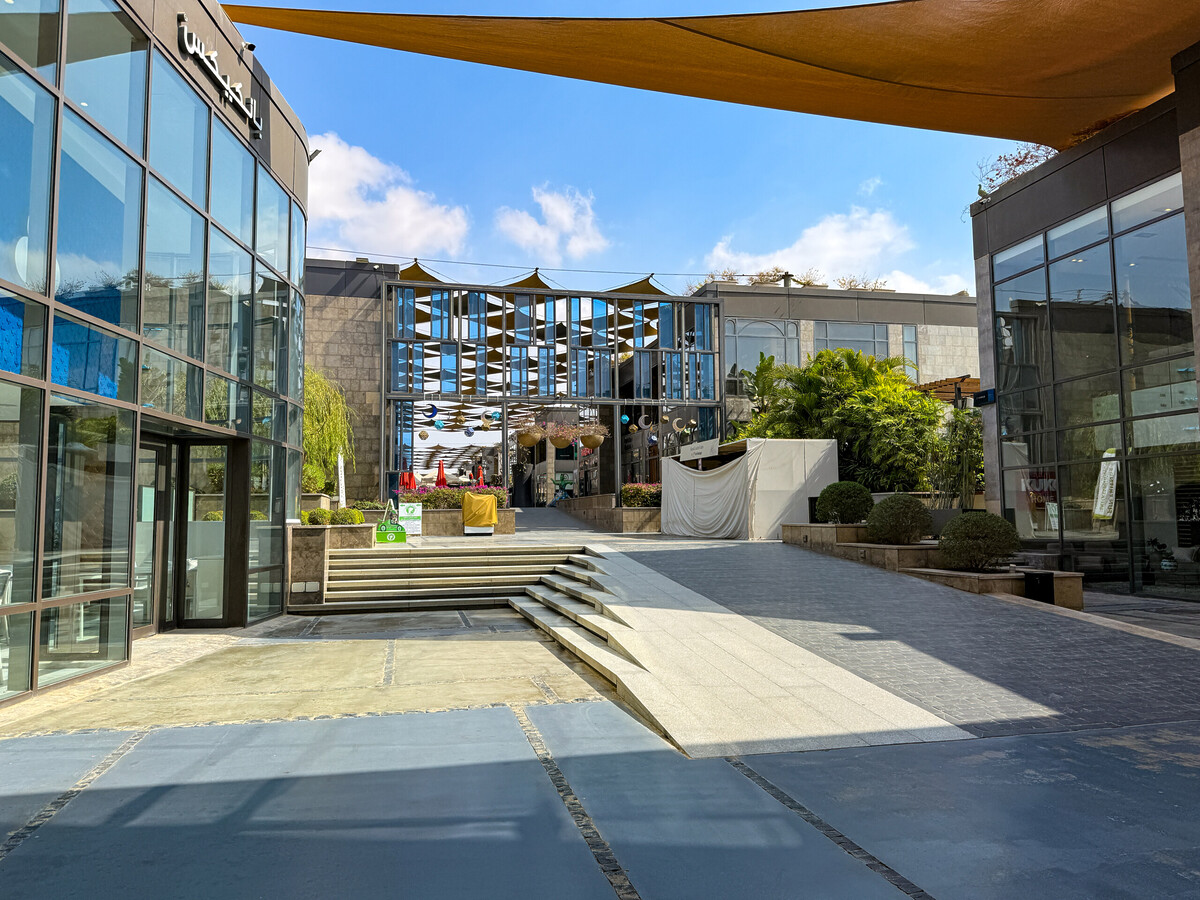
If you still have time after the museum, go shopping in Giza, for example at the Walk of Cairo, which is a modern and beautiful part of the area.
You’ll also find the Museum of Illusions Cairo there, which can be a great evening activity.
Dinner in a rooftop restaurant
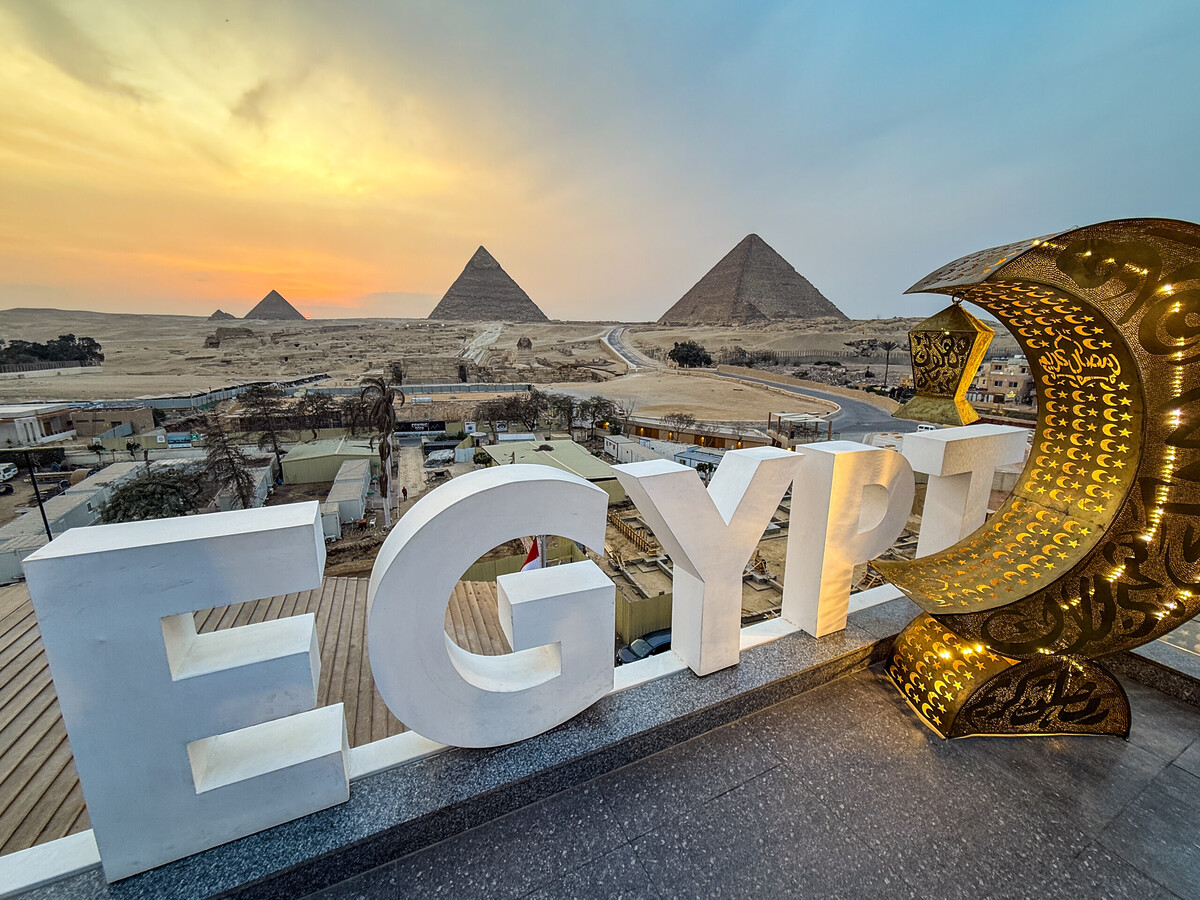
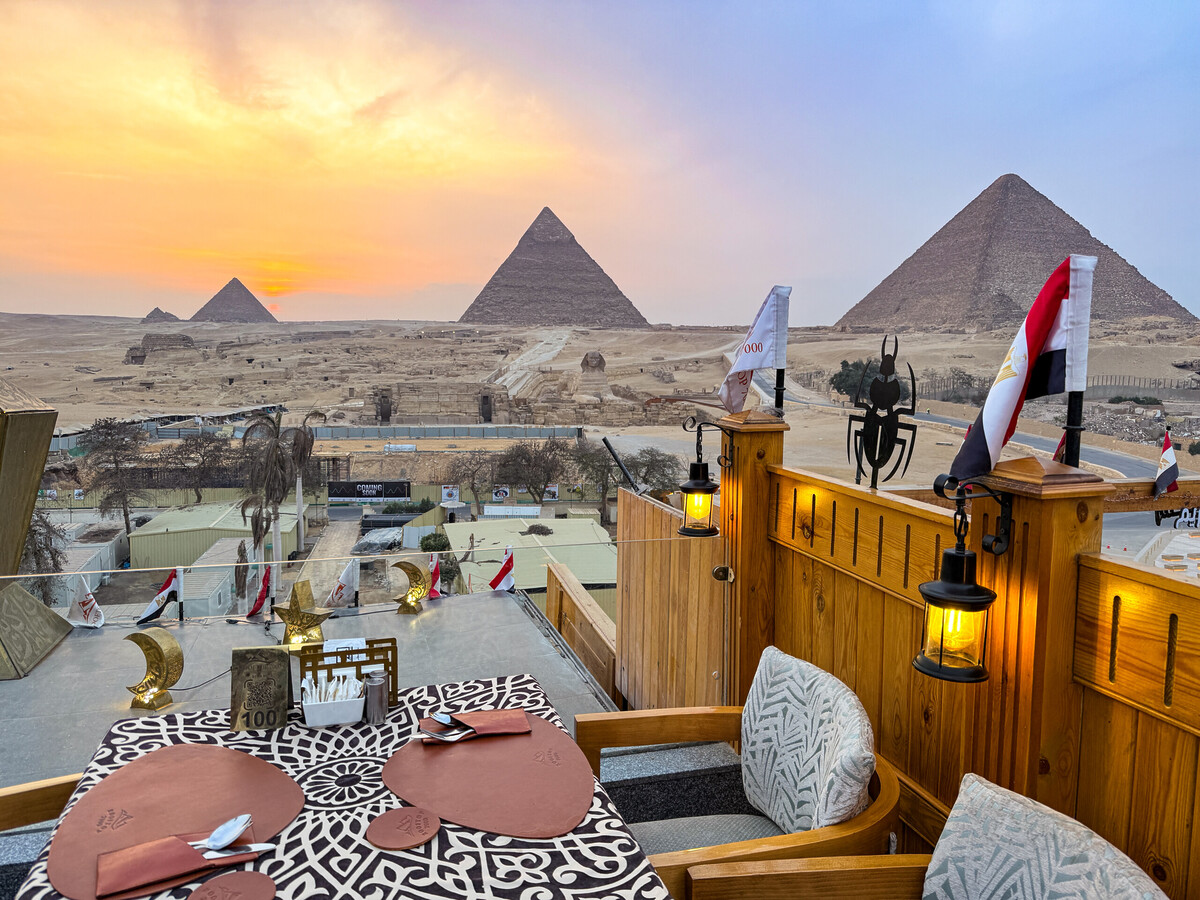
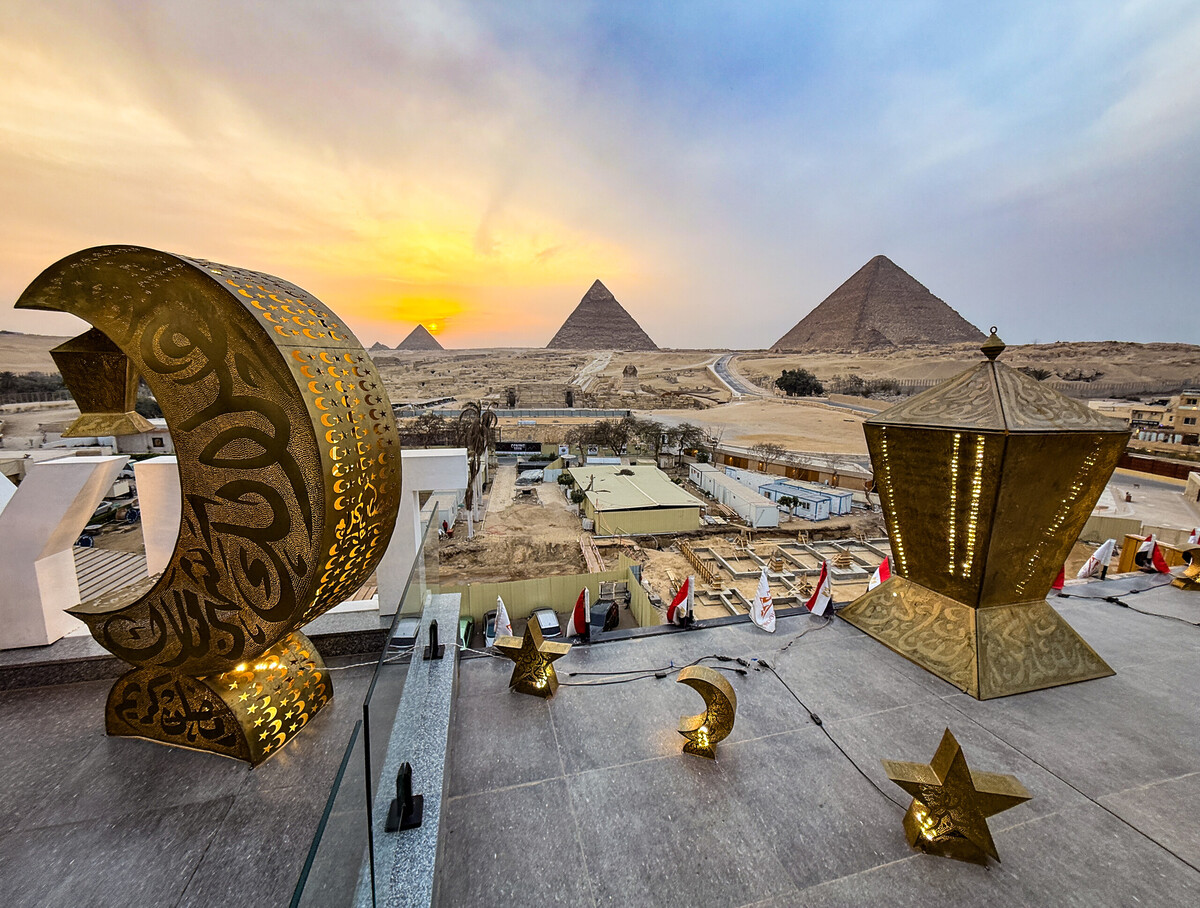
If you want to relax in the evening, I recommend the Rooftop 7000 restaurant in Giza, which is one of the best rooftop places in the area, with excellent Egyptian food and an amazing view of the Pyramids of Giza and the Sphinx.
It’s best to time your dinner for sunset, because the sunsets from here are simply beautiful.
In the evening, get some rest after the tiring day.
Where to stay in Giza
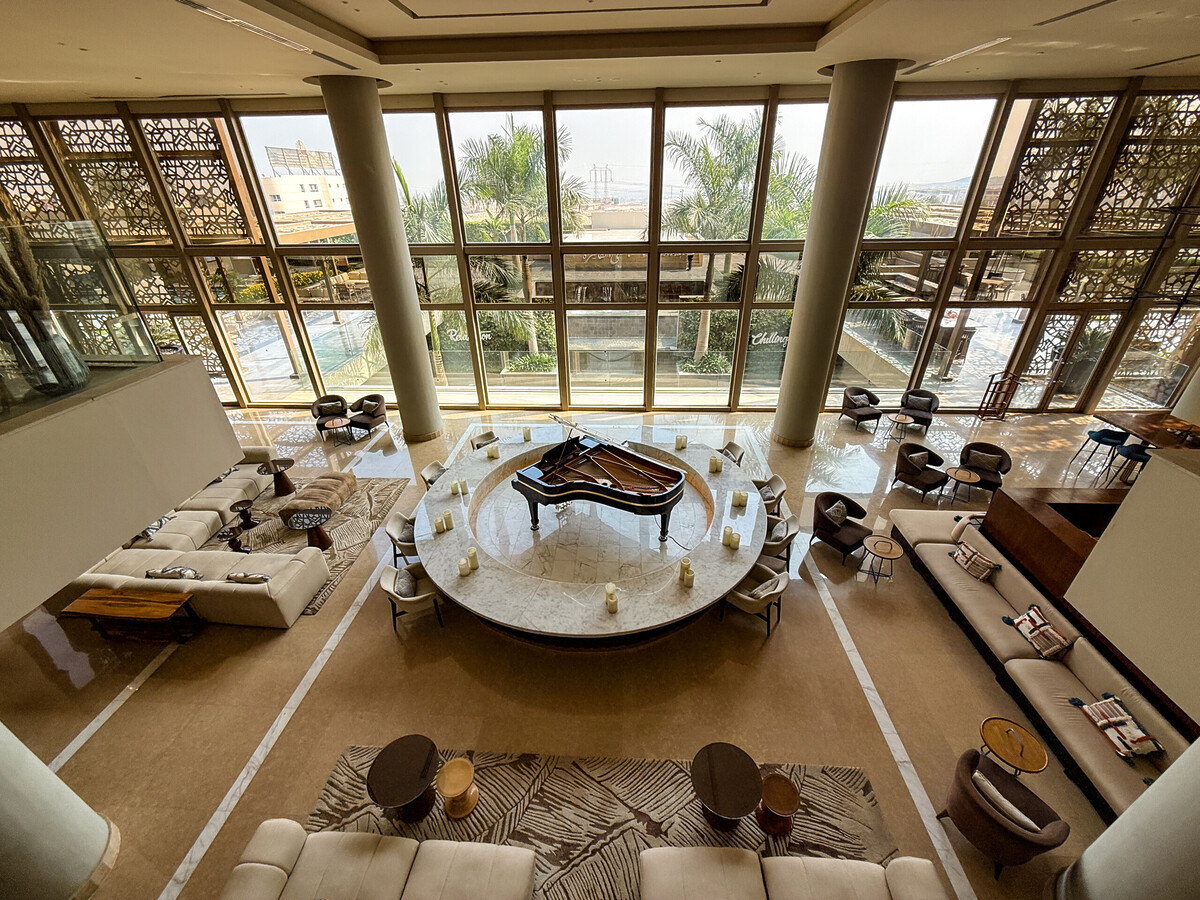
We chose the Hyatt Regency Cairo West, where parking was also available.
It’s a great 5-star hotel with an excellent breakfast, and it gives you a very good base for exploring the sights of Giza.
Day 2: The Pyramids of Giza and Cairo highlights
I planned the Pyramids of Giza for the second day, which is a bit more tiring.
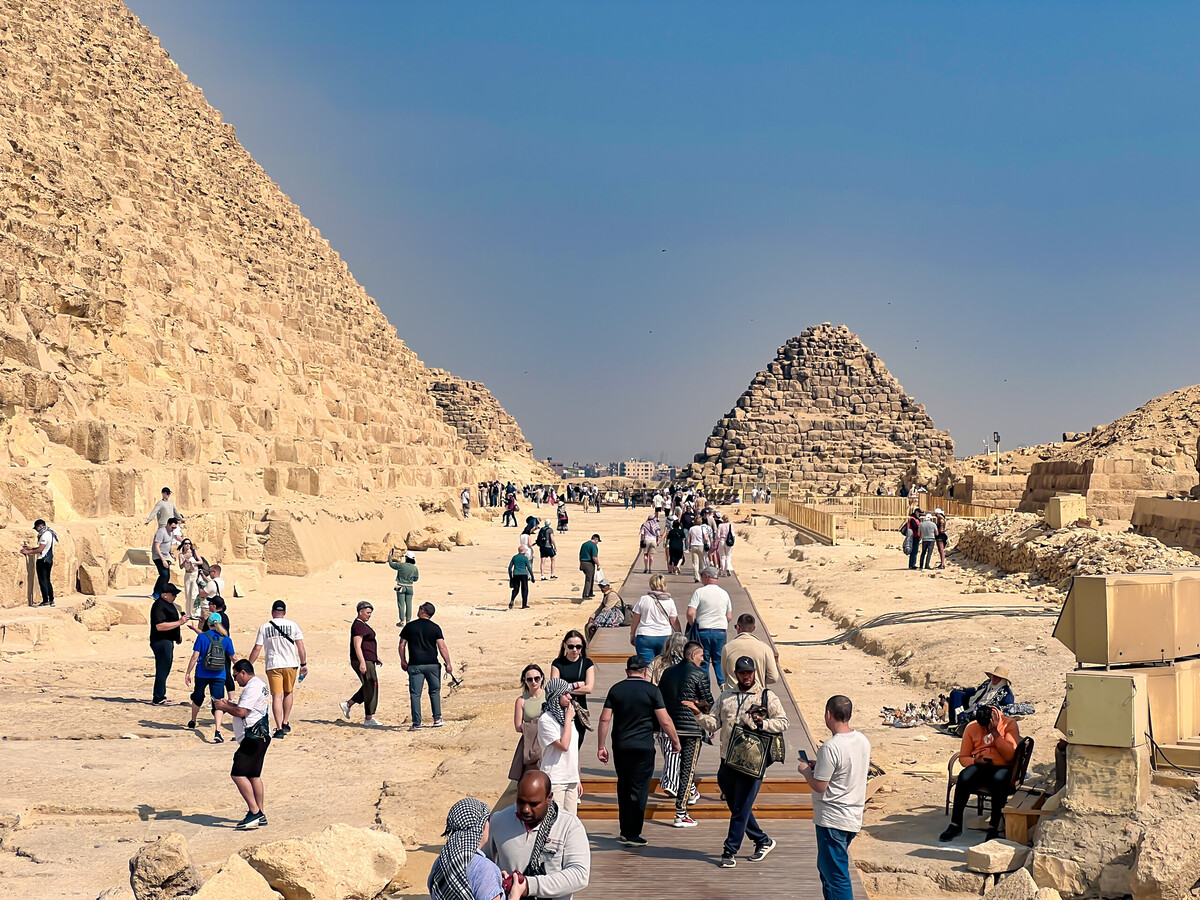
Arrive as early as you can and be prepared for everything. There may already be a security check when entering the parking area, then another one after parking, and then after buying your ticket, which you can do on site, you can take buses to the pyramids.
At the front of the buses, the routes are marked with colors, but the staff on site are also happy to help with information.
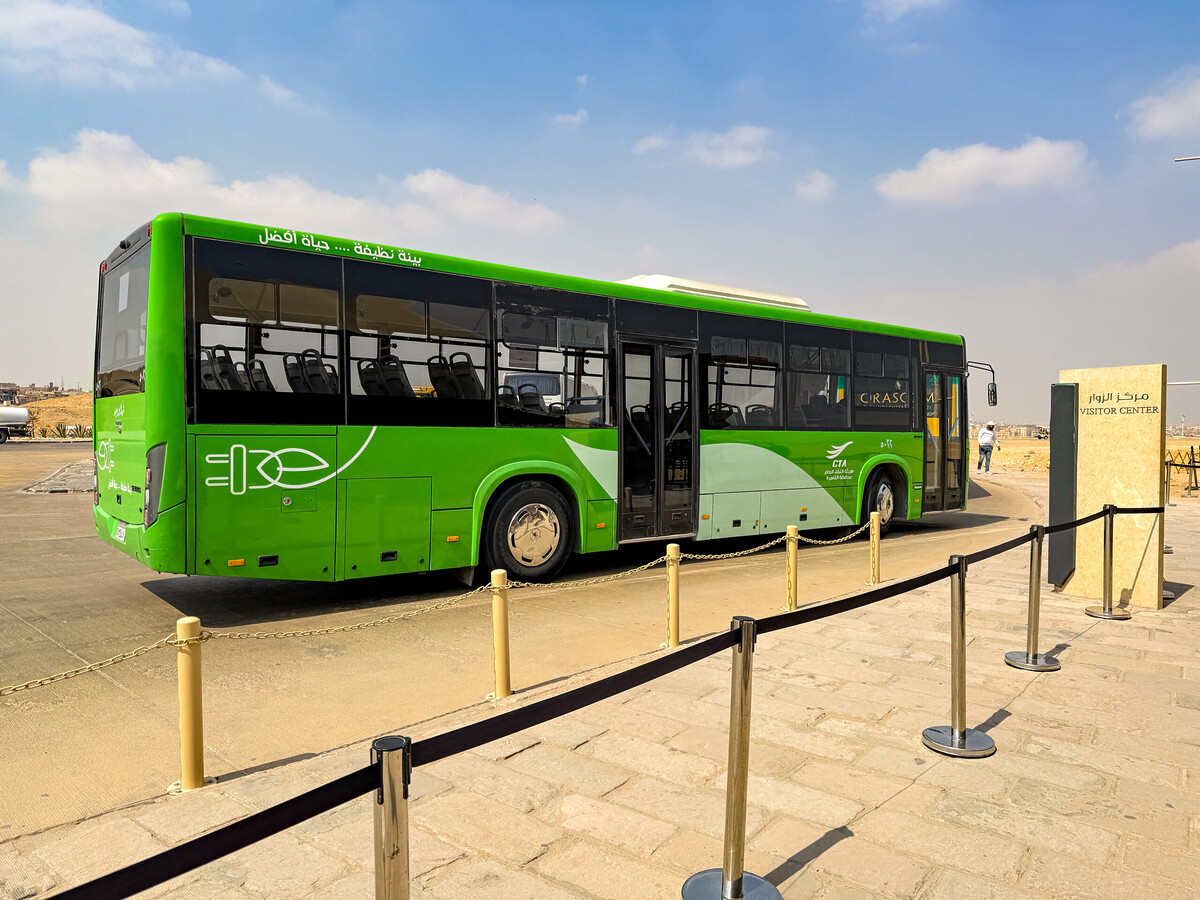
There are several bus stops along the way.
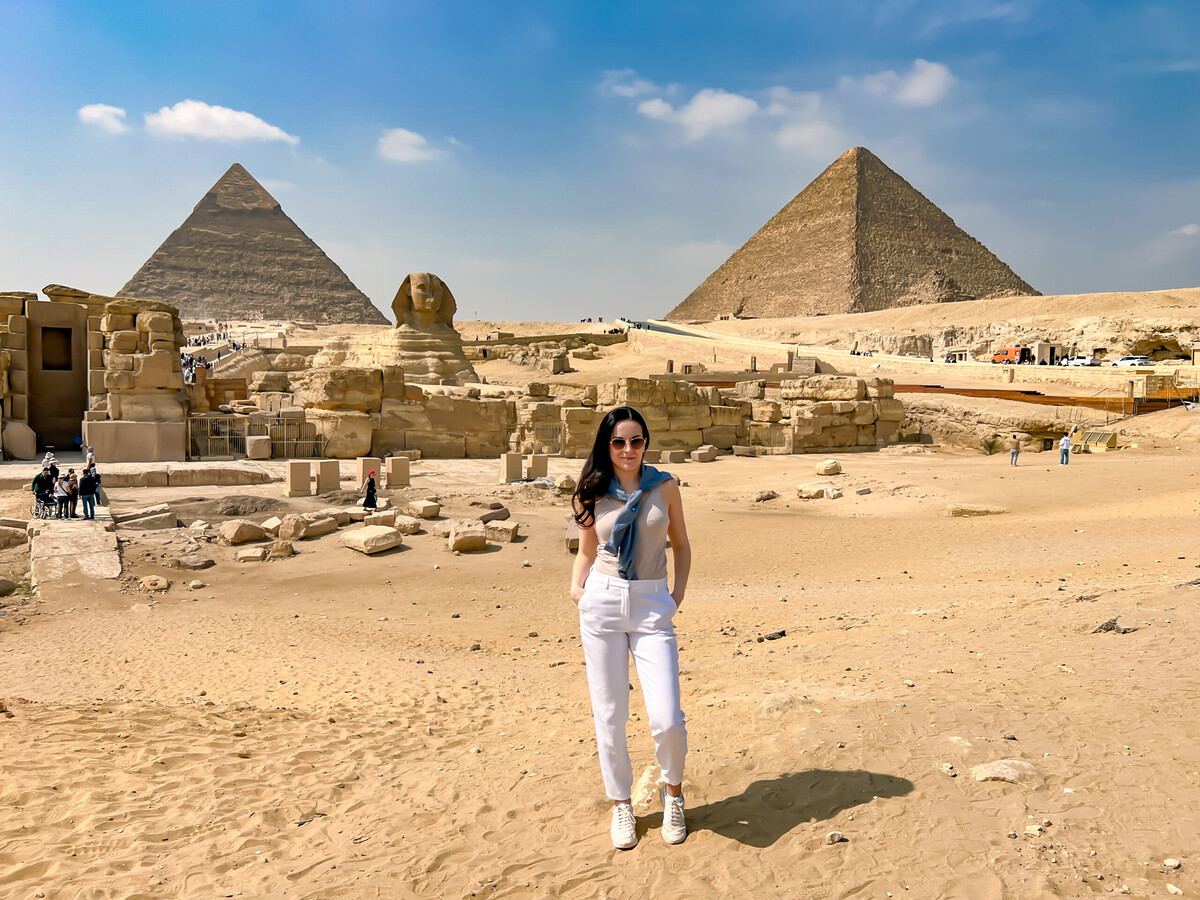
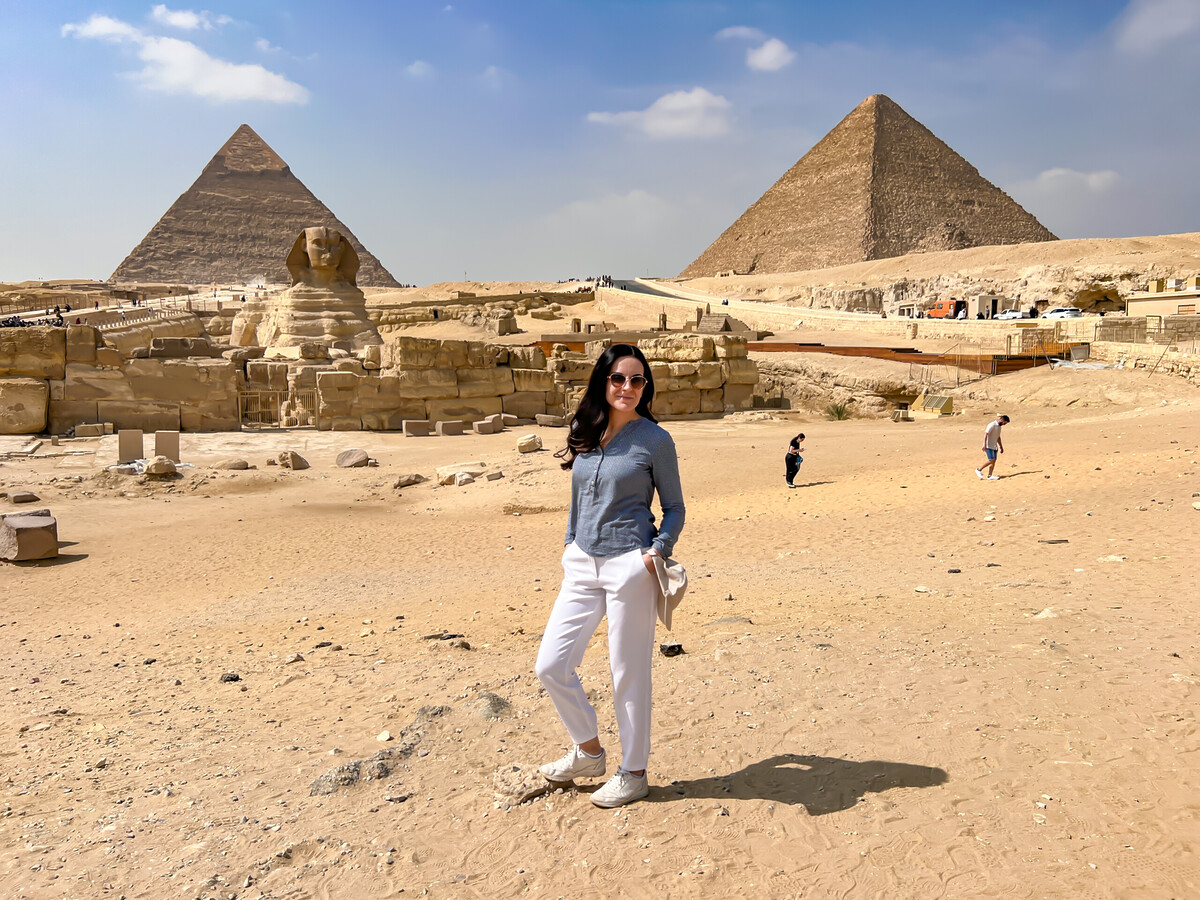
We first took the bus to the Khafre Pyramid, then from there to the Sphinx, which also required some walking even after the bus ride, because the bus takes you to a parking area where vendors immediately start approaching you.
By the time you reach the Sphinx, you have to get past many souvenir sellers and camel ride vendors.
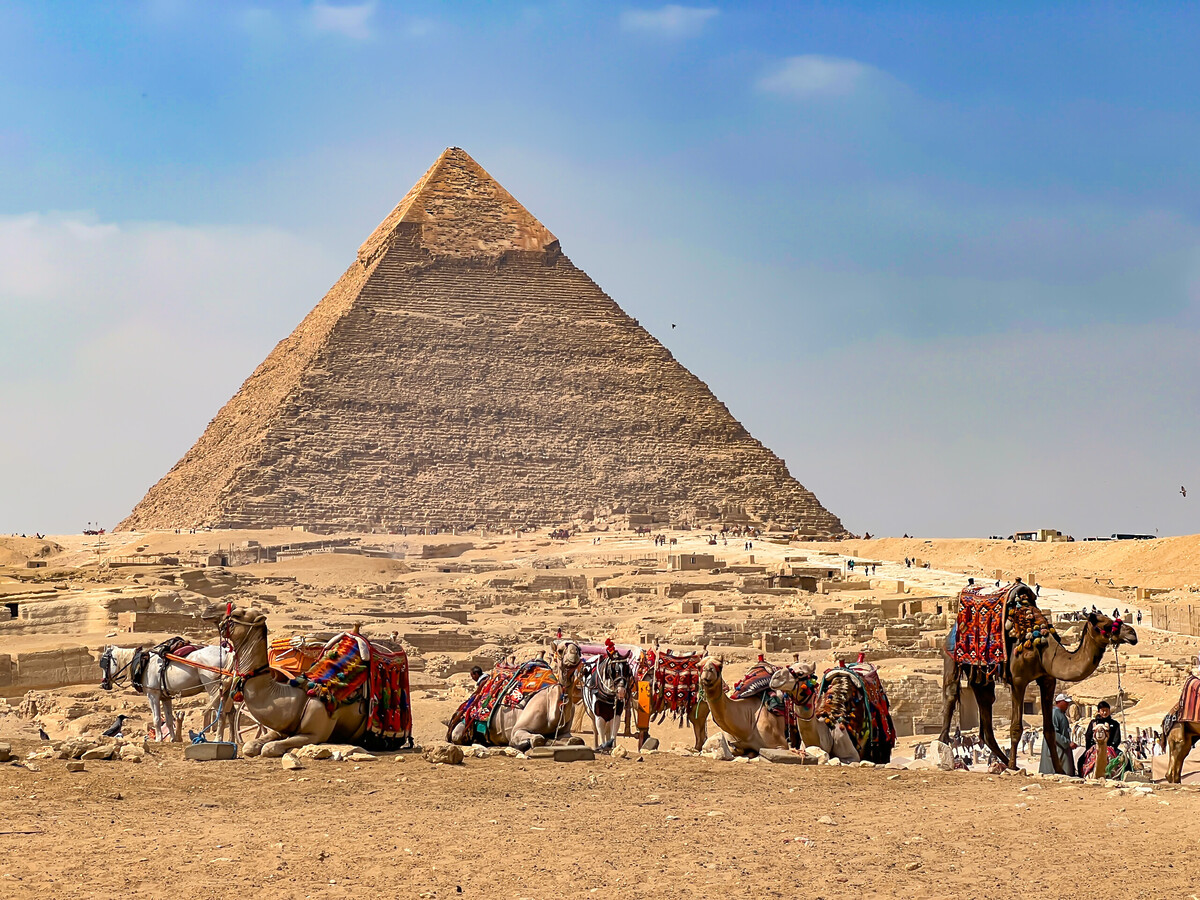
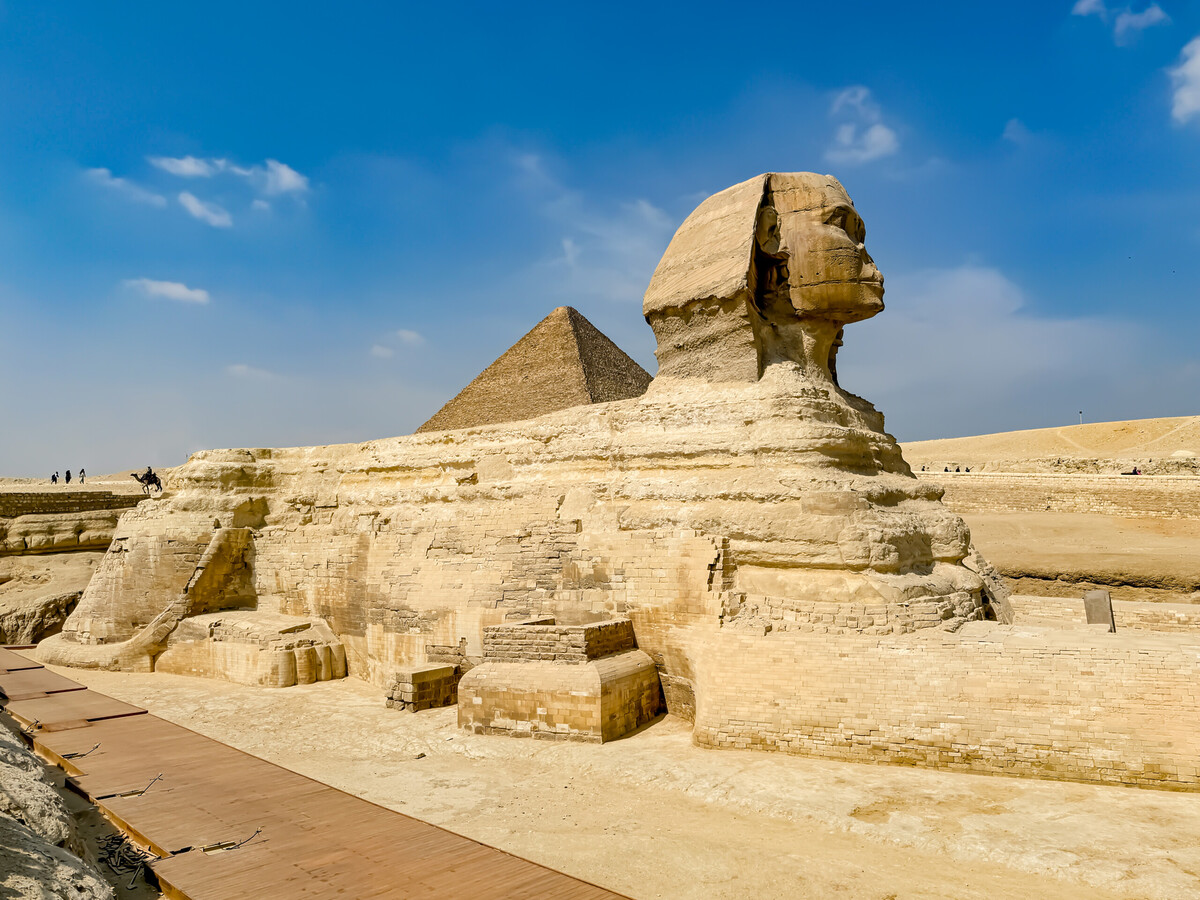
If you feel like it, you can pay for a camel ride or buy souvenirs there. You can sometimes find them at very good prices.
Then on the way back, it’s the same again.
After that, we went to the Khufu Pyramid, which we also walked around on foot, and we also went inside it. This pyramid has the most popular interior.
Although walking inside a pyramid was a once-in-a-lifetime experience, I was disappointed that compared to the expensive ticket price, it was so difficult to get in and in the end you only reach an empty chamber.
Even though we only spent about 20 minutes inside the pyramid, I was completely soaked in sweat. It was extremely hot inside and the air was bad, and afterward I had muscle soreness for days because of the physically demanding climb.
It was a one-time experience that I do recommend, but I personally promised myself I would not regularly go inside pyramids again.
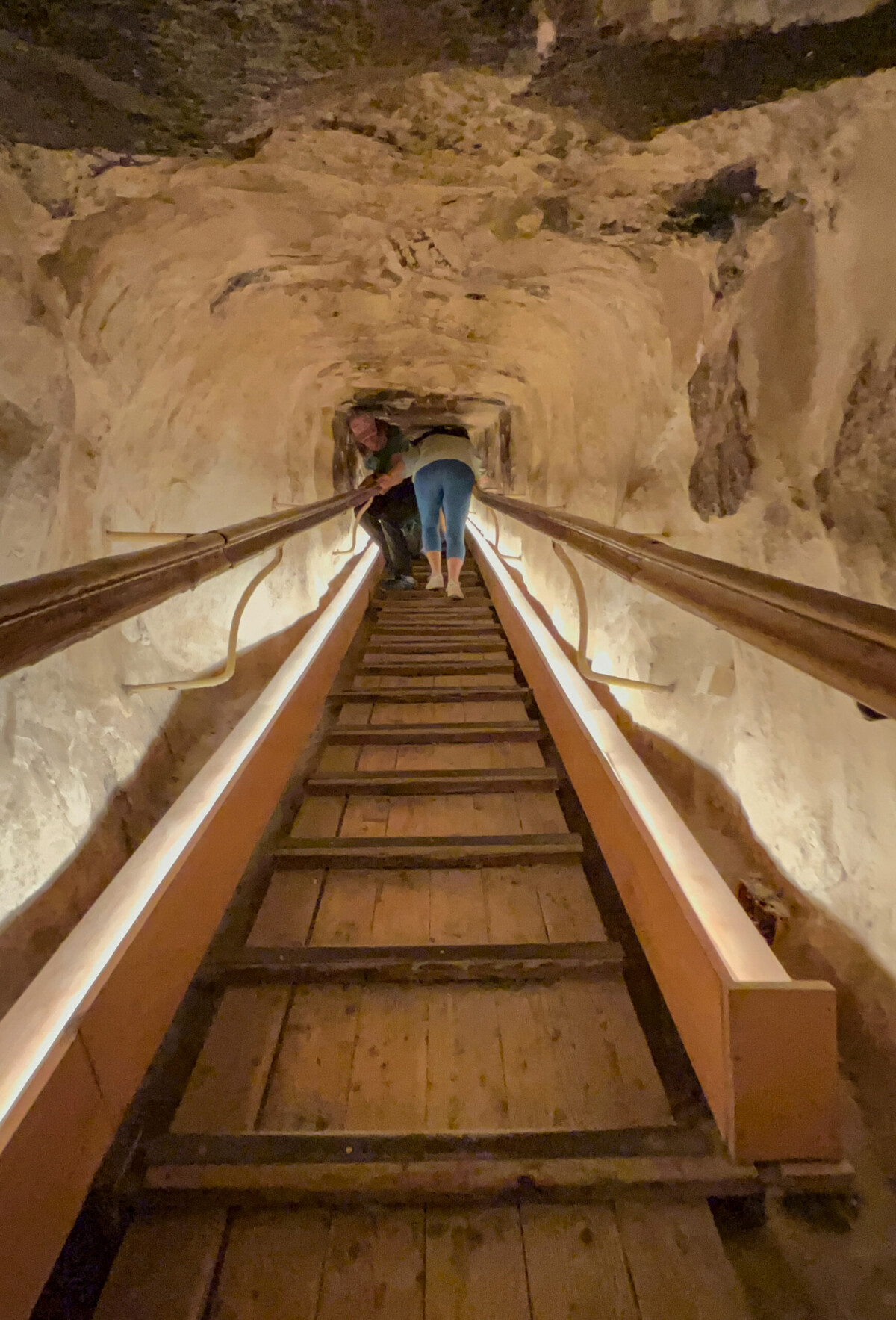
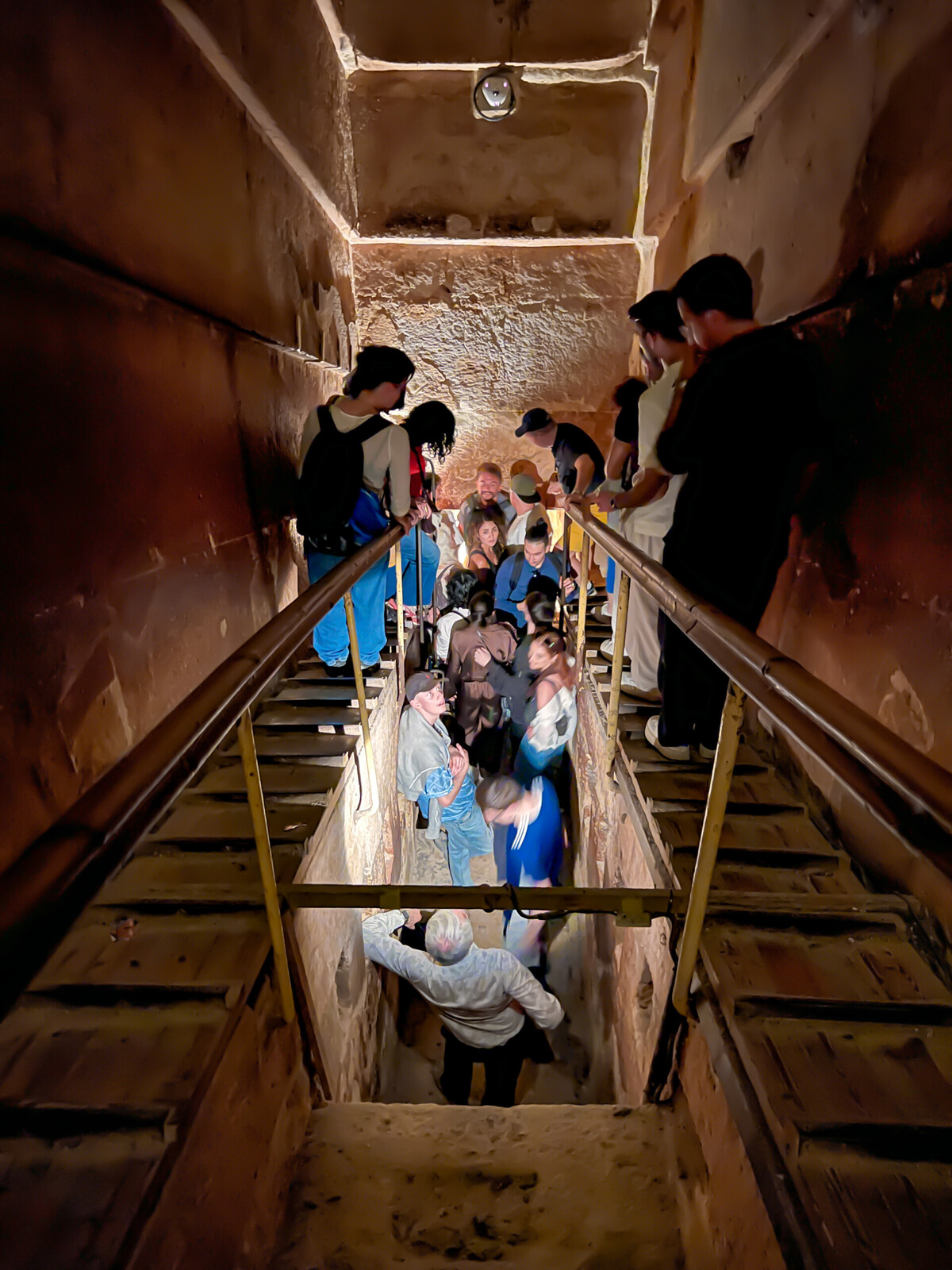
Meanwhile, you can also walk around the pyramid itself and admire how enormous the structure really is.
At the end of your visit, go for lunch. I really liked the 9 Pyramids Lounge, where we also ate.
You can enjoy an excellent view of the pyramids from the terrace, and the food is delicious. Just pay attention to the opening hours, but otherwise it’s one of the best places.
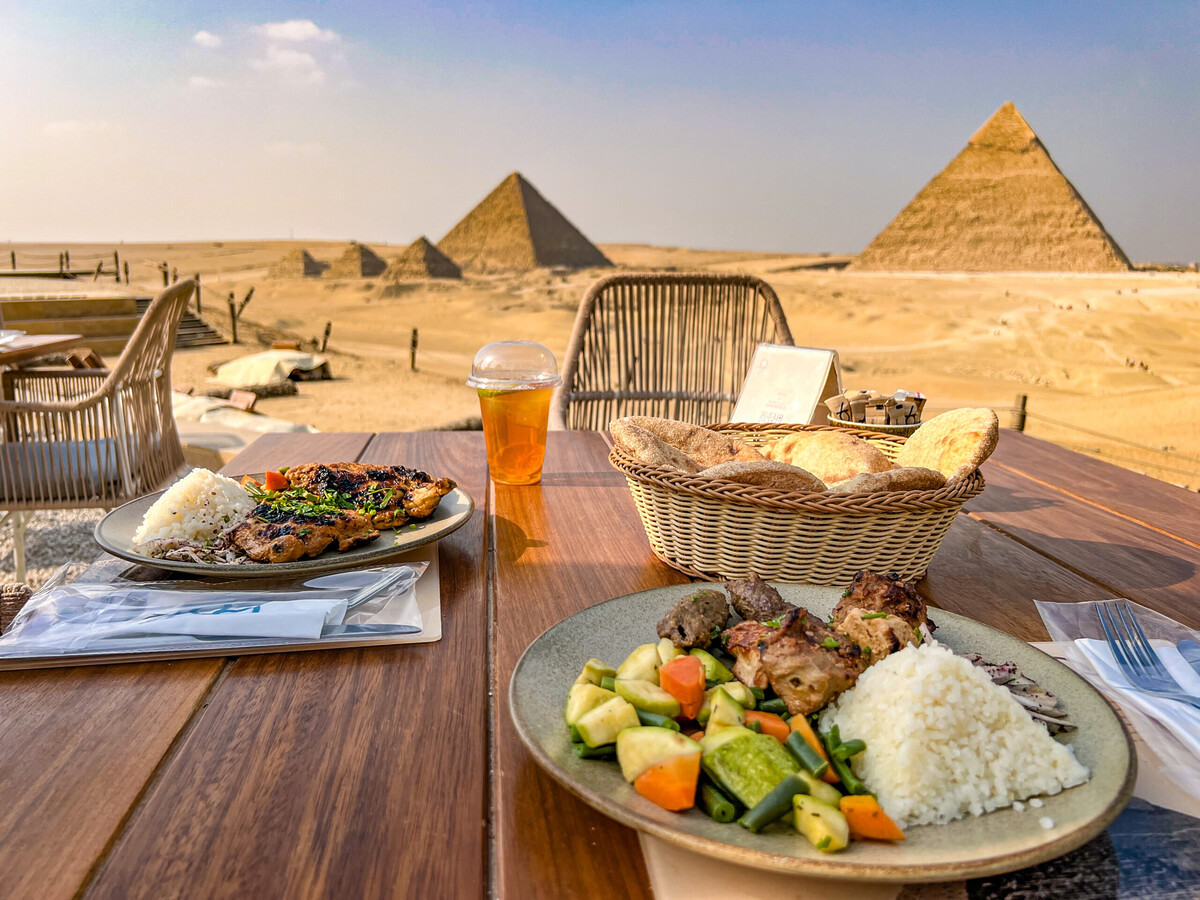
To get there, you need to take another bus, so you have to go back to the entrance area first and then take a different bus that goes directly there.
There are several more bus stops along the route, but in my opinion it’s not really worth stopping at more places unless you want to go inside another pyramid too.
Other attractions in Cairo
In the afternoon, if you finish at the pyramids early enough, you may still have time to see other sights in Cairo, such as the Pharaonic Village or the Cairo Tower, or even go south of the city to see other pyramids, for example the Saqqara Pyramid.
I should warn you that the other pyramids are not easy to reach, so I recommend hiring a local guide if you want to visit these areas.
Dinner with the best view
In the evening, we had dinner in the restaurant of a luxury hotel, which I also recommend to you if you can afford it.
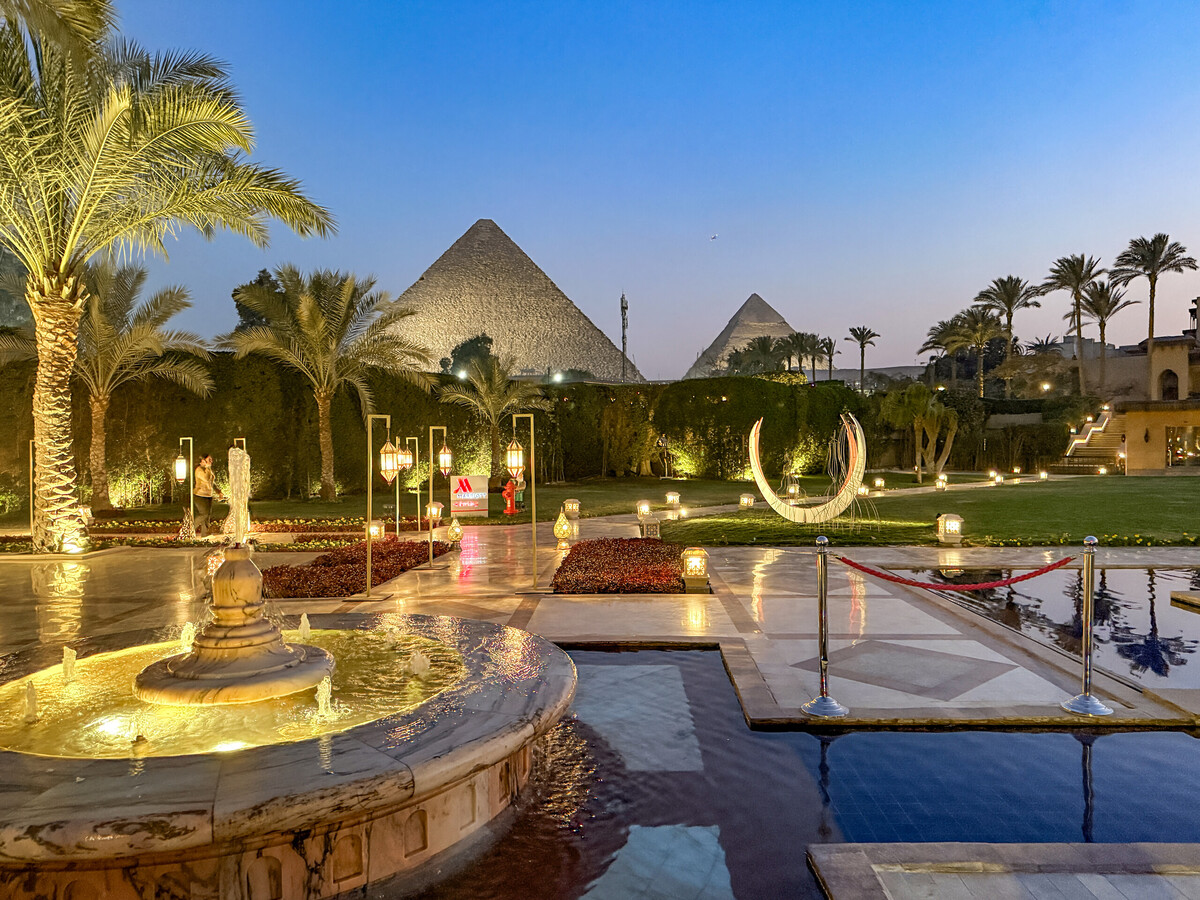
This was the 139 Pavilion restaurant at Marriott Mena House, Cairo, which has one of the most breathtaking views of the pyramids.
The dinner here was also fantastic, by the pool, in the beautiful surroundings, with that incredible backdrop.
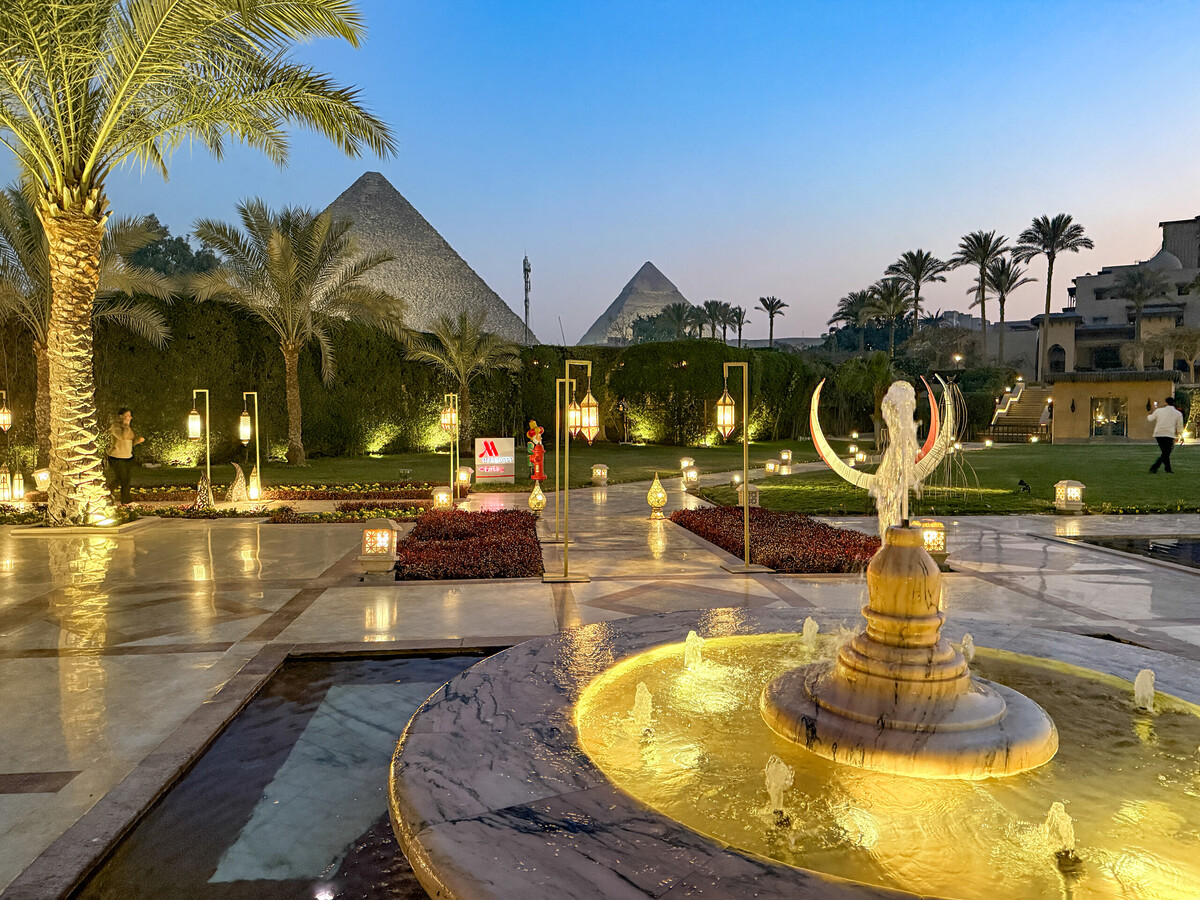
On the evening of the second day, we moved to stay near Cairo Airport, so that we could continue early the next morning to the next stops of our trip.
Where to stay in Cairo
Near Cairo Airport, you’ll find the Le Méridien Cairo Airport, a 5-star hotel that also has parking and a very good breakfast.
If you are continuing your trip from Cairo Airport the next day, this is a great choice for that night.

Day 3: Travel to Abu Simbel
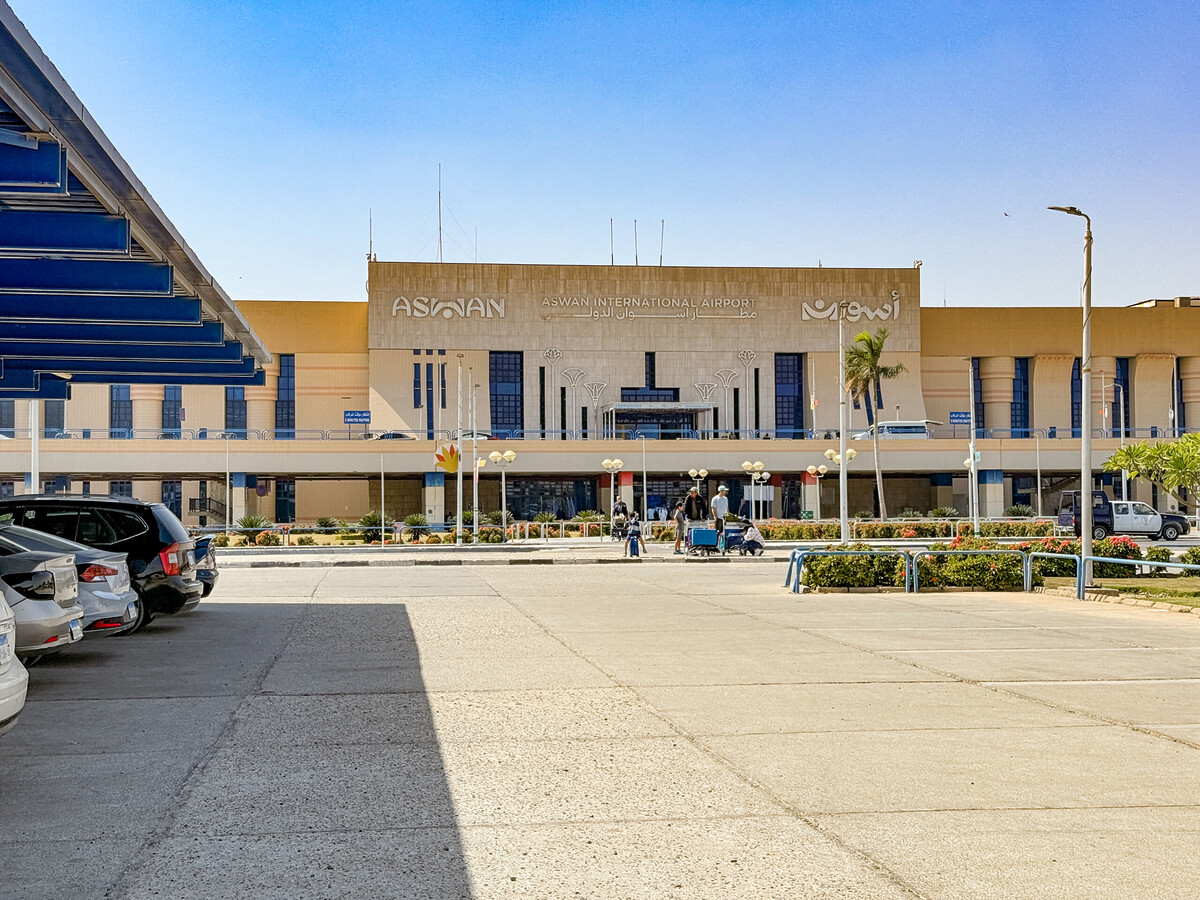
On the third morning, it’s best to take an early flight from Cairo to Aswan, then continue to Abu Simbel either with a private transfer or a rental car.
The flight takes a little over one hour, so this is the most time-efficient option.
An important thing to know is that the Aswan–Abu Simbel road is only open until 5 PM, so make sure you start the journey early enough. Be prepared as well, because there are very few stops along the way, and most of them are just small roadside shops.
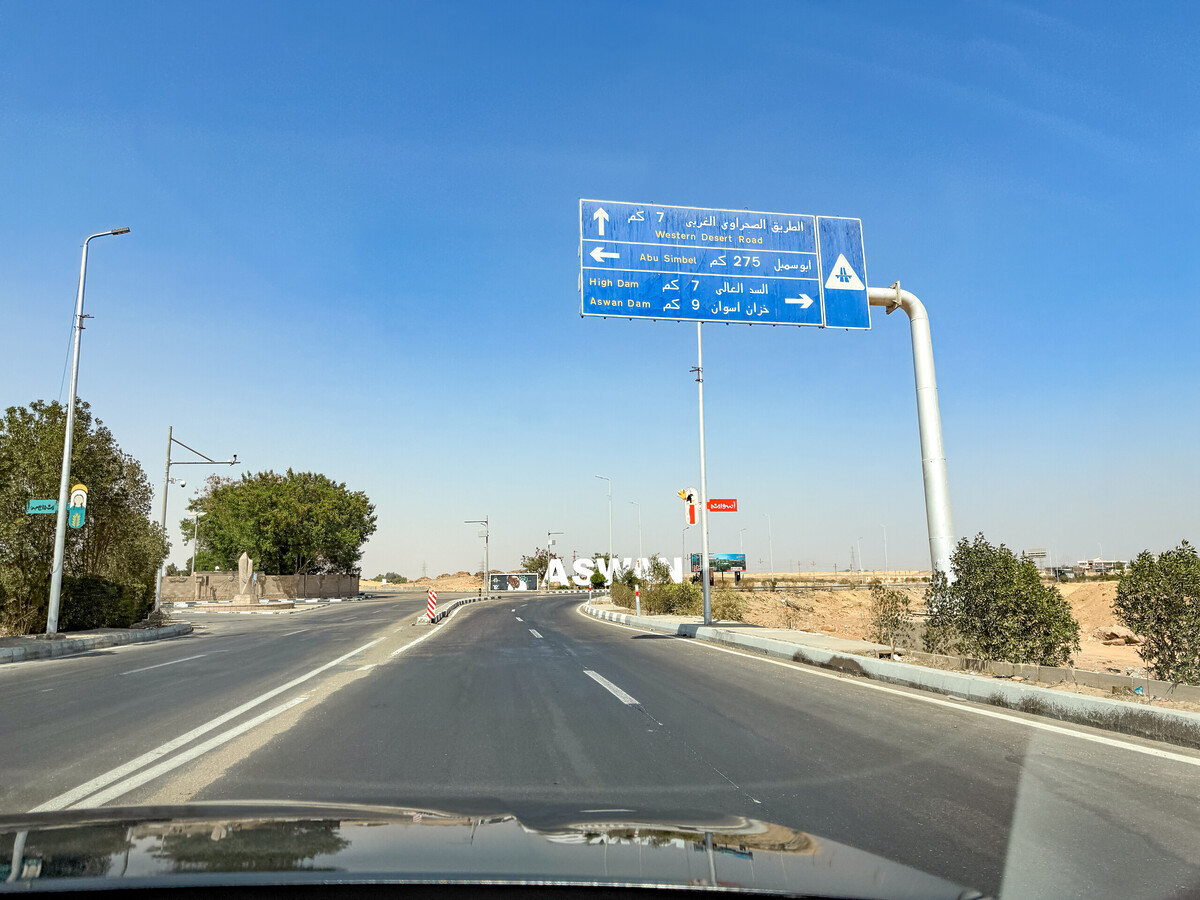
We decided to rent a car from Aswan to Abu Simbel, because it gave us more flexibility.
Honestly, I didn’t like that almost all private transfers leave very early in the morning, often before sunrise, and arrive at Abu Simbel around 8 AM, when the crowds are at their biggest.
I also read on other travel blogs, and later experienced it myself, that the temples are the most crowded in the morning, because of these early tour groups. After midday the crowds gradually decrease, which is why the best time to visit is actually in the afternoon, a few hours before closing.
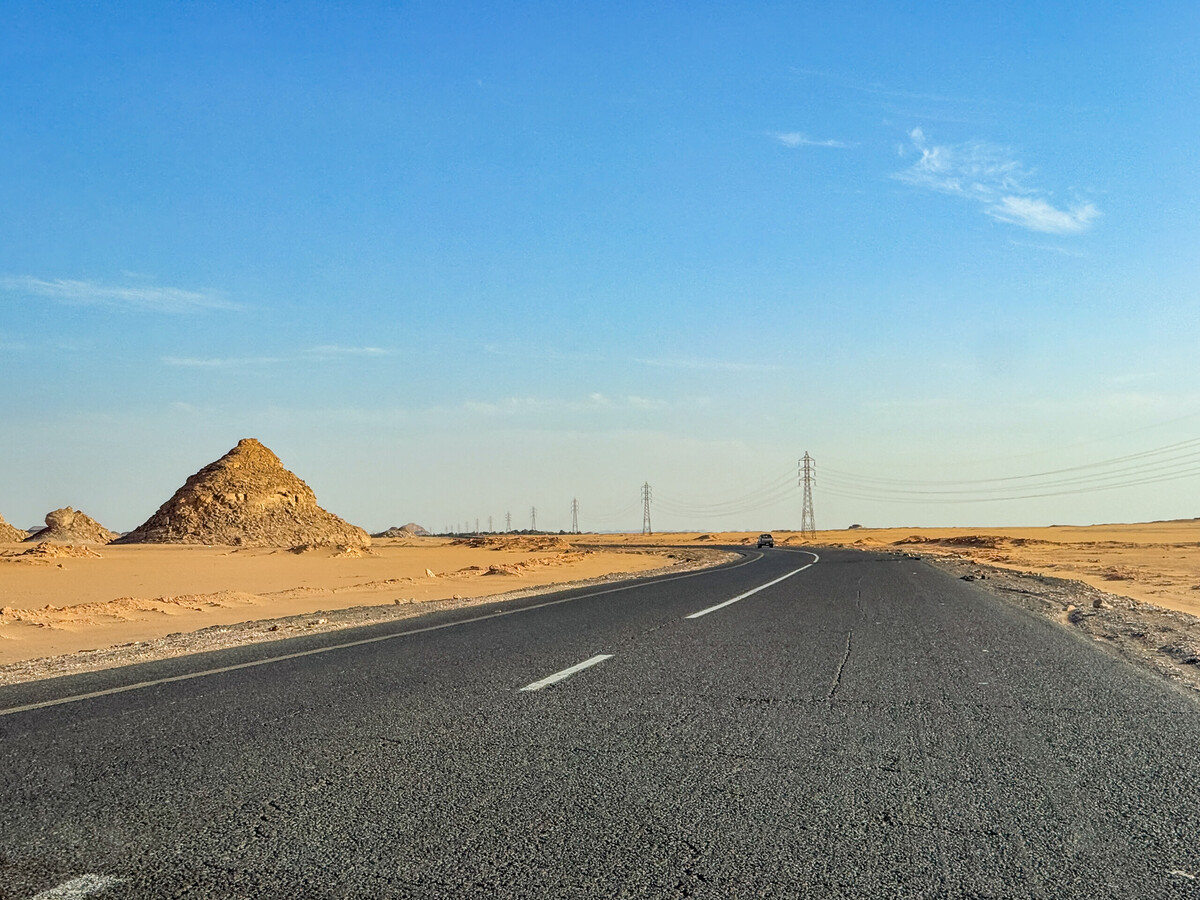
If you leave Aswan on time, the drive to Abu Simbel takes about three hours, so you can still arrive early enough to visit the temples before closing.
Visiting Abu Simbel
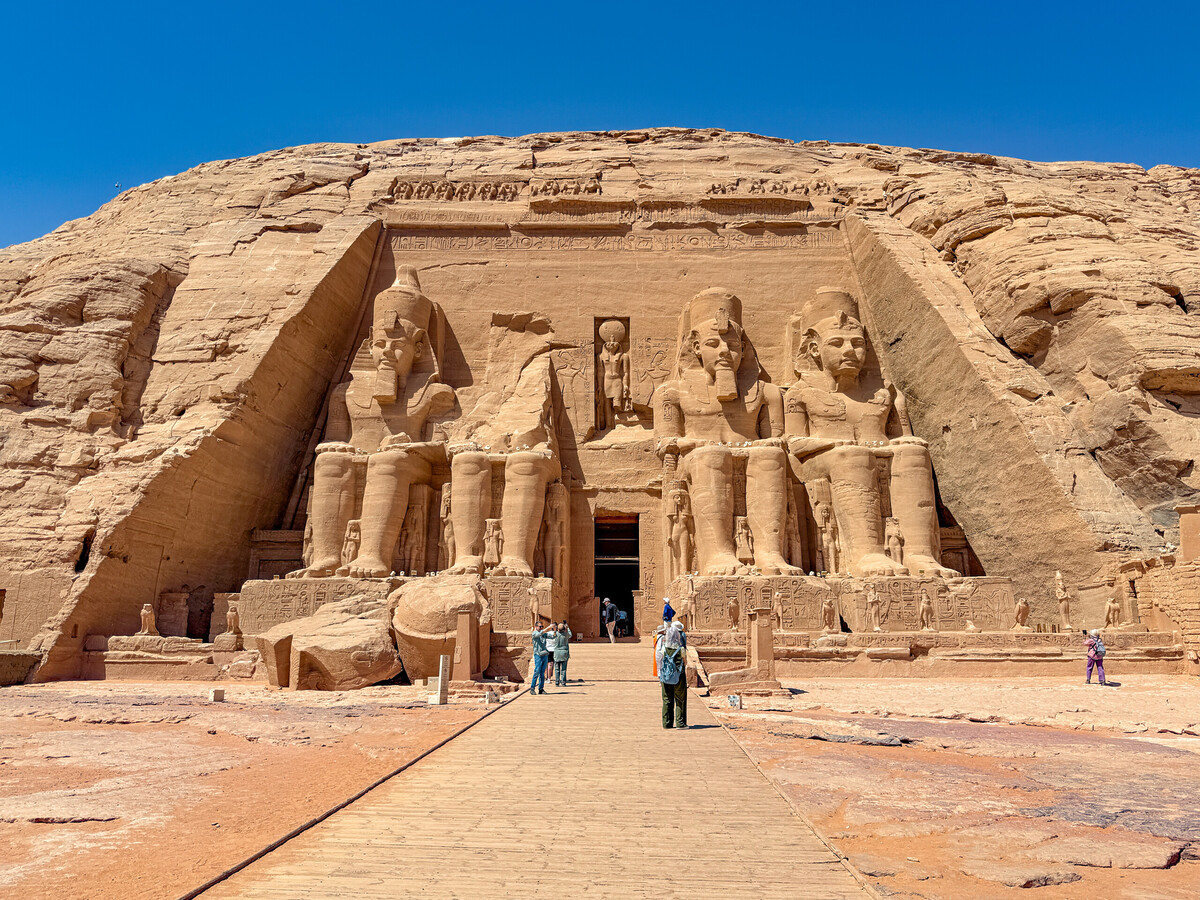
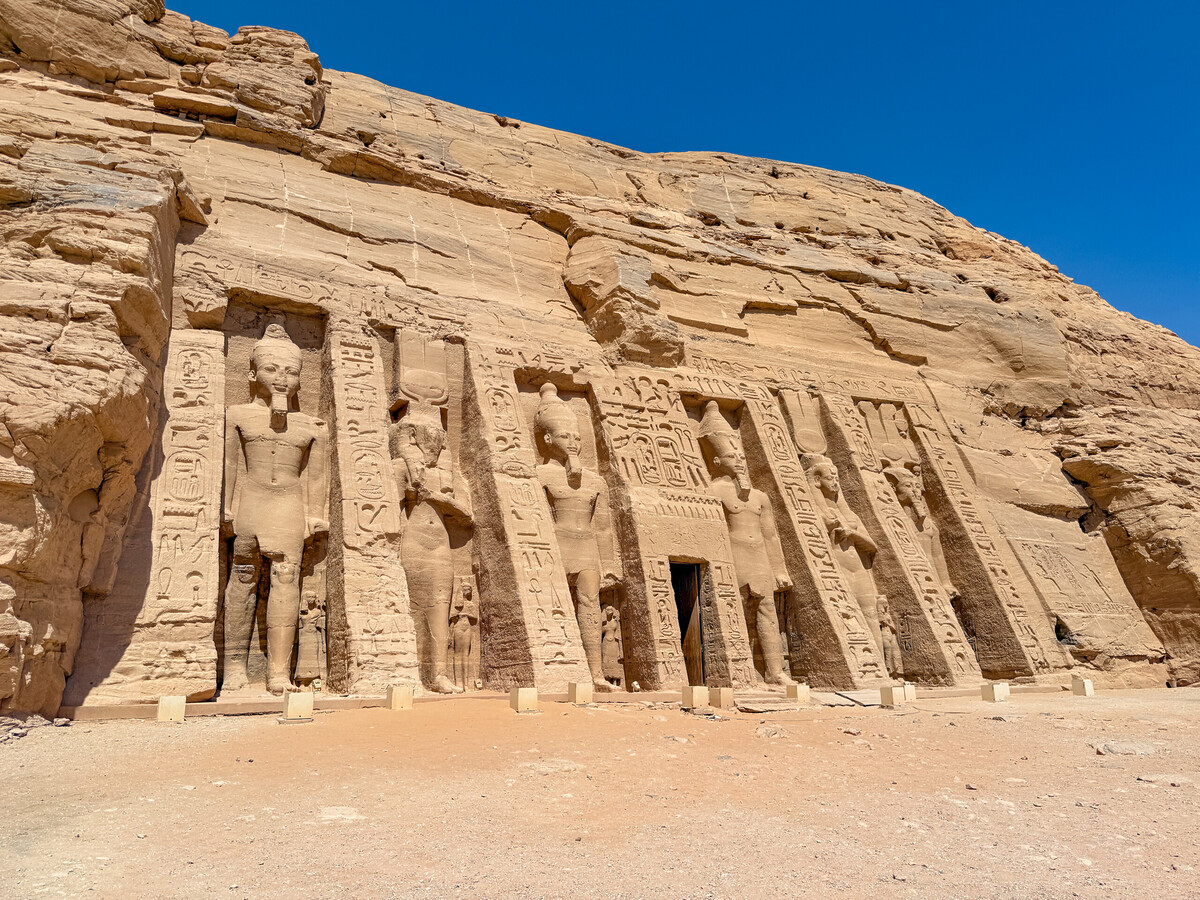
Once you arrive in Abu Simbel, you’ll find two temples built in honor of Ramses II and his wife Nefertari.
Both temples are impressive inside, although the Ramses temple is clearly larger and more spectacular than the smaller Nefertari temple.
When the Aswan High Dam was built, the temples were actually relocated several meters higher to protect them from the rising water of the artificial Lake Nasser.
As you approach the temples, you first pass through a gate with guards. On the right side there is a dusty parking area where you have to pay a parking fee.
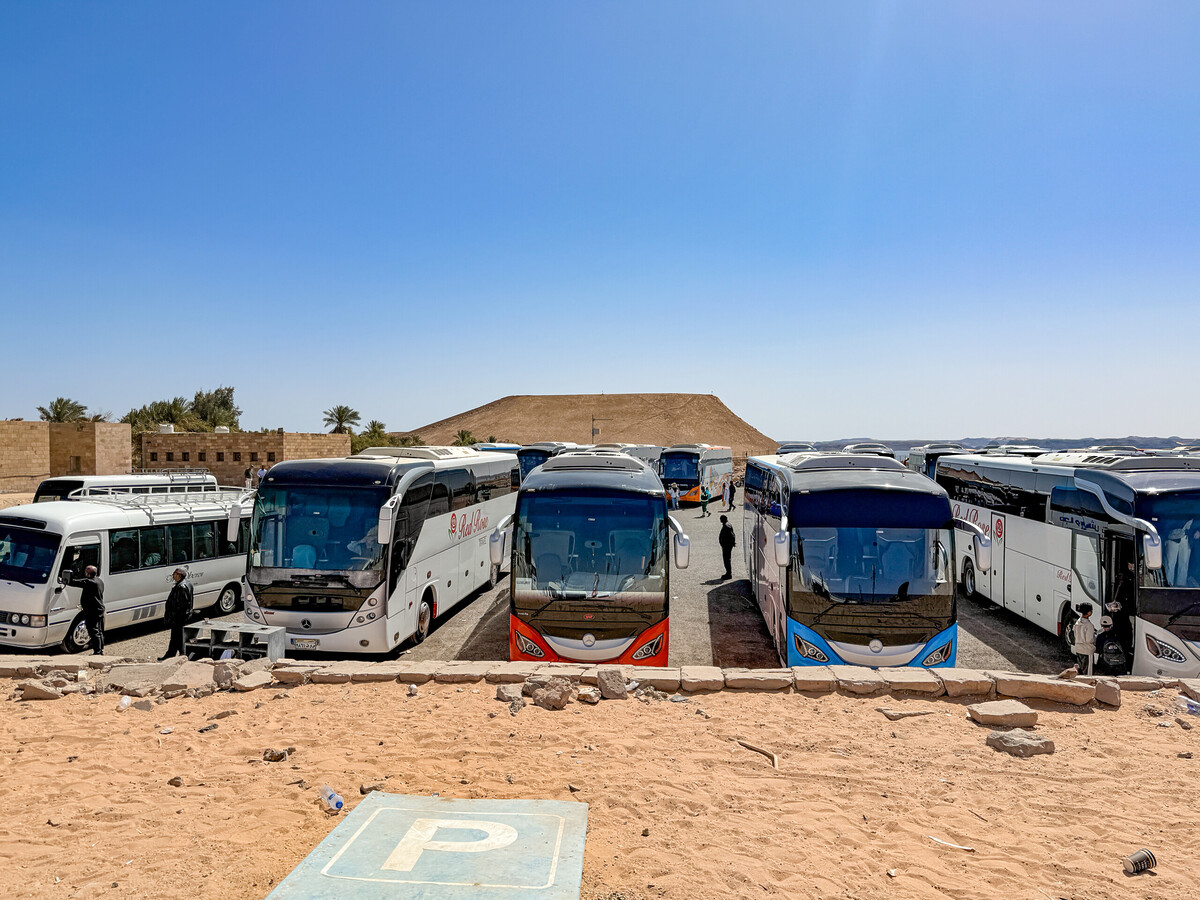
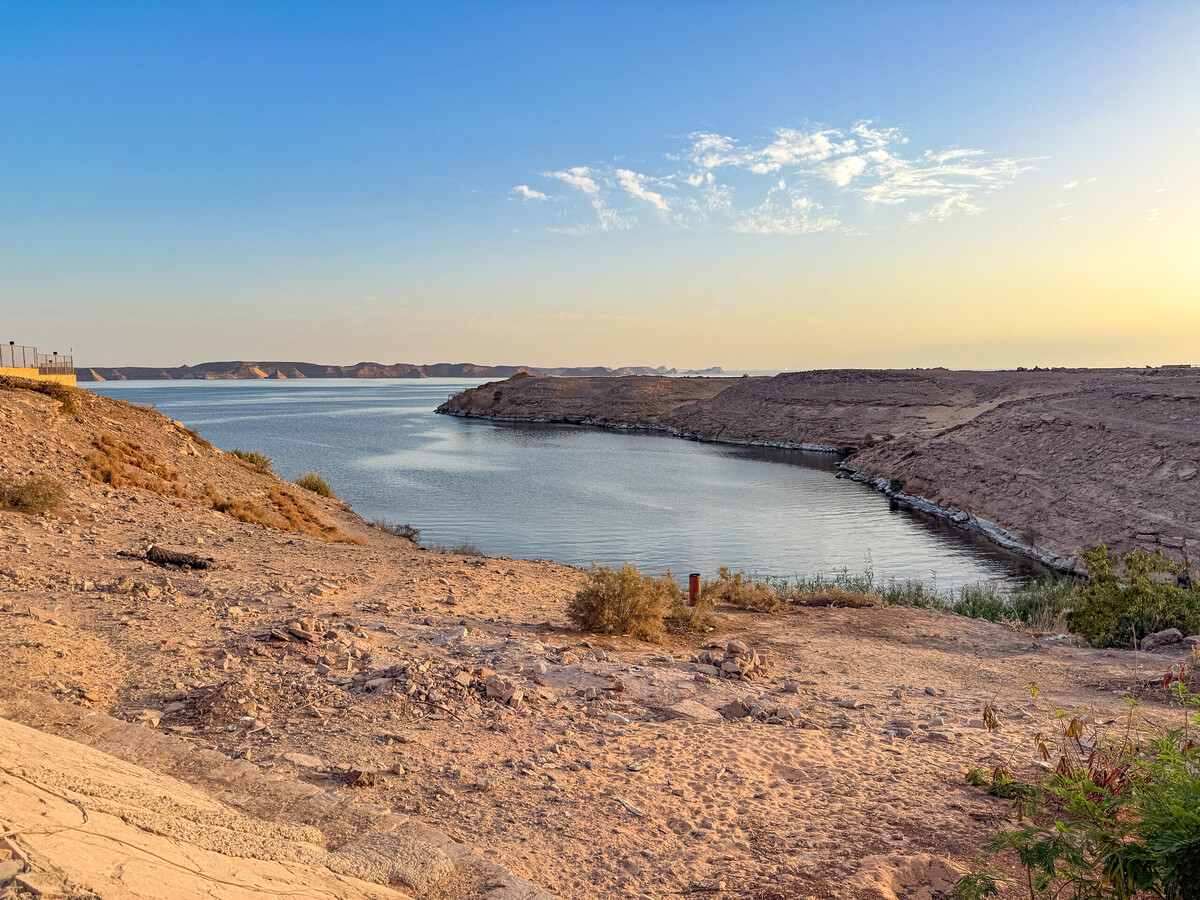
This was actually the place where I experienced the most aggressive tipping culture in all of Egypt. Both the guards and the vendors expected tips everywhere.
From the parking area you can already see the beautiful waters of Lake Nasser, and after a short walk you reach the entrance where you can buy tickets.
After buying your ticket, you can reach the temples on foot from two directions, since the walking distance is not long. There are also small golf carts that take visitors down for an extra fee.
Personally, I didn’t like the way the golf carts were driven there. I almost fell off during the ride, so after the first attempt we decided to walk instead during the rest of our visits. (We actually visited the temples three times.)
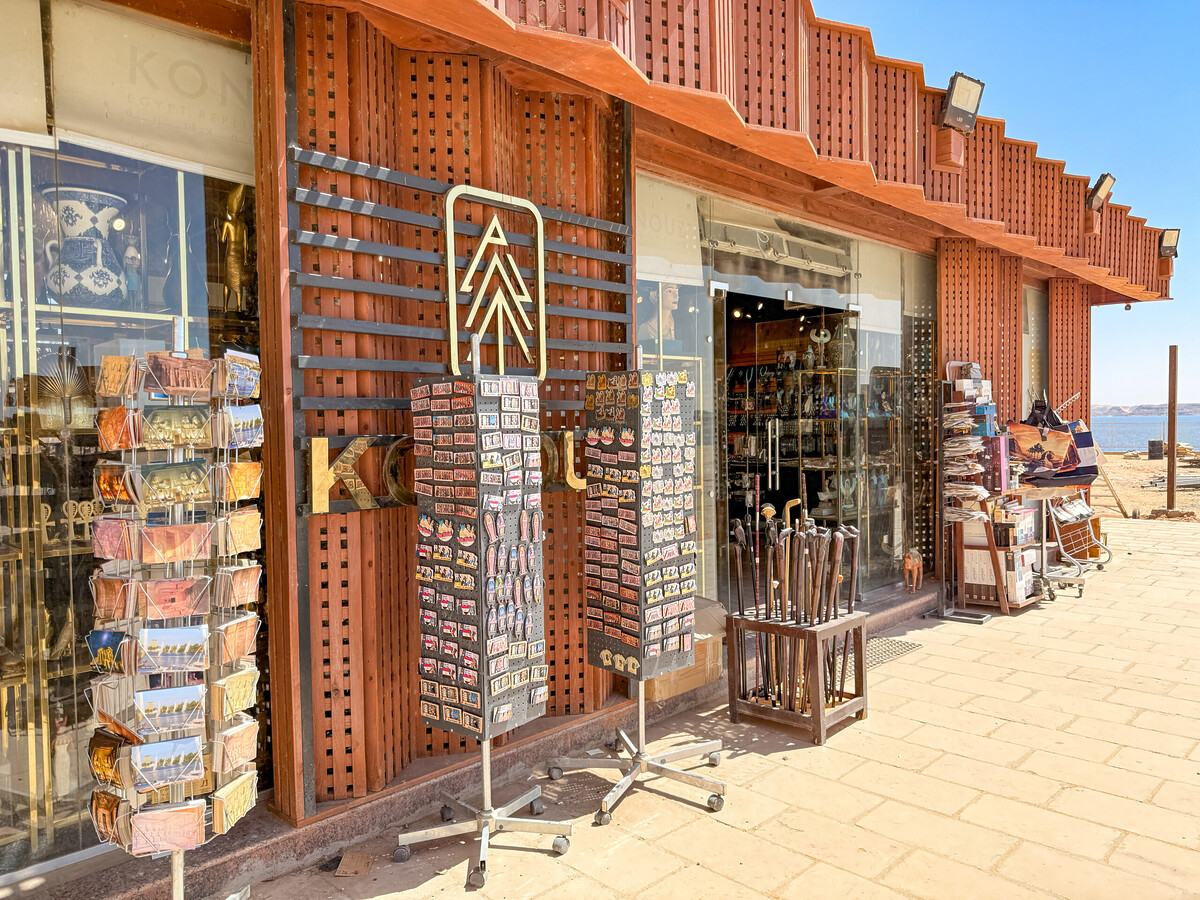
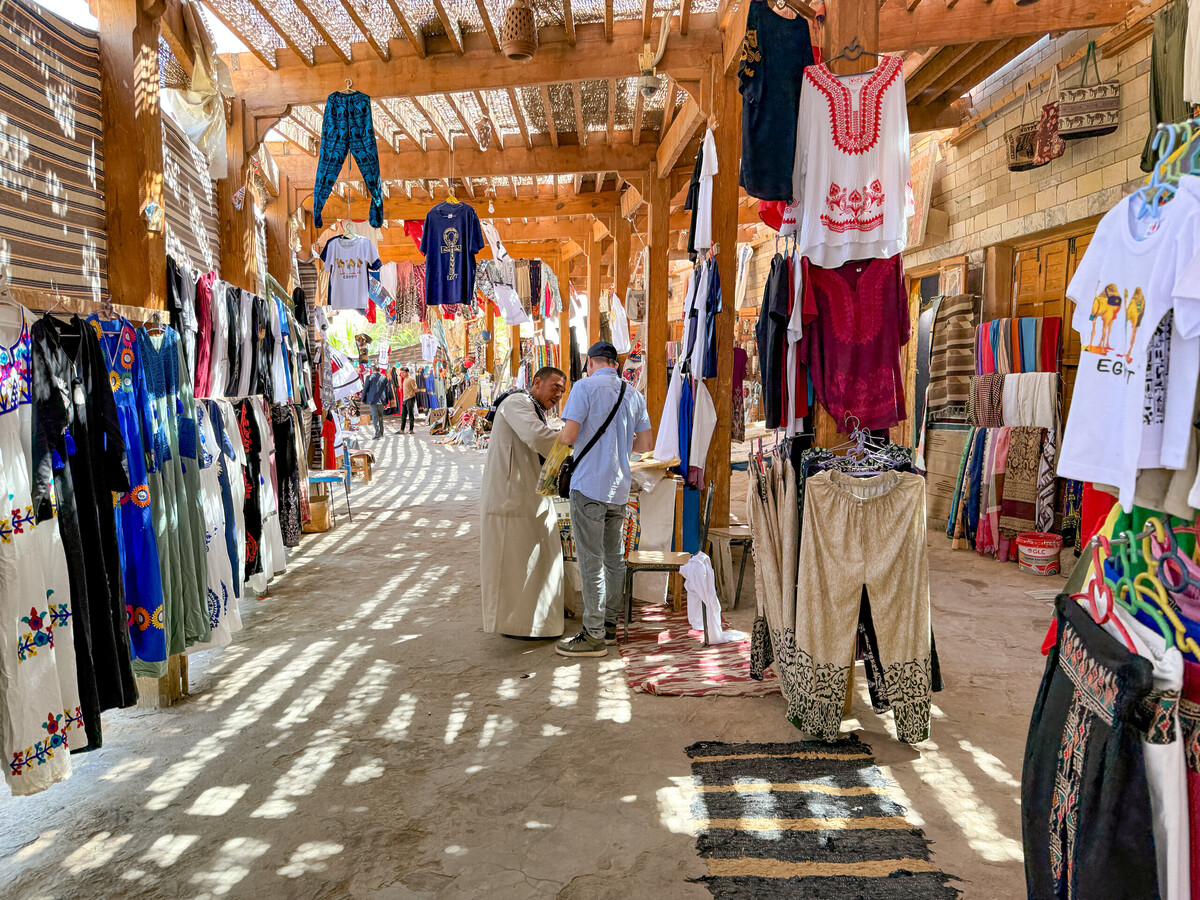
Along the path to the temples the vendors can be very aggressive, often trying to overcharge tourists. Based on my experience, it’s better to avoid buying souvenirs there, because they are usually much more expensive than in small village shops. Even drinks are noticeably more expensive here.
Abu Simbel light show
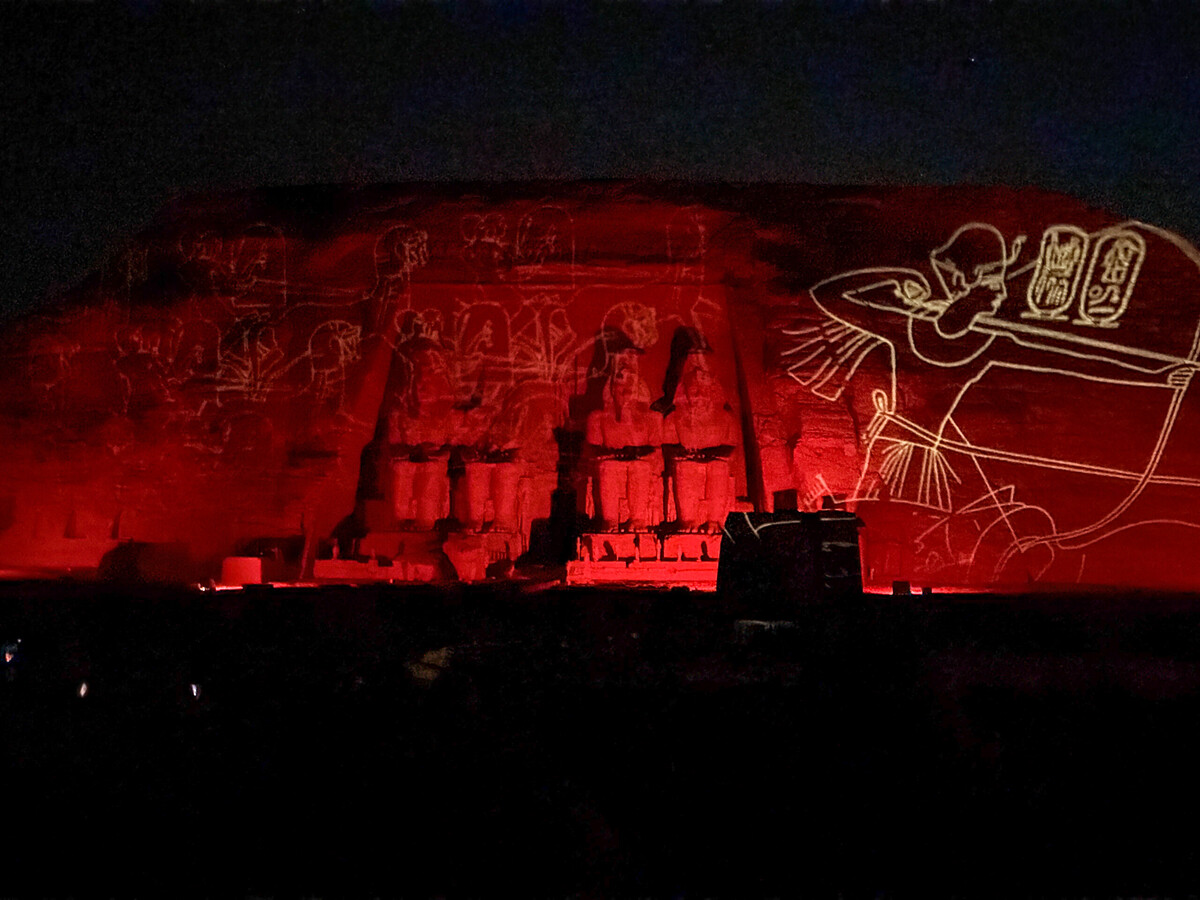
If you don’t arrive in time to visit the temples during the day, there is usually the option to attend an evening light and sound show, typically around 8 PM.
It’s a spectacular experience, although you can only see the temples from the outside during the show.
Spend the night in Abu Simbel.
Where to stay in Abu Simbel
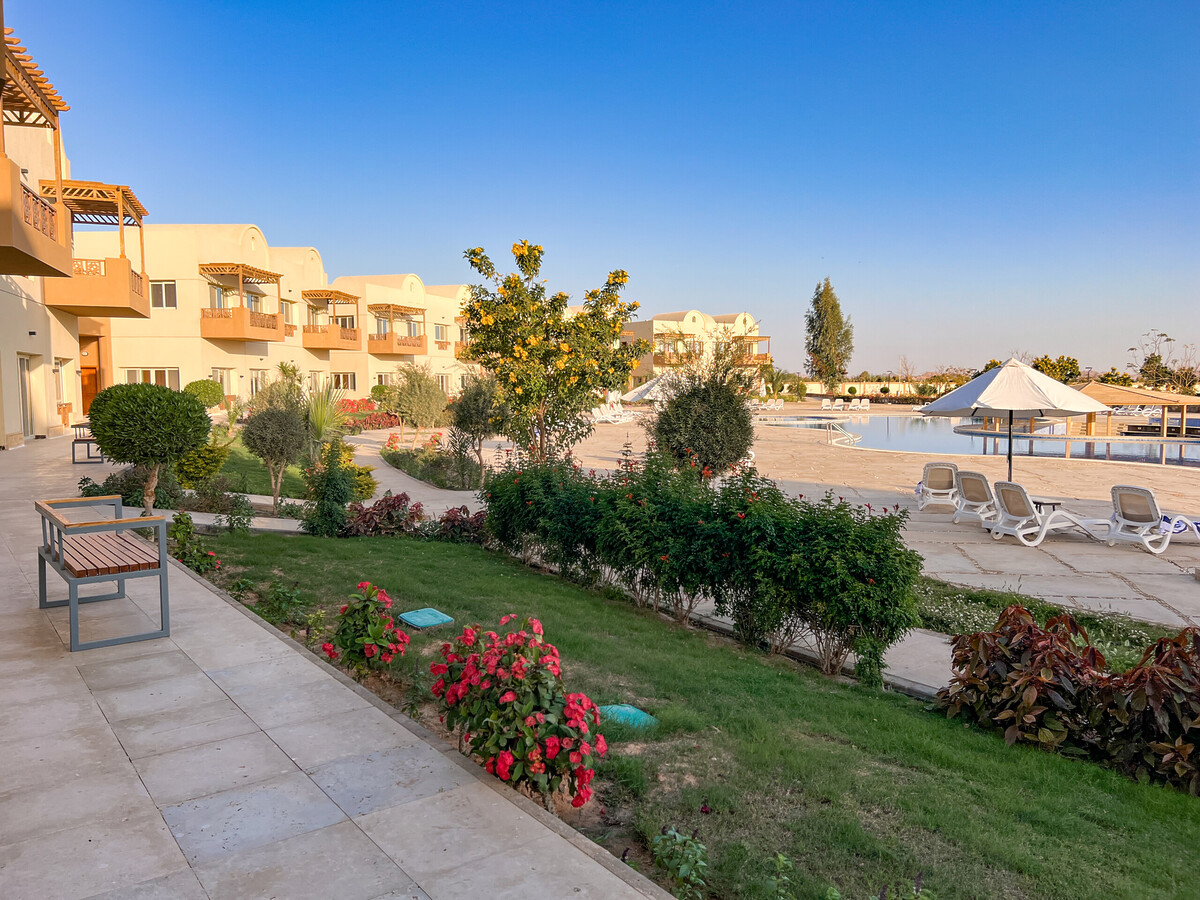
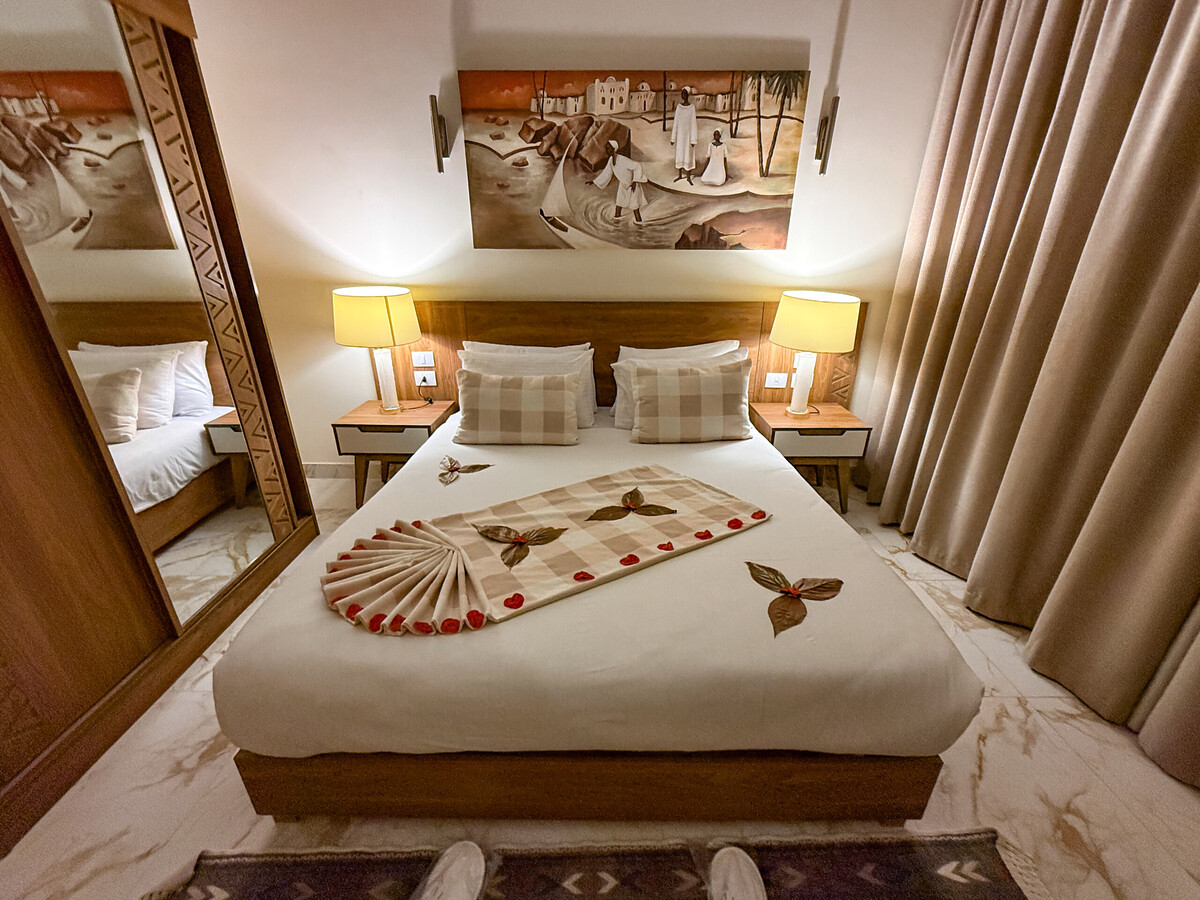
We stayed at Azal Lagoons Resort Abu Simbel, which is a five-star hotel with beautiful lake views and located about 10 minutes by car from the temples.
Day 4: Travel to Luxor via Aswan
On the fourth day, if you haven’t seen the Abu Simbel temples in daylight yet, wake up as early as possible and try to arrive right when they open to admire the temples in the morning light.
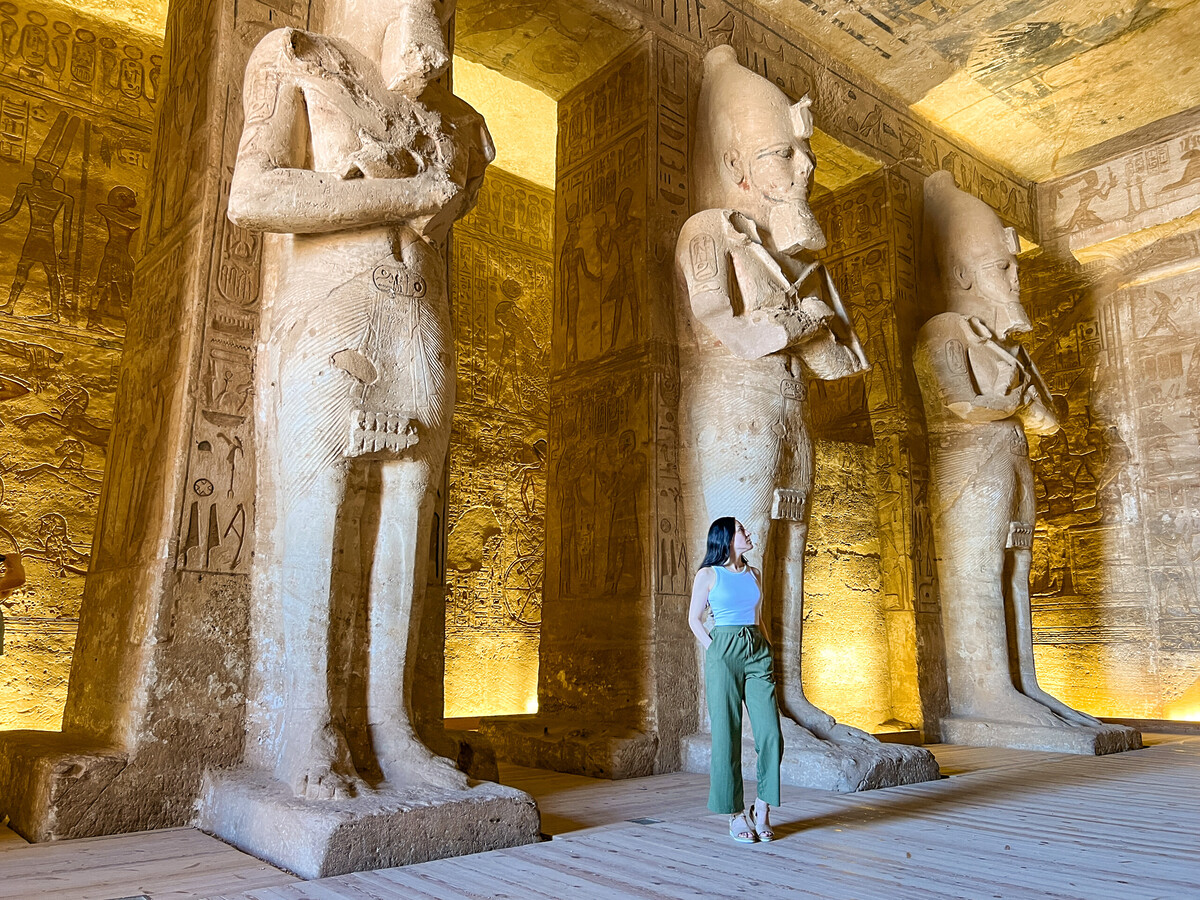
There are also sunrise boat trips on Lake Nasser, which can be a great experience if you don’t mind waking up early.
After that, start driving back toward Aswan. Again, be prepared that during the roughly three-hour drive, there are almost no opportunities to stop for fuel or food.
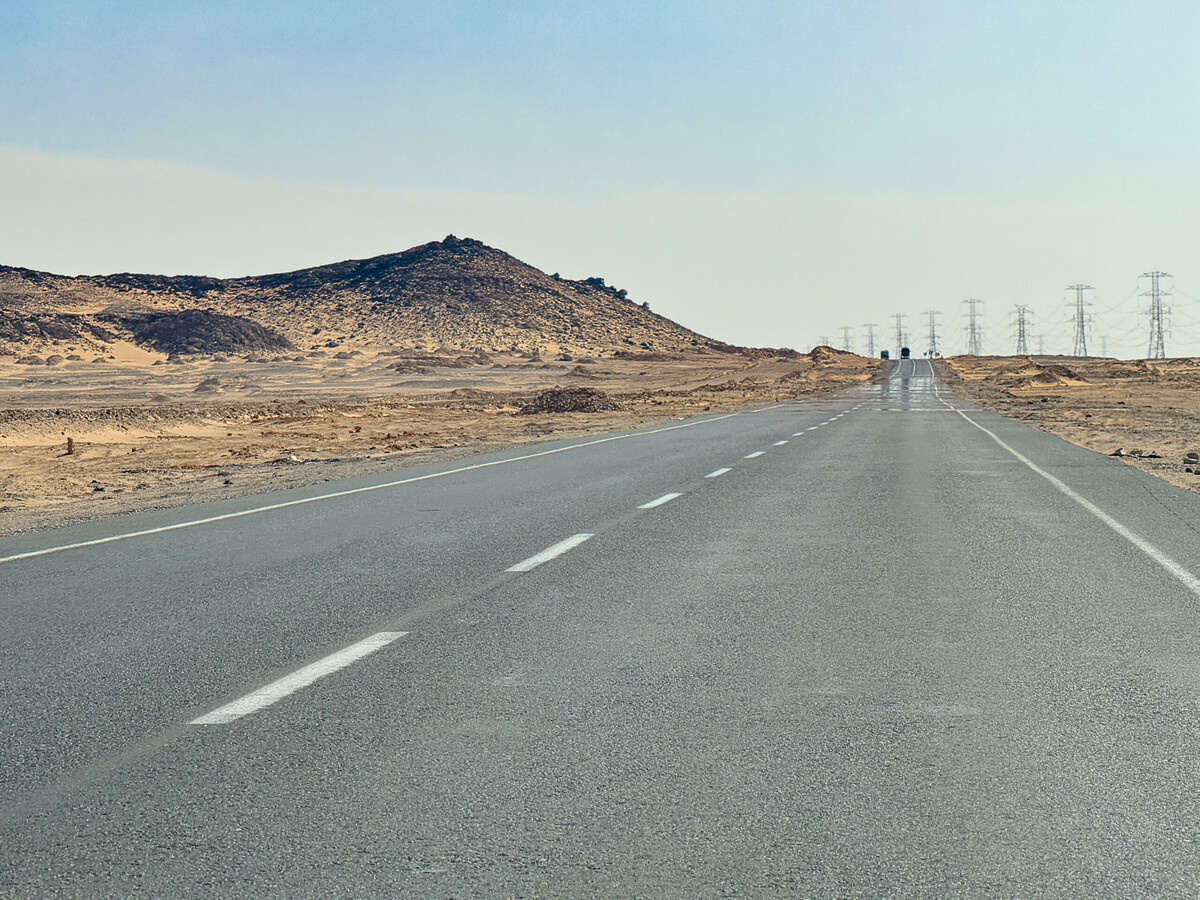
Once you arrive in Aswan, visit the Philae Temple.
On the way there you’ll also see the famous Aswan High Dam. When you arrive near the temple area, you’ll need to take a boat to reach the island where the temple is located.
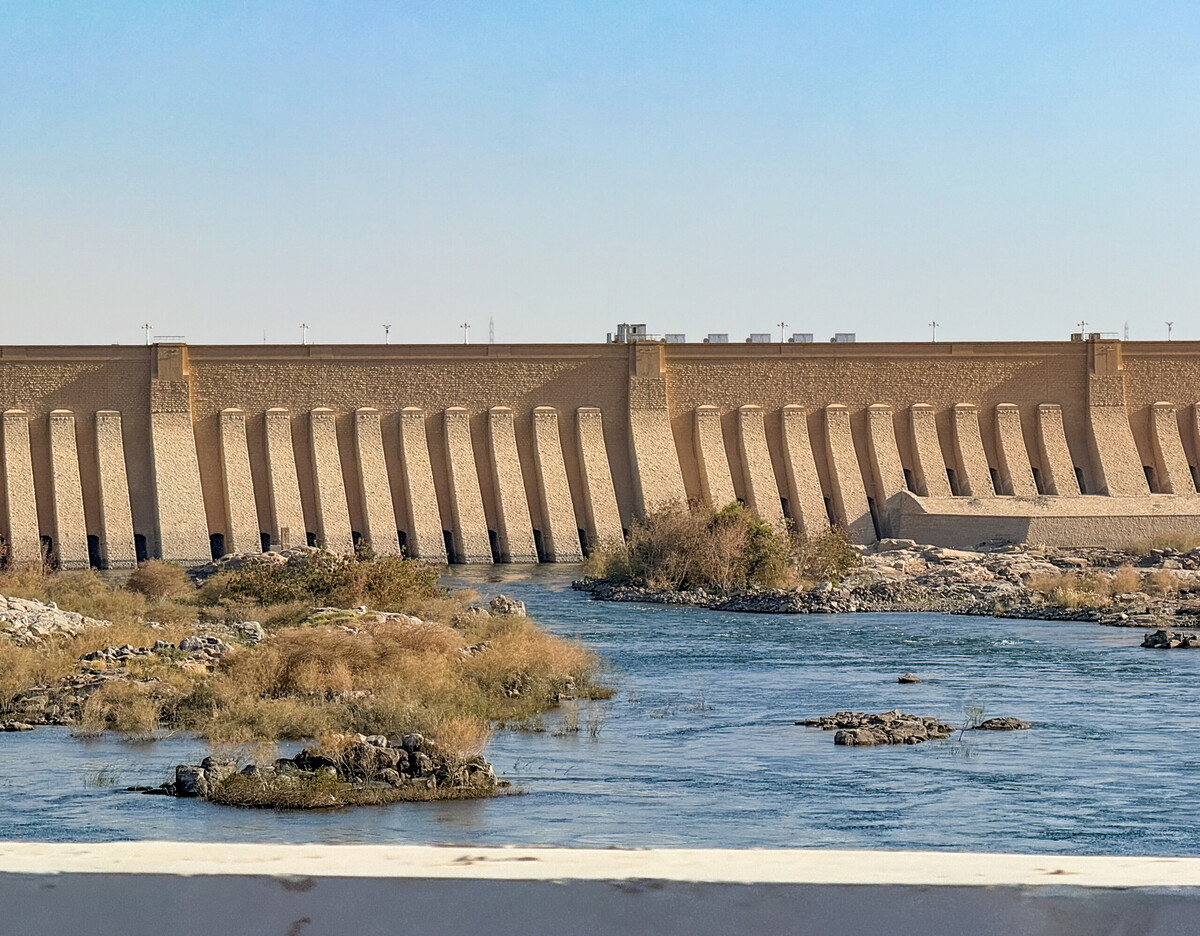
Unfortunately, the temple cannot really be seen properly from the shore, so it’s worth taking the boat ride to see it up close.
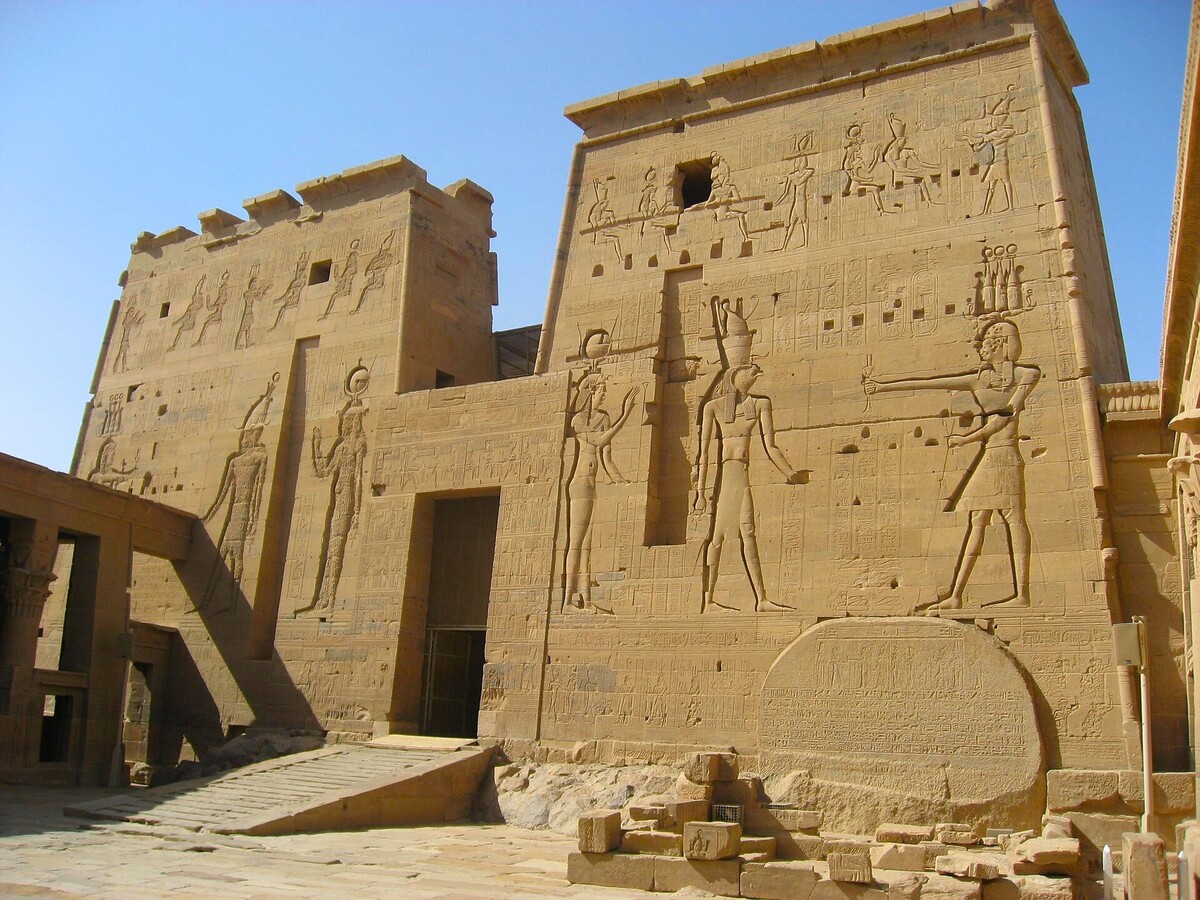
If you decide to skip this stop, continue directly toward Luxor.
It’s also important to leave early for this drive. Even though this road is not closed at specific times, the travel time shown by GPS is usually much shorter than the real driving time.
The distance between Aswan and Luxor takes about 3–4 hours.
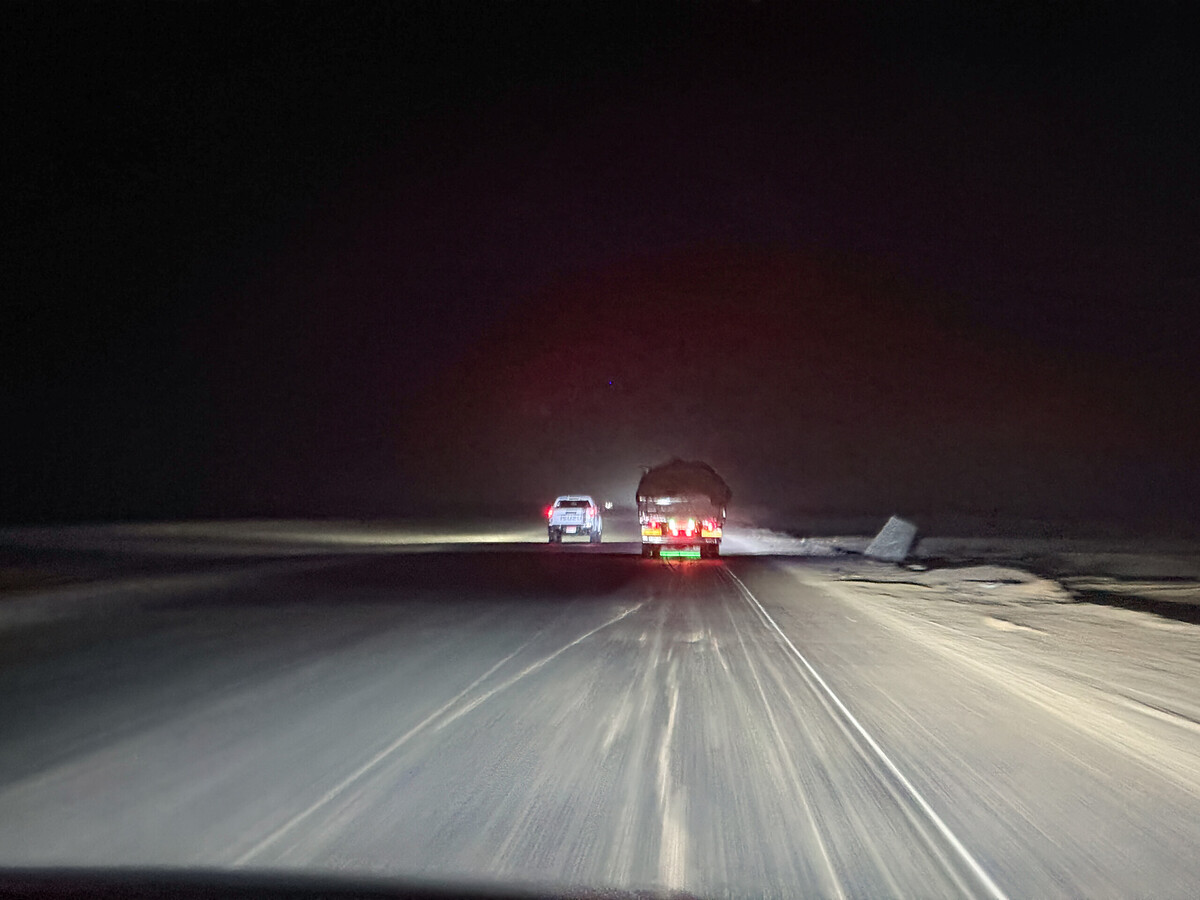
This was one of the worst road sections we experienced in Egypt. It is full of obstacles, trucks, police checkpoints, and uneven surfaces.
I strongly recommend avoiding this drive after dark, because it becomes even more stressful and difficult at night.
Spend the night in Luxor.
Where to stay in Luxor
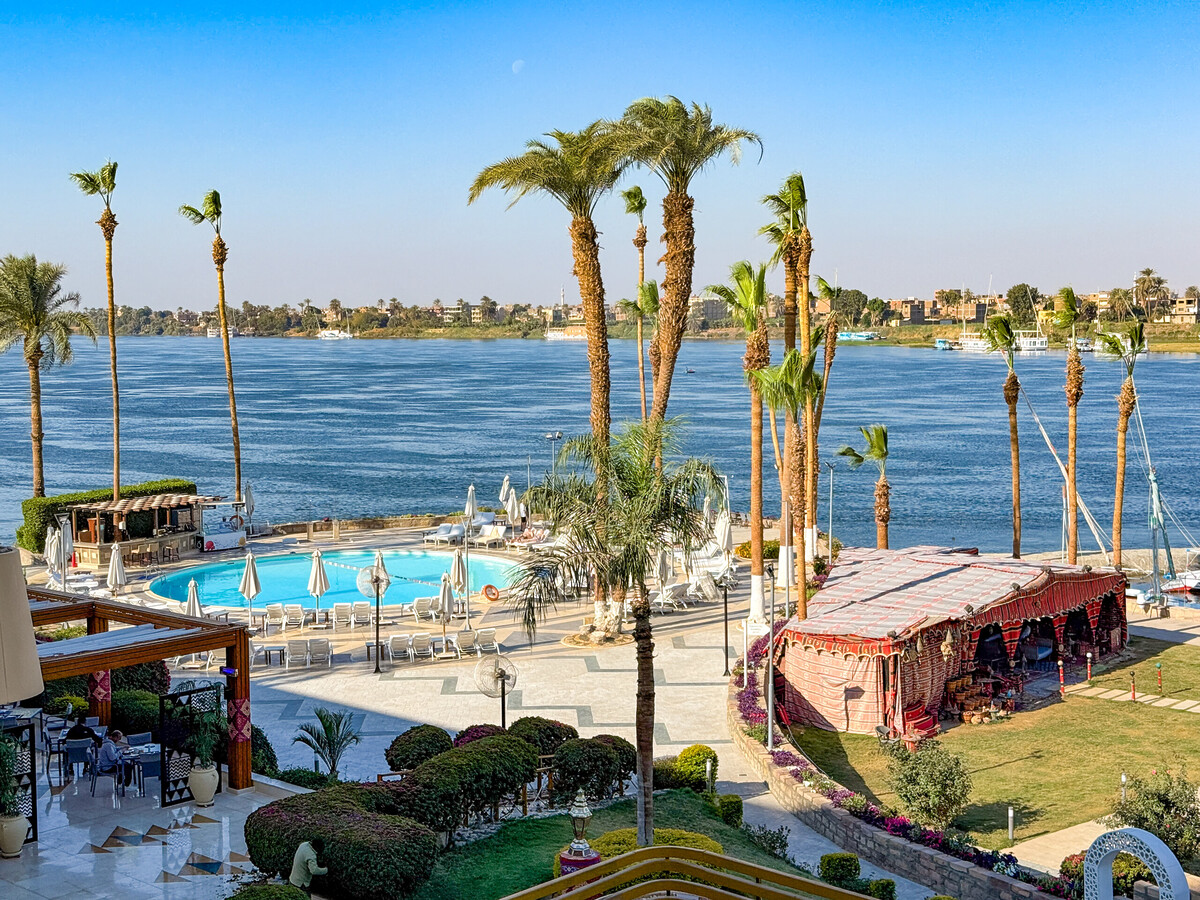
In Luxor we stayed at the Steigenberger Resort Achti, a five-star hotel with its own parking area and a very good buffet breakfast and dinner.
It’s also located directly on the Nile River, so from our balcony we had a beautiful view of the river.
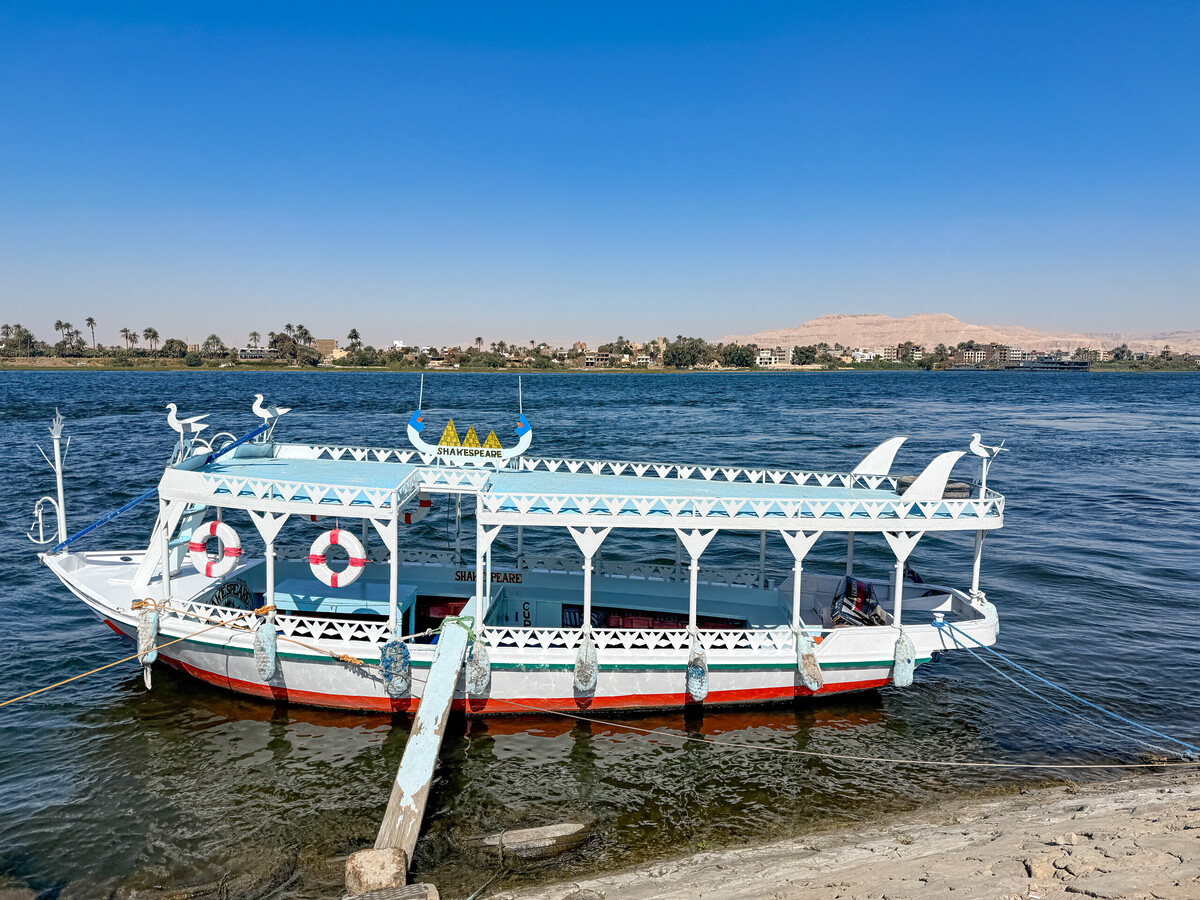
You can even take sunrise or sunset boat trips on the Nile right next to the hotel, which makes the stay even more special.
Day 5: Luxor
Continue your trip in Luxor on the fifth day, and dedicate the entire day to exploring the city’s attractions, because there are many of them. We bought all our tickets on site, and we didn’t need to book anything online.
Karnak Temple
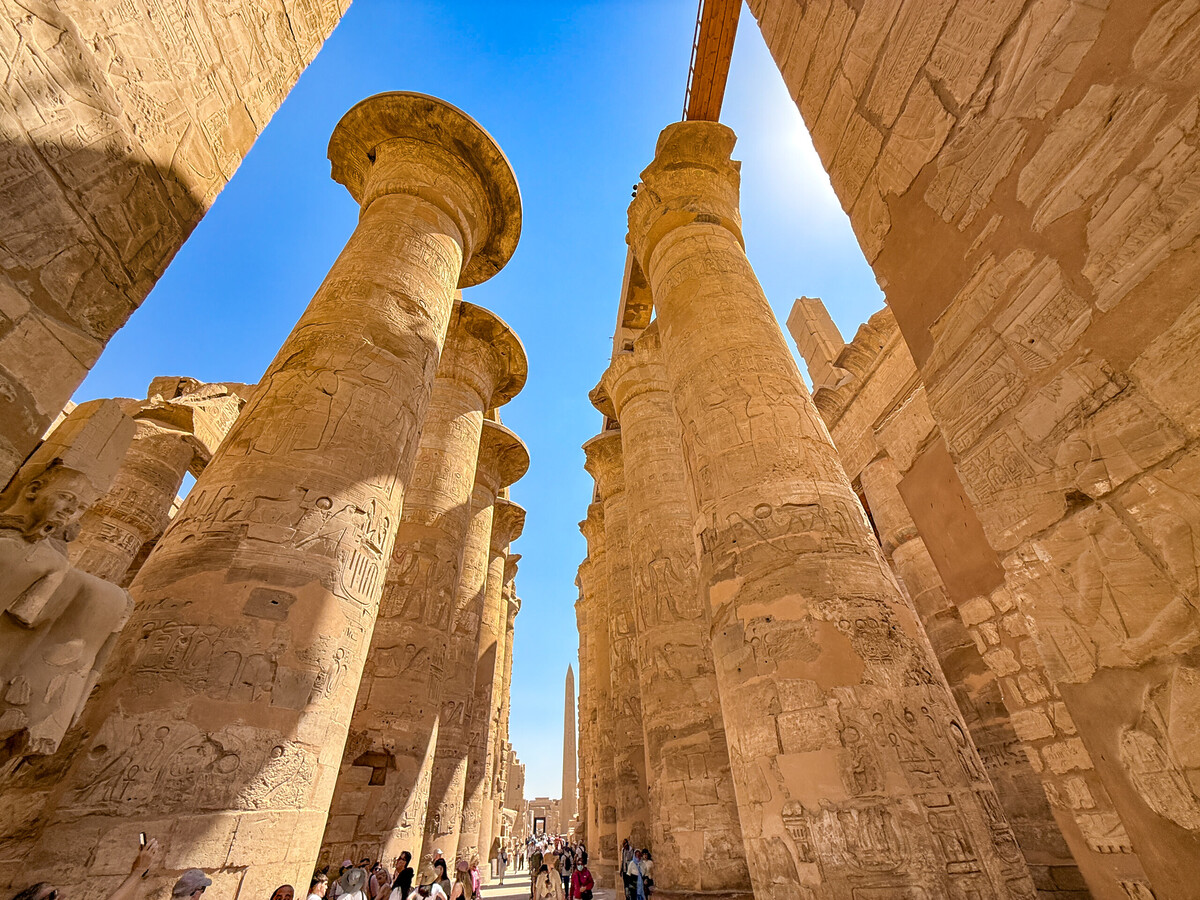
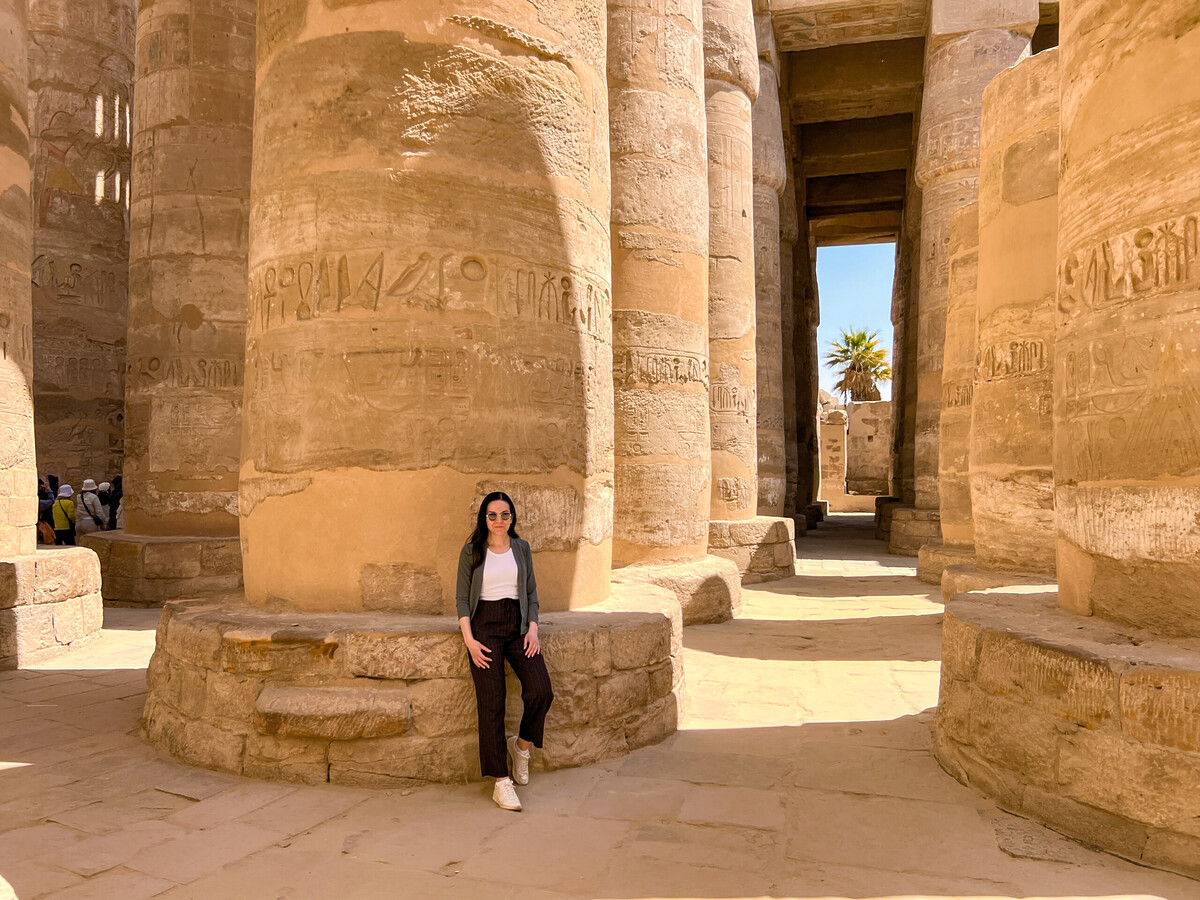
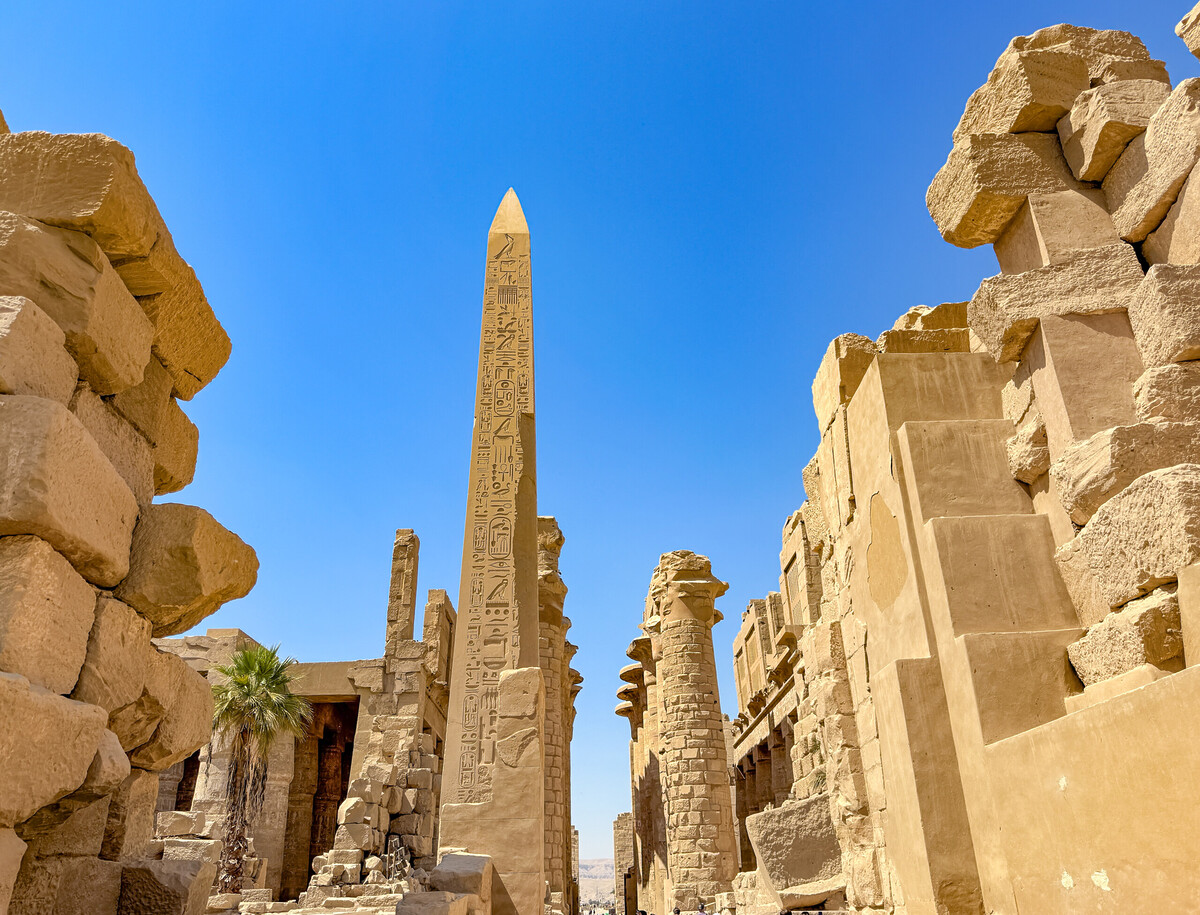
We planned our route for the day by starting in the morning at the Karnak Temple, which took us about 1.5–2 hours to explore, since it is enormous.
There is also parking available directly at the site for a small fee, and as usual you will find many vendors around the entrance.
Colossi of Memnon
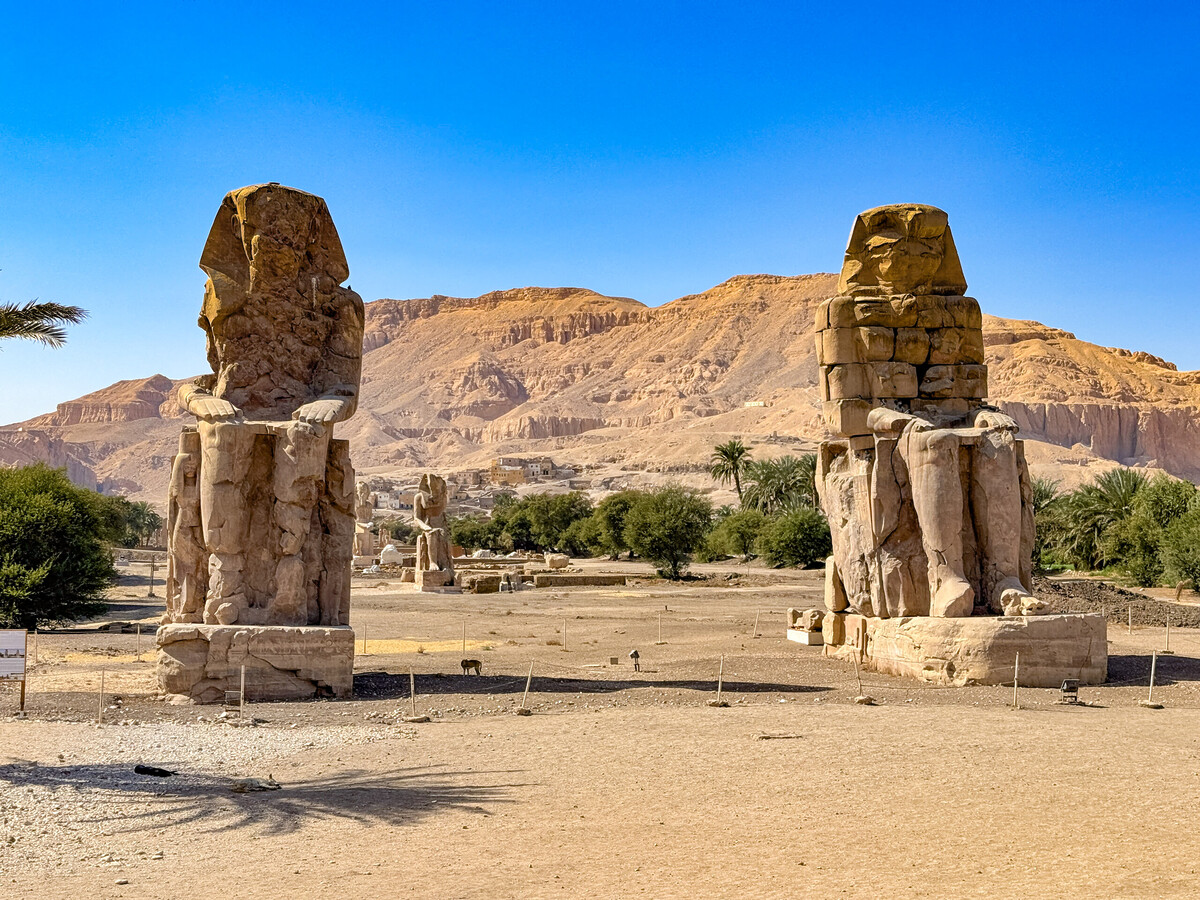
After that we drove to the Colossi of Memnon, which are a pair of huge Egyptian statues and the only remaining parts of the ancient temple of King Amenhotep III.
We only stopped there briefly to see them and didn’t spend much time.
On the way we also saw the Ramesseum, another impressive historical site.
Mortuary Temple of Hatshepsut
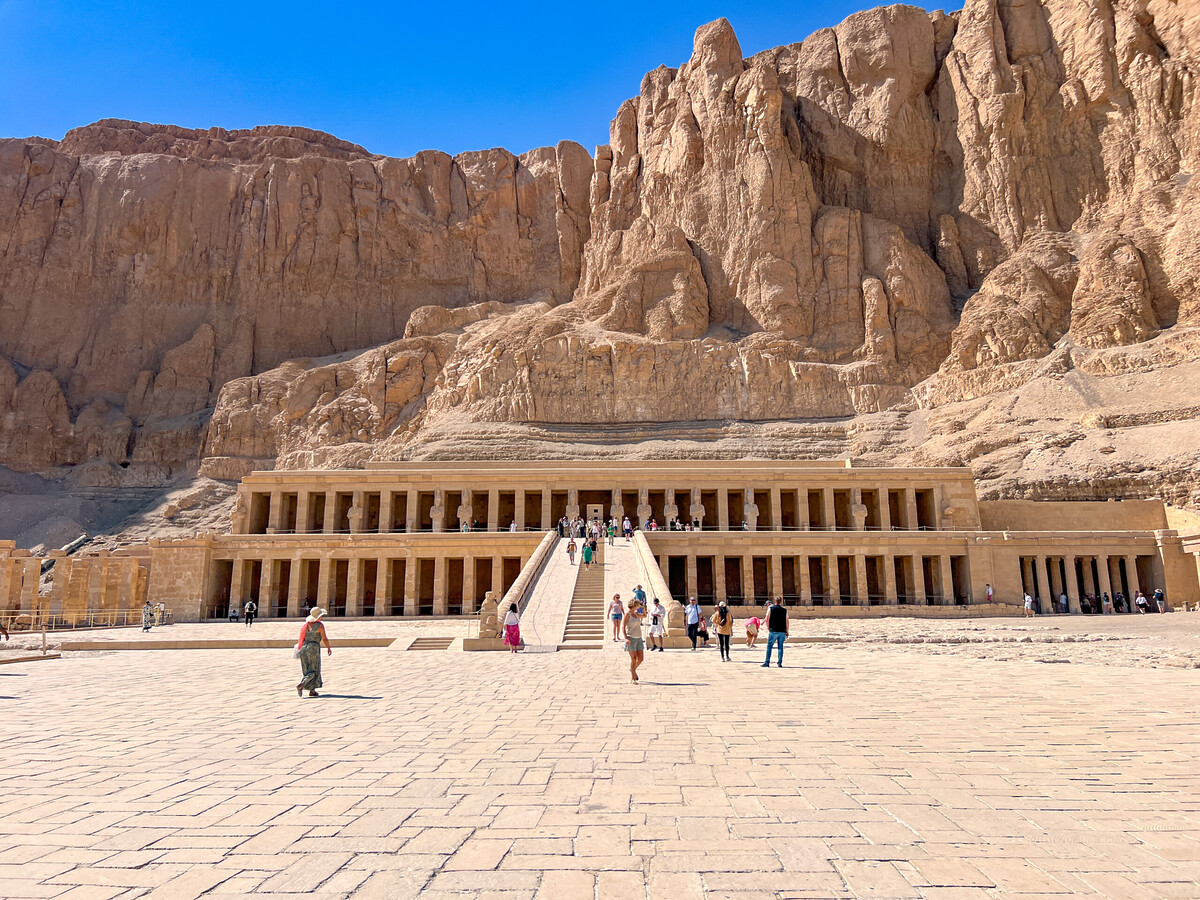
Next we continued to the Mortuary Temple of Hatshepsut, one of the most famous attractions in Luxor. After parking, you can reach the temple either by walking or by taking a small golf cart.
Personally, I found the interior a little disappointing. The temple is actually much more impressive from the outside.
Our entire visit here took about one hour.
Valley of the Kings
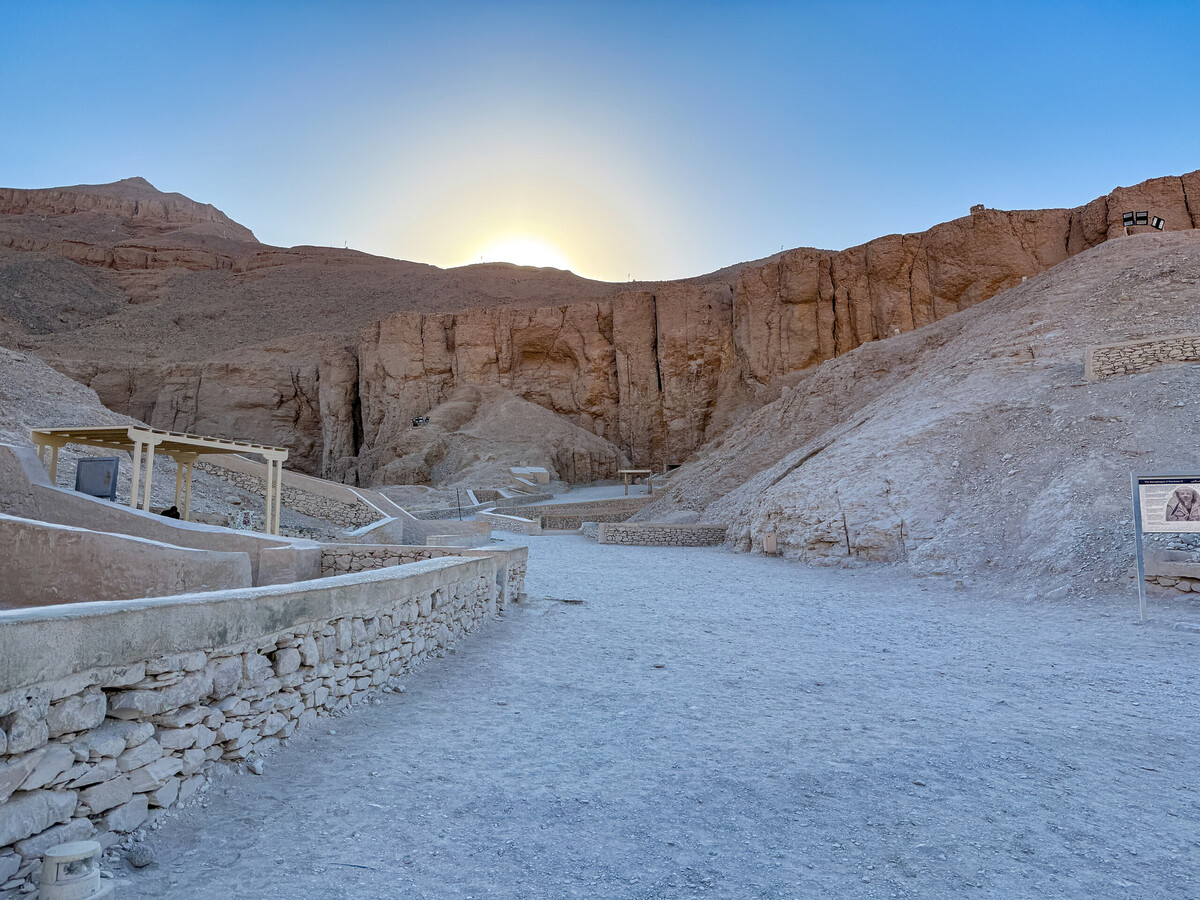
After that we continued to the Valley of the Kings, which in my opinion is the biggest highlight of Luxor.
Many former pharaohs have their tombs in this valley, surrounded by dramatic red desert cliffs.
We bought our tickets from the machine on site. Later we realized that the basic ticket only includes entry to three tombs, which was a bit disappointing.
You also need to buy a separate ticket for the small shuttle vehicles that transport visitors from the entrance to the tomb area.
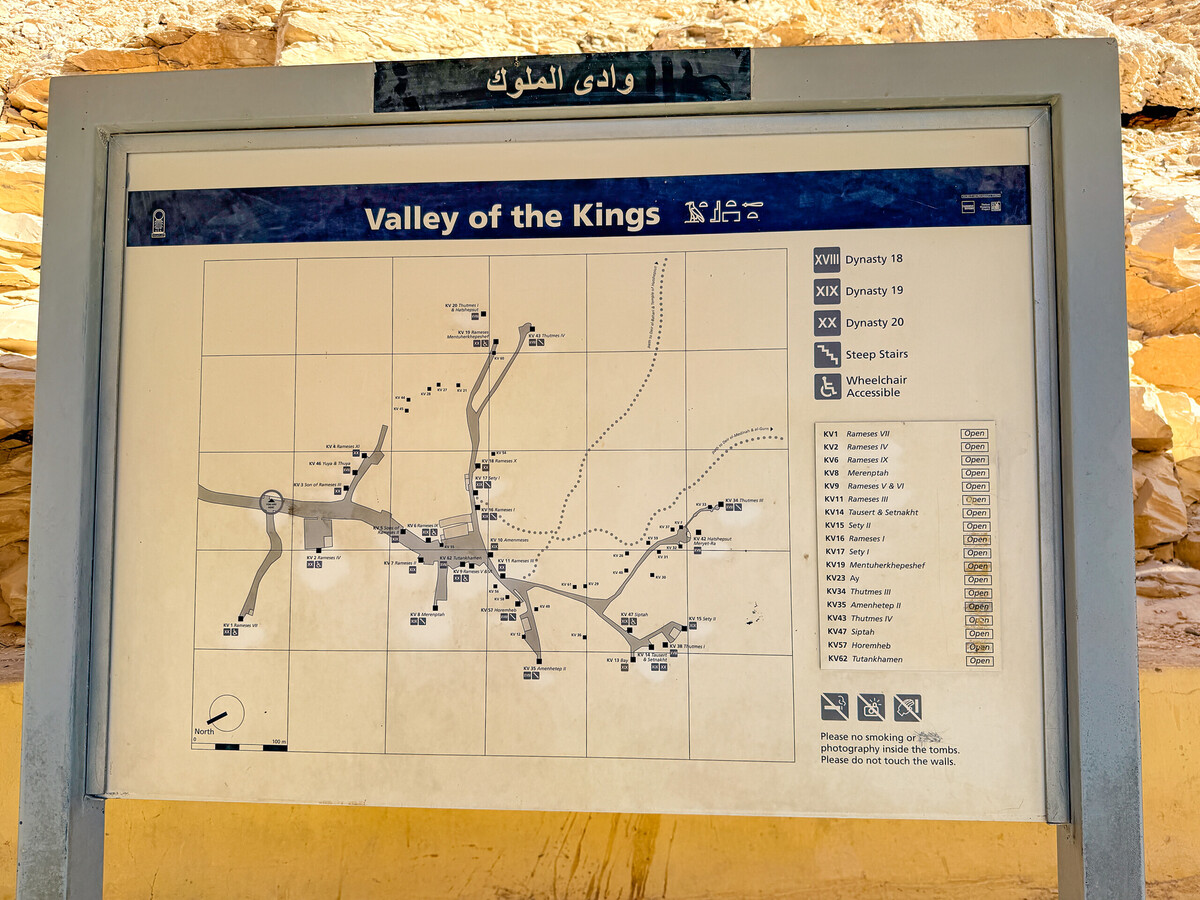
At each tomb, guards check and punch your ticket. If you take a moment to talk with them, they often share interesting information about the tombs. They also helped us decide which ones were the most beautiful to visit.
We bought extra tickets for some special tombs, including the tombs of Seti I, Ramses V and VI, Tutankhamun, and Ay.
The tomb of Seti I is very expensive, and in my opinion it was not really worth the high price.
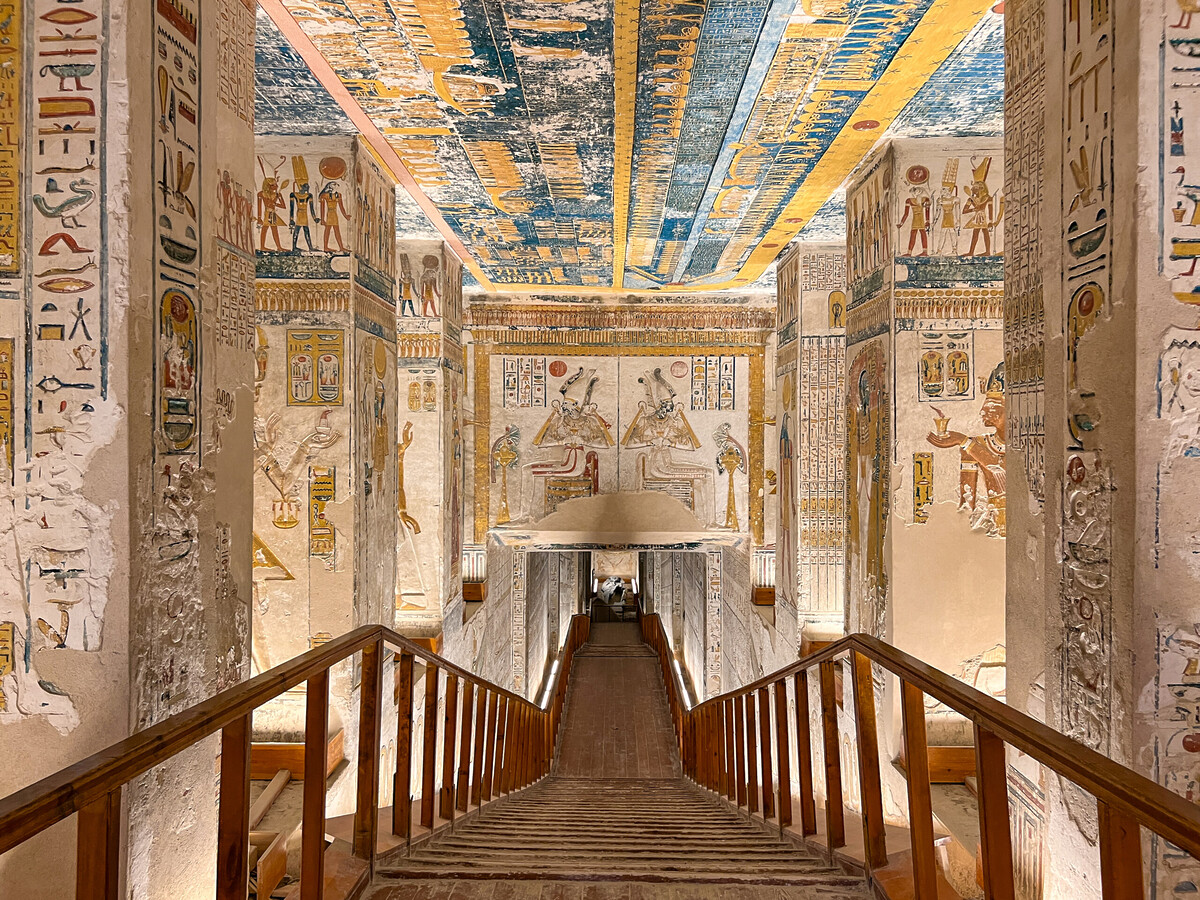
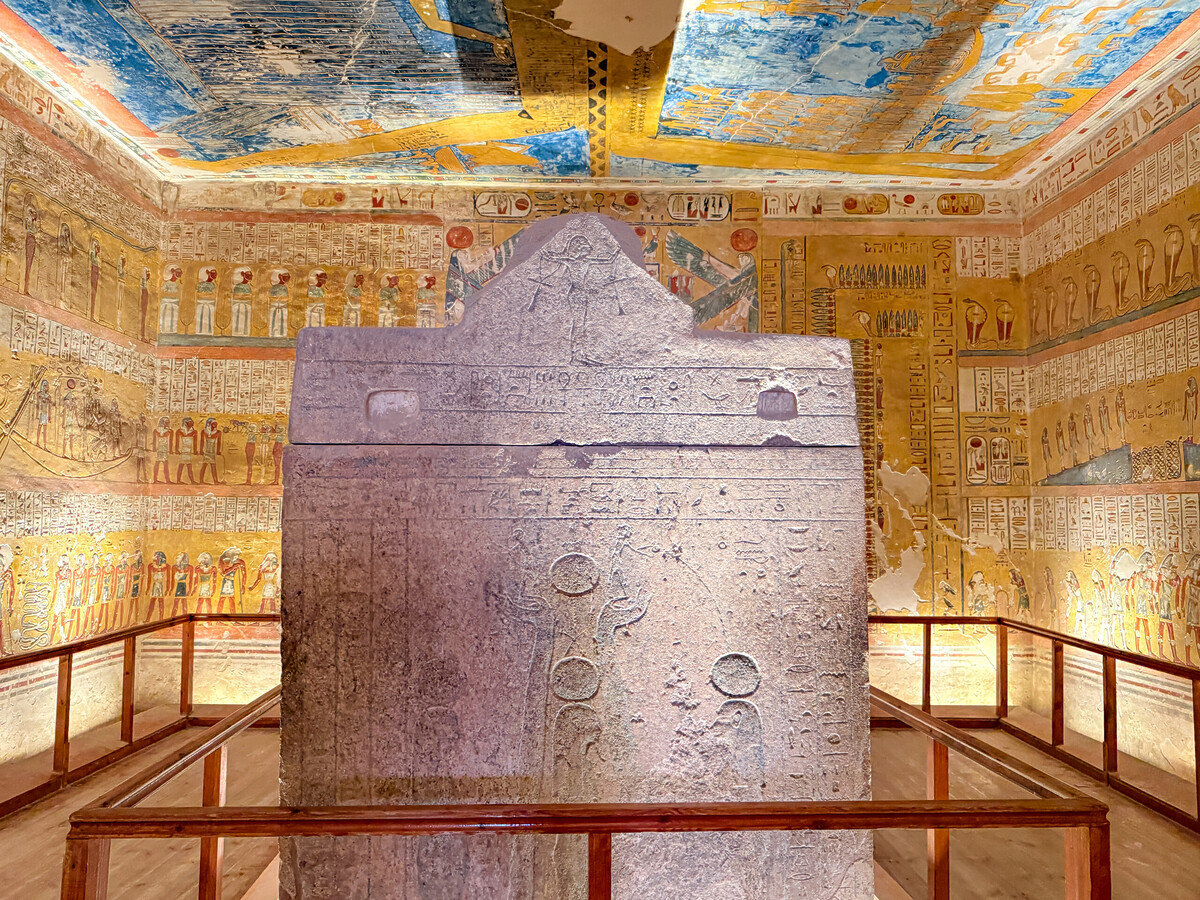
The tomb of Ramses V and VI was probably the most beautiful one we saw, so that one was definitely worth it.
The Tutankhamun tomb is also interesting, although for me it was a bit unsettling to see a real mummy inside. We were actually alone when we went down, which made it even more intense, so I didn’t stay long.
The tomb of Ay is located in a different area and requires a separate approach, so even though we had tickets, we eventually skipped it.
The biggest issue with the ticket system is that if you want to enter all the tombs, the total cost can easily reach 100–150 euros per person, which is an incredible amount.
If you choose wisely, you can limit the cost to around 30–40 euros per person, but even that isn’t exactly cheap.
From the tombs included in the basic ticket, I personally liked the tomb of Ramses IV the most. It’s located near the beginning of the path from the entrance.
Overall we visited 7–8 tombs, which was enough. There’s really no need to see them all.
One important thing to remember is that the site closes early, so try to finish your visit before around 4 PM.
Valley of the Queens
If you still want to see more, you can also visit the Valley of the Queens, which is a smaller and slightly cheaper attraction.
The most famous tomb there is the tomb of Nefertari.
Luxor Temple
In the evening we went to the Luxor Temple to watch the sunset, which turned out to be a great decision. There was a huge crowd, because it’s practically the only major attraction in Luxor that stays open in the evening.
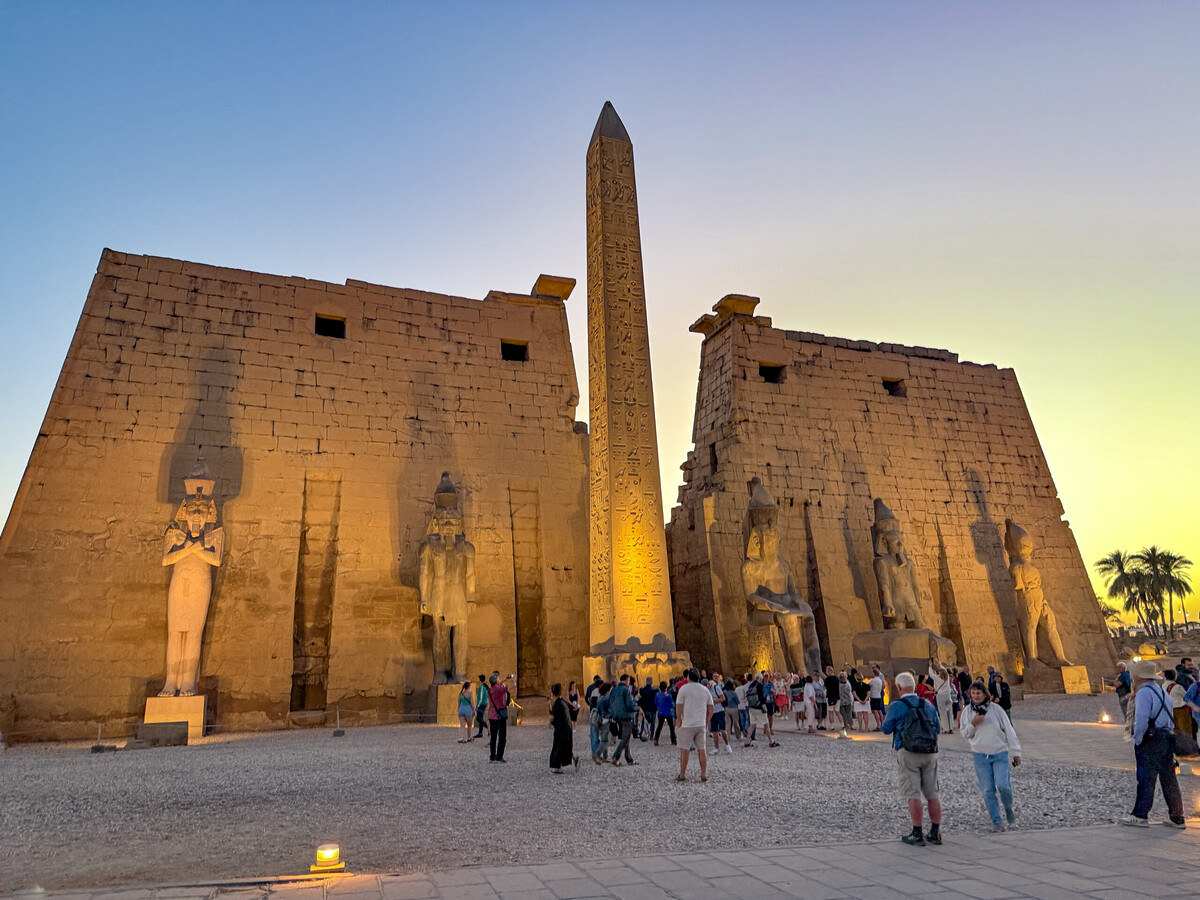
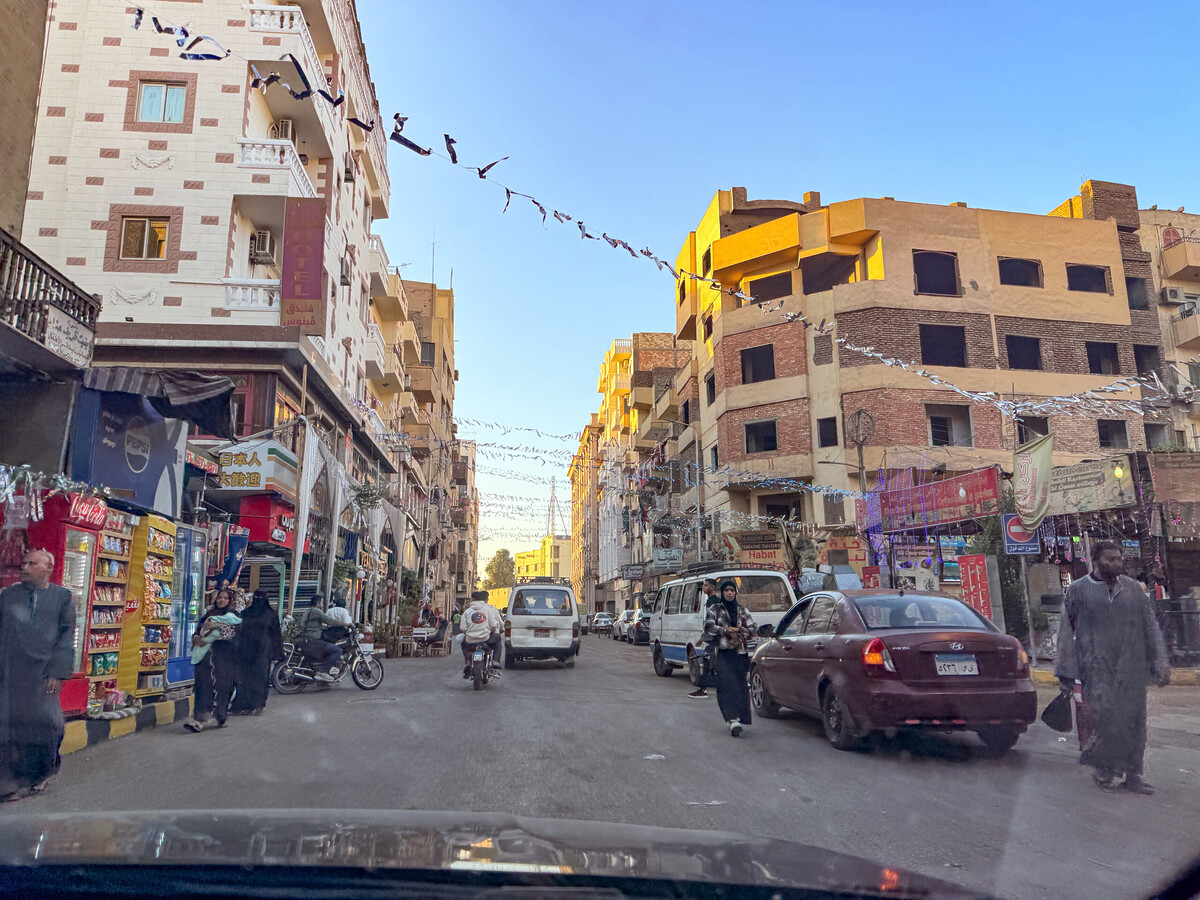
If you go there by car, keep in mind that Luxor’s city center is full of self-appointed parking attendants who aggressively ask tourists for money. We also had a negative experience there.
Some locals can be very aggressive with tourists and even shout lies just to make you pay them. For example, horse carriage drivers tried to tell us that a road was closed and that they could take us along the “open” road instead. Of course this was completely untrue.
My advice is simple: don’t believe everything people tell you, don’t give money without a real service, and stay careful in that area!
We ended the day with dinner at our hotel’s buffet restaurant, followed by a relaxing walk along the Nile River in the hotel garden.
Day 6: Travel to Hurghada
On the sixth day, continue your journey to Hurghada.
If you missed any sights in Luxor, you can still visit them in the morning, but I recommend starting the drive while it’s still daylight. The journey takes about four hours.
Leaving Luxor was not easy for us, because several roads recommended by GPS were closed by the police. Eventually we managed to reach the highway.
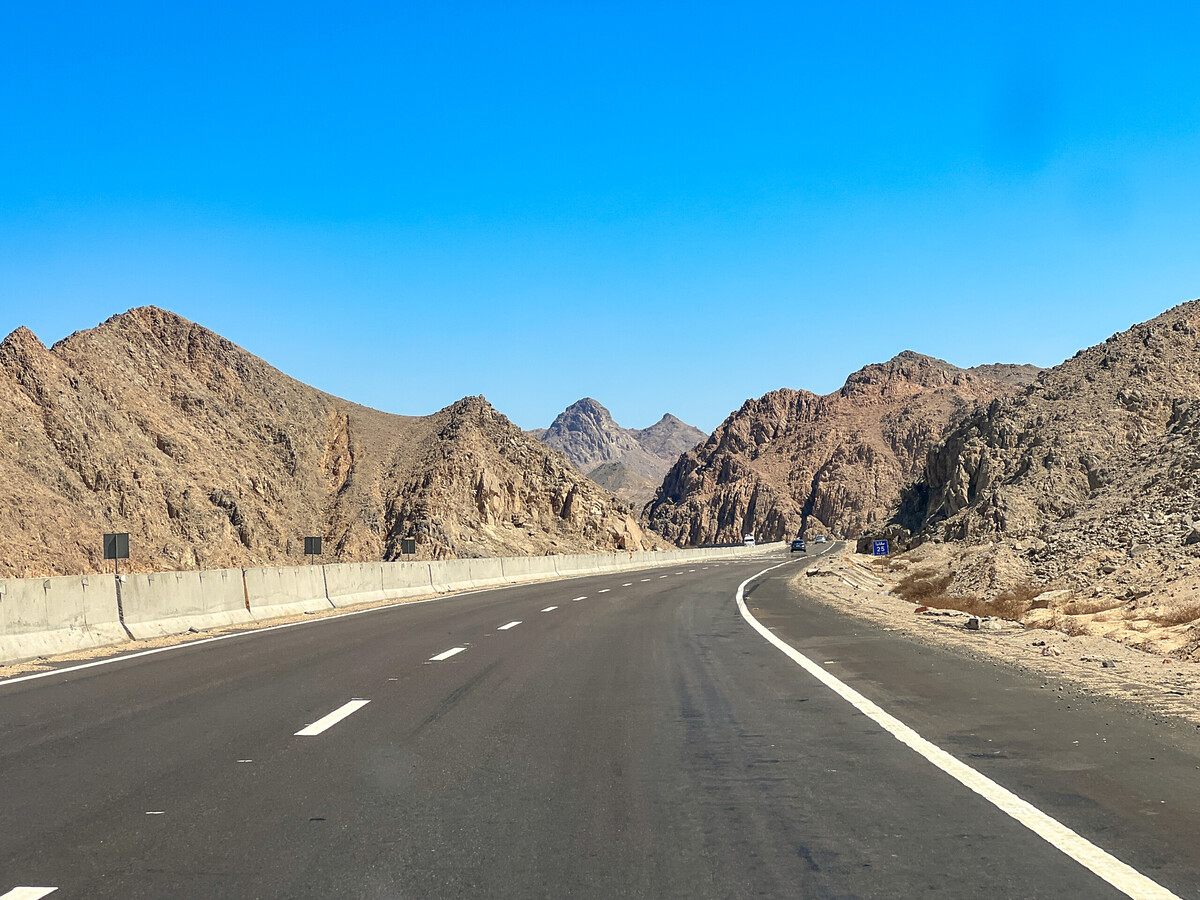
The road first leads toward Qena, then continues toward Hurghada along a surprisingly good two- or three-lane highway through the mountains, which is actually very scenic.
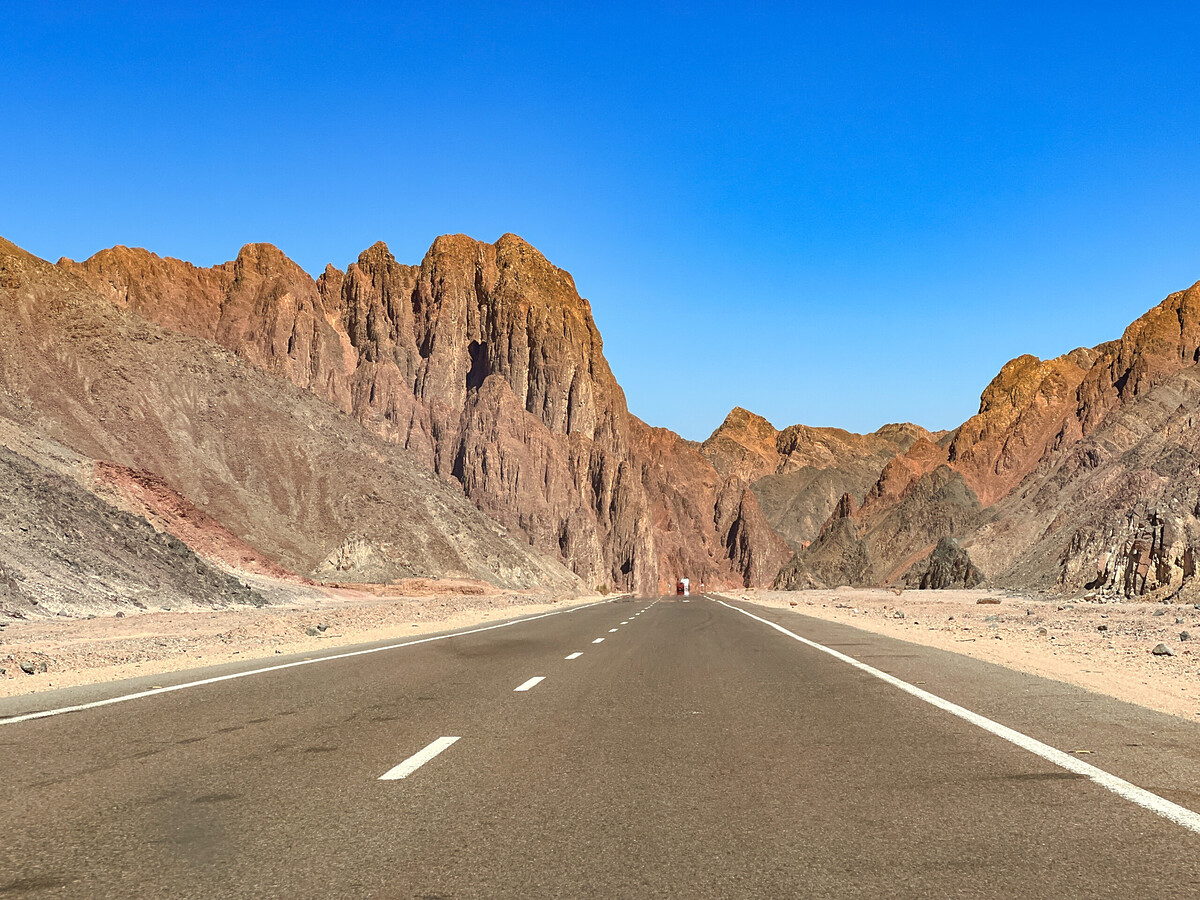
Again, prepare for the long drive by bringing enough fuel, food, and water, because there are very few places to stop along the way.
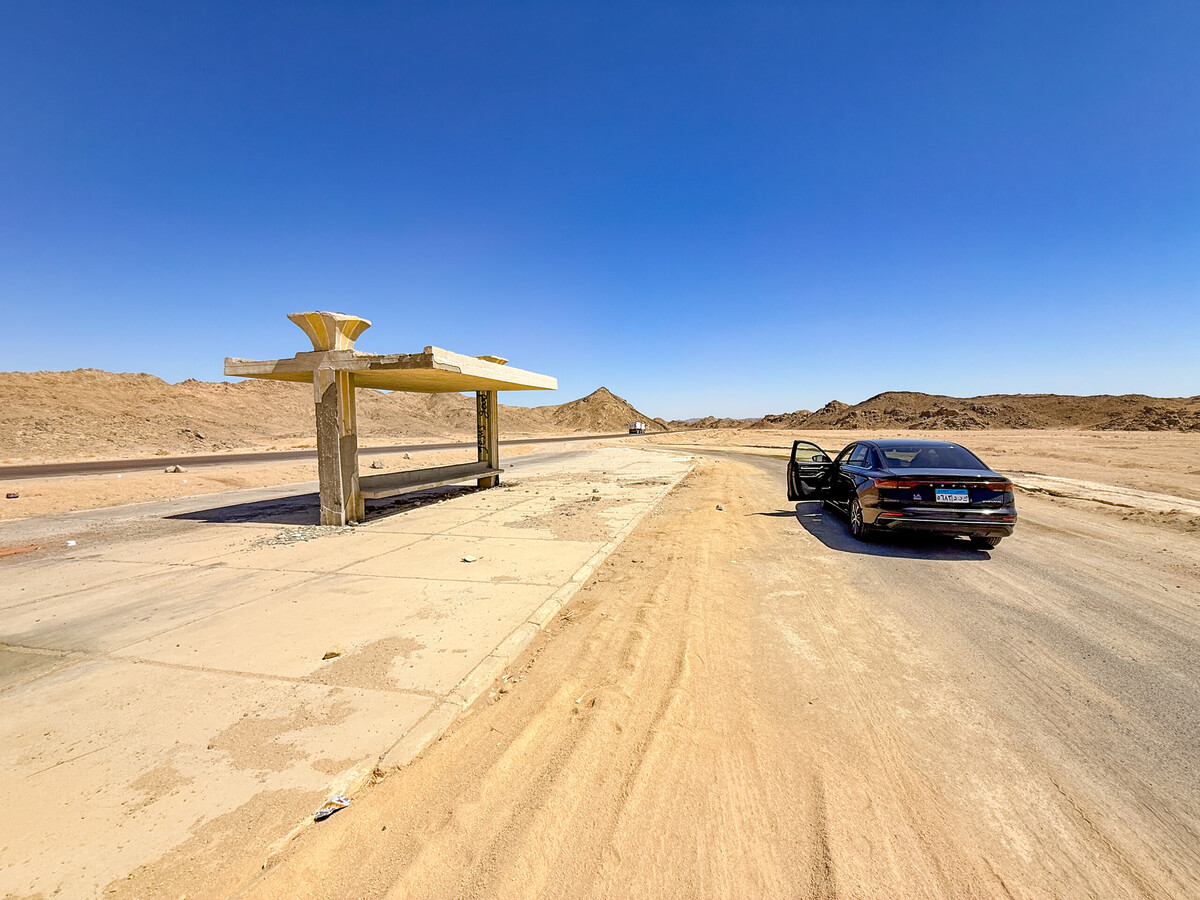
When you reach Safaga, you will finally see the Red Sea, which is a beautiful sight. After that, you still need to drive a bit further to reach Hurghada.
As soon as you arrive in the city, you’ll see countless hotels, shops, malls, and restaurants. This is where you really start to feel that you have arrived in a Red Sea resort destination.
If you still have time in the afternoon, head to the Hurghada Marina area for a walk. There are many shops and restaurants here and it’s a great place to spend the evening.
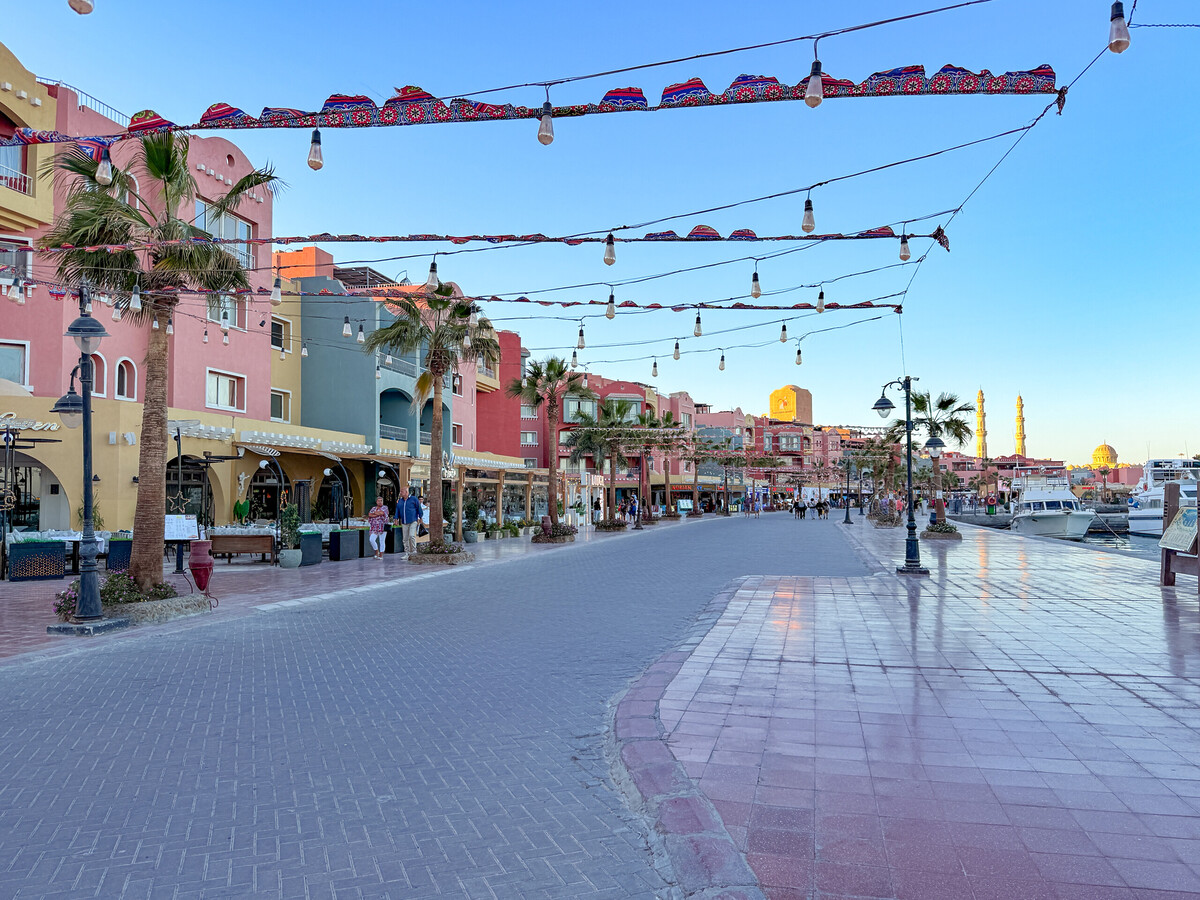
If you are staying at a beachfront hotel, you can also enjoy some swimming. We visited during the winter months and found the water a bit cold, but swimming is still possible if you don’t mind the temperature.
Where to stay in Hurghada
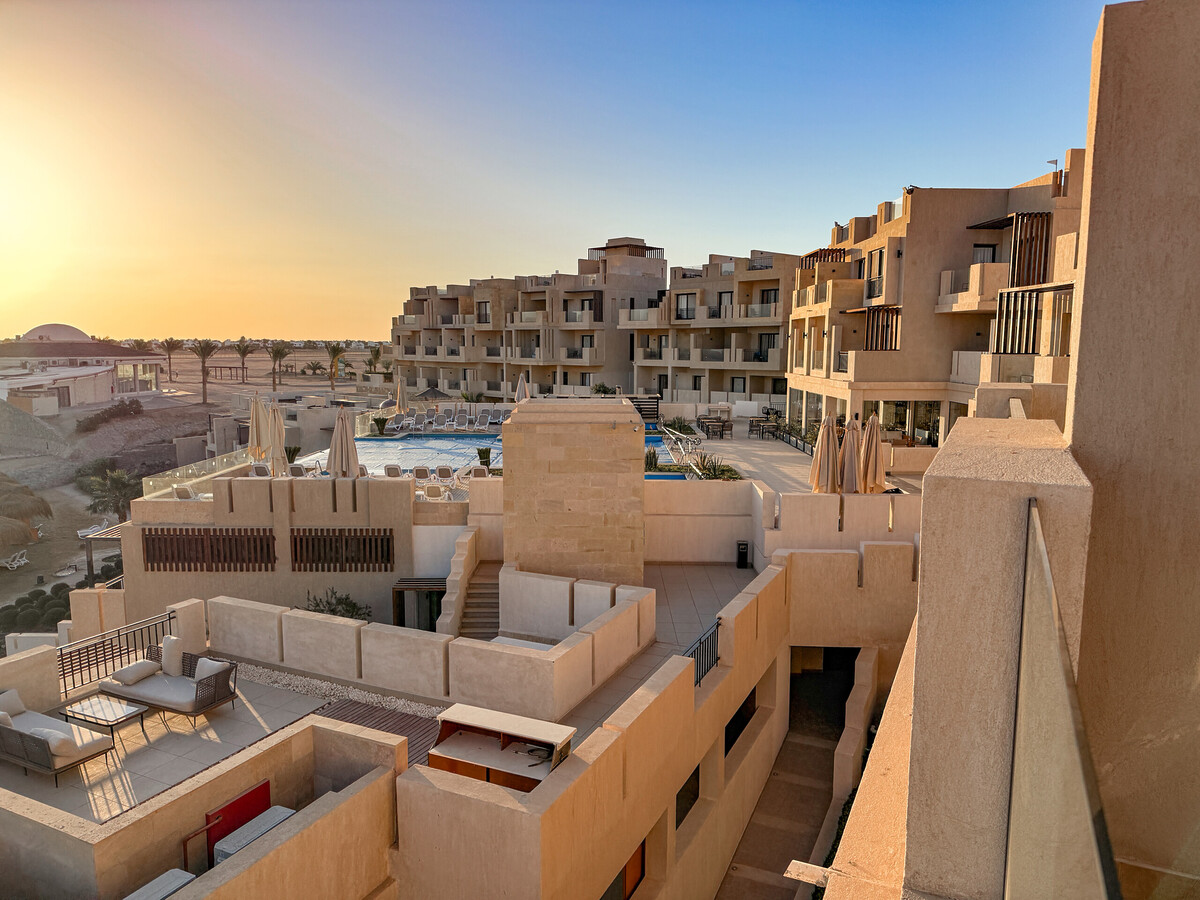
We chose CREEK Hotel & Residences El Gouna, although this is not a beachfront hotel. However, it offers very good value for money.
If you’re looking for beachfront accommodation, I recommend the JAZ hotel chain, which was also recommended to me by friends who have traveled to Egypt many times.
Day 7: Hurghada
For the last day, book a morning boat trip on the Red Sea.
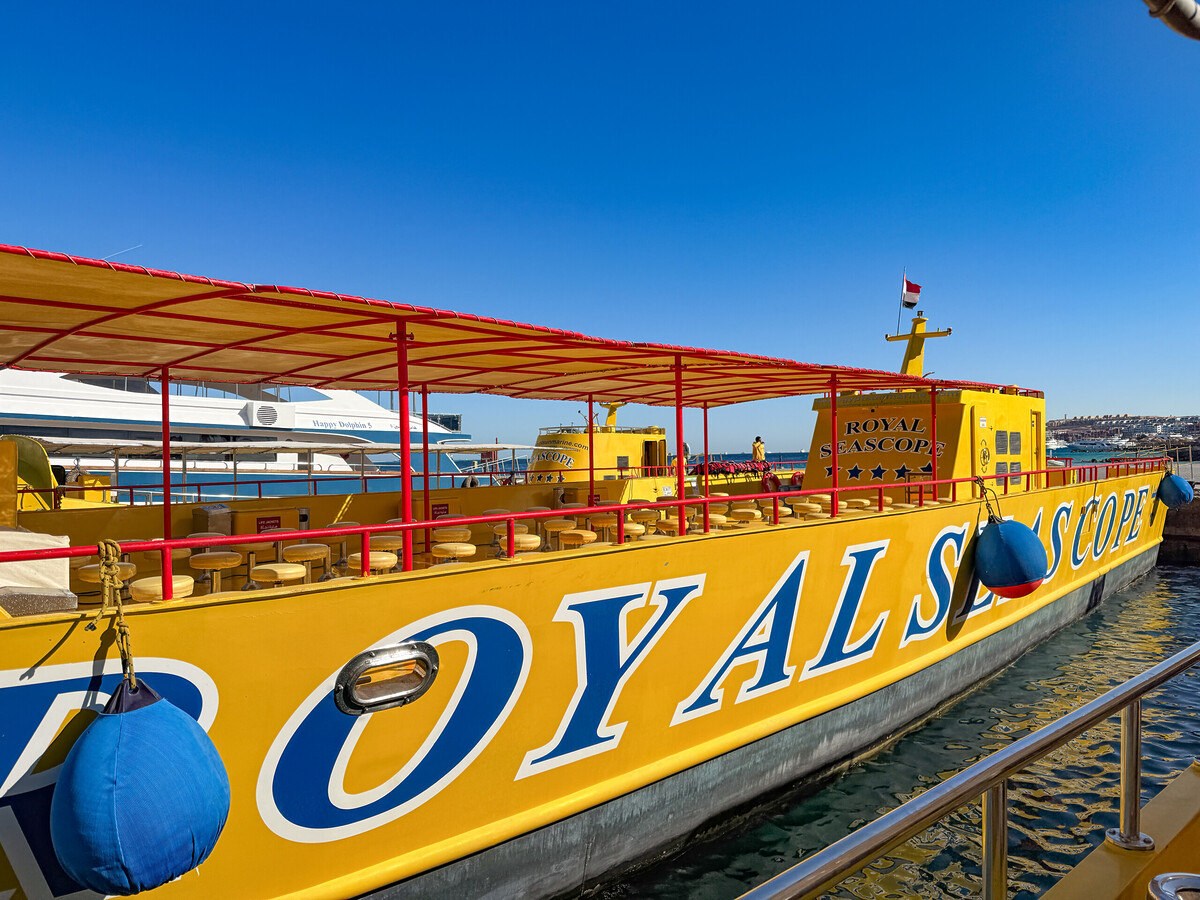
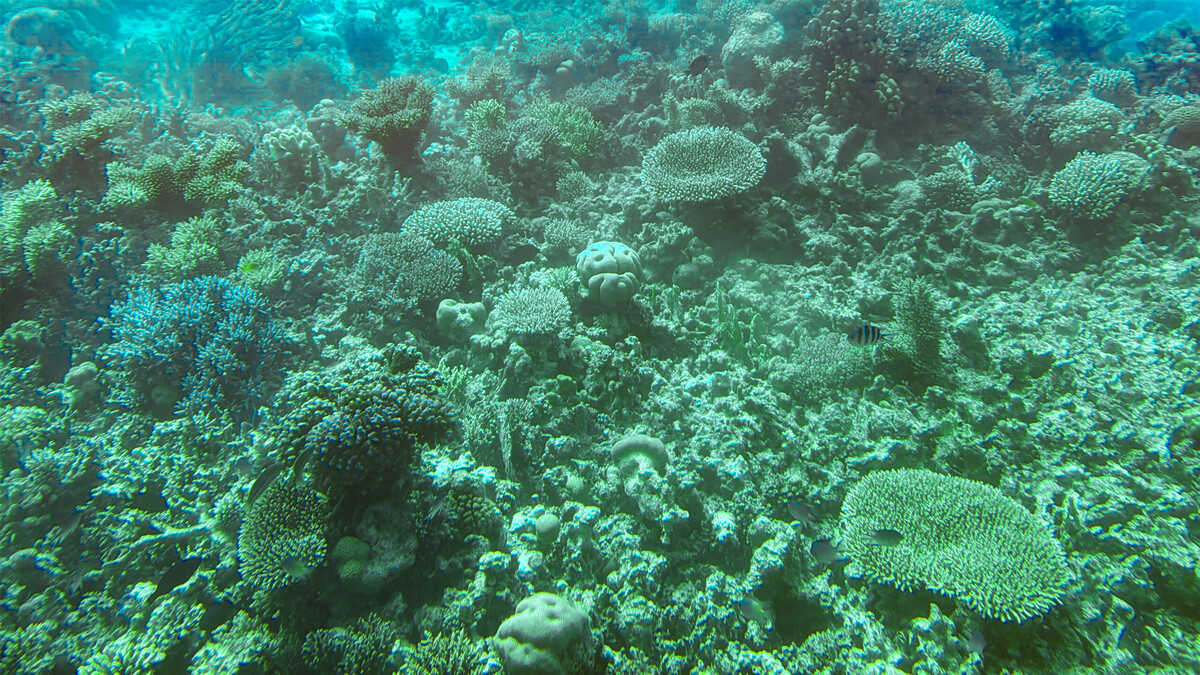
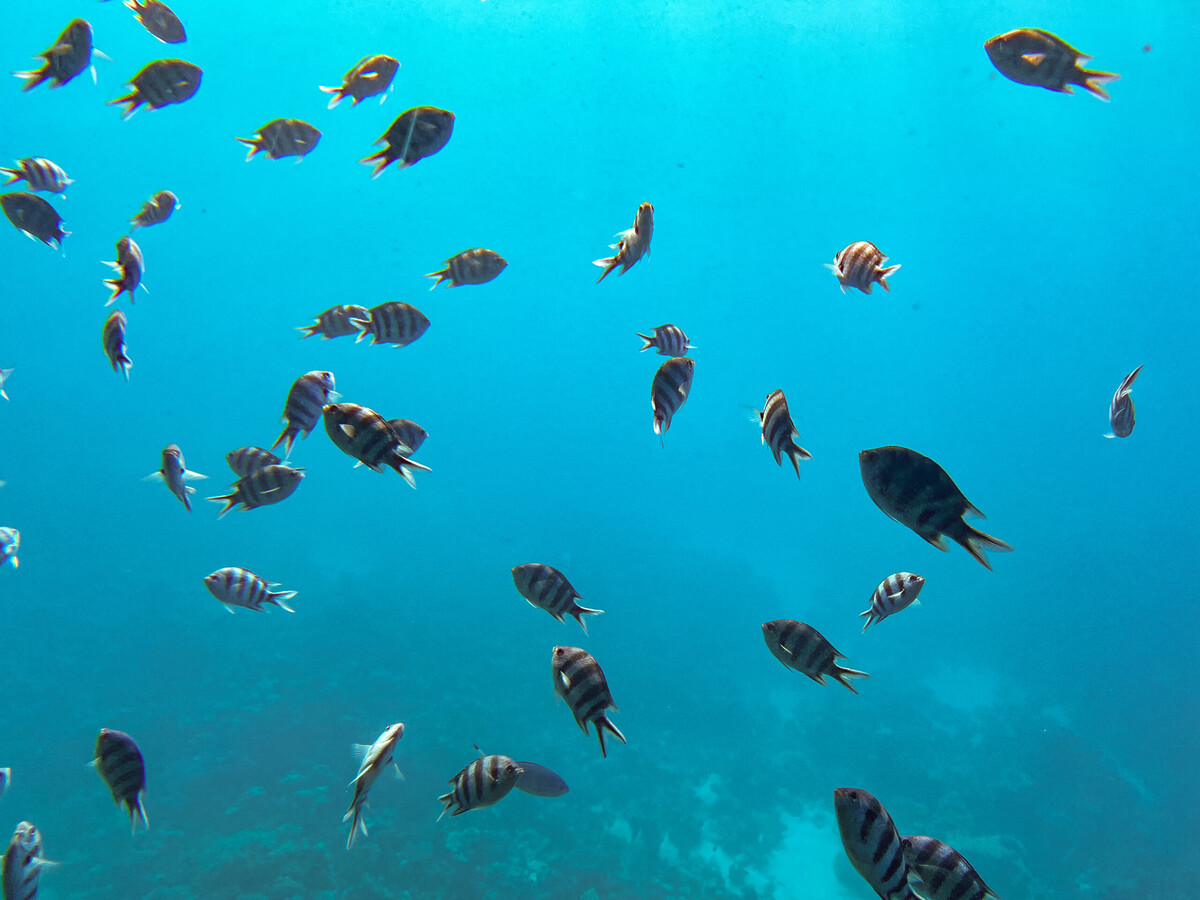
I especially recommend the Seascope boats, which have an underwater viewing deck. You can go downstairs and watch the coral reefs, fish, and marine life through large glass windows, which is a very exciting experience.
Many of these tours also include snorkeling stops.
We also joined one of these boat tours. It lasted about two hours, and we really enjoyed it.
I recommend booking these tours through GetYourGuide, because they are usually not very expensive and in my opinion this is one of the best activities in Hurghada.
Hurghada also has some excellent shopping opportunities. One place I particularly recommend is Senzo Mall.
If you still want to visit more attractions in the city, you can also check out the Hurghada Grand Aquarium, the Hurghada Museum, or Mini Egypt Park in nearby Makadi Bay.
Hurghada is a very family-friendly destination, and many people come here specifically for beach holidays with their families. However, during our 7-day itinerary we only had time to see a small part of it.
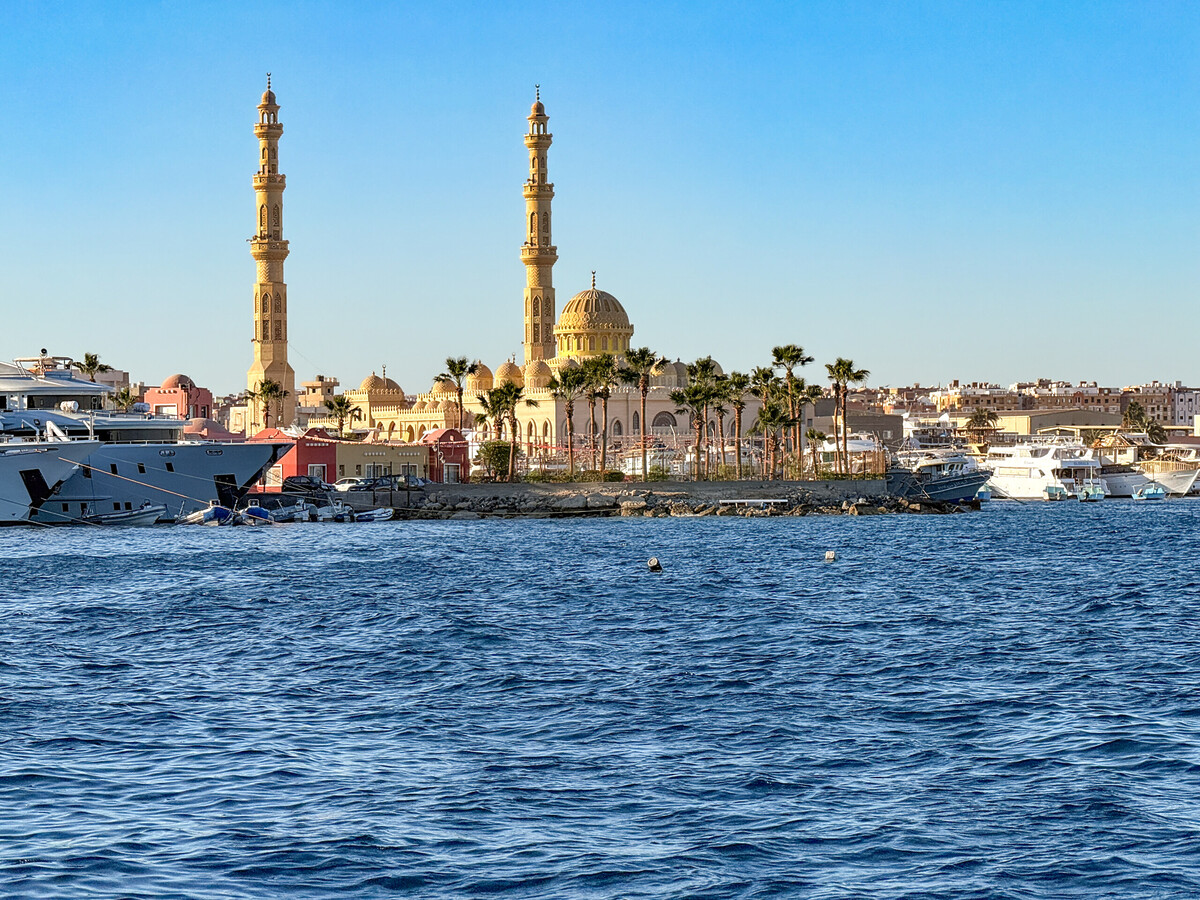
And with Day 7, our 7-day Egypt itinerary comes to an end.
In our case, we flew home from Hurghada, which offers many direct flights to European cities. Even if you need a connecting flight, there are still plenty of options available, often with a transfer in Cairo.
Keep in mind that Hurghada Airport can be slow, especially during security checks. Out of all the airports we used, this was the one where the procedures took the longest, so make sure to arrive early and allow plenty of time to get through all the controls.
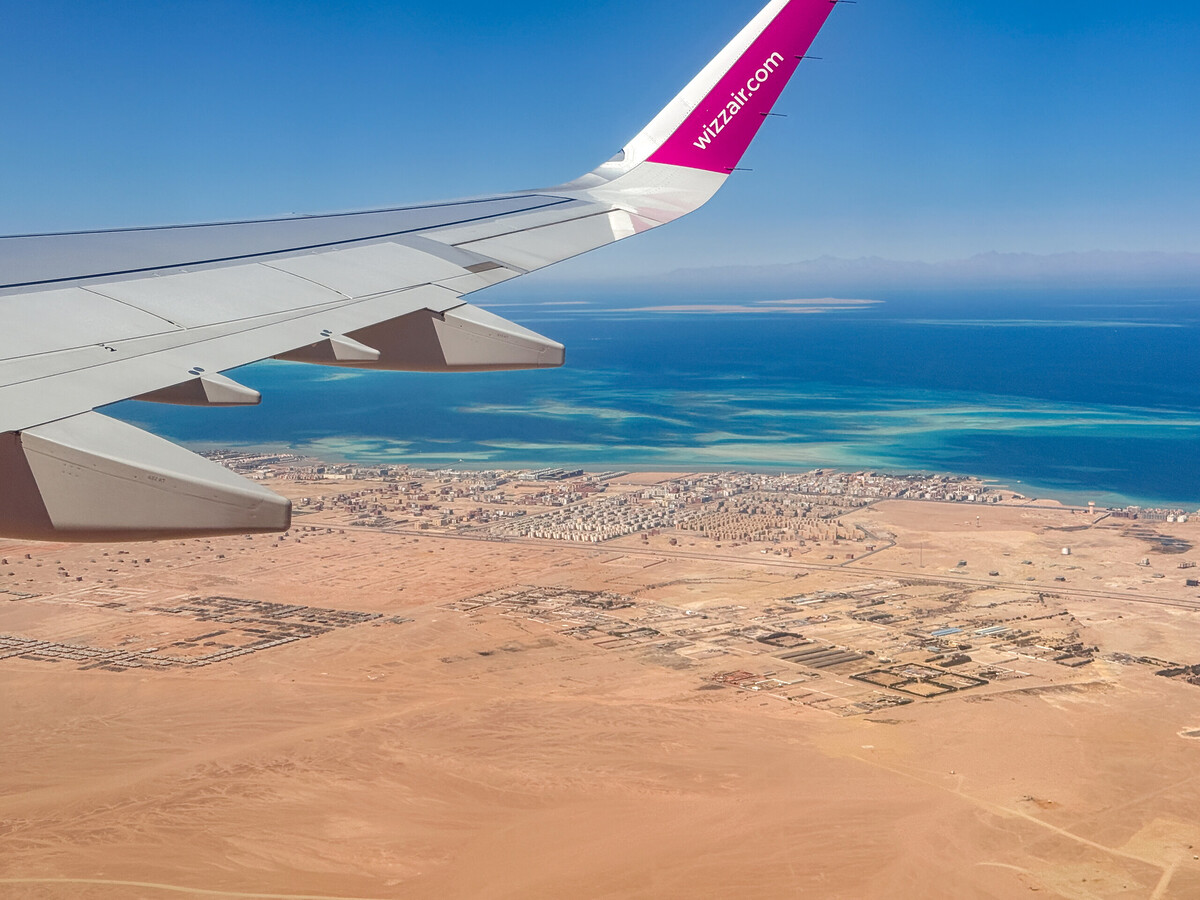
This 7-day Egypt itinerary may feel fast-paced, but it still lets you experience some of the country’s most iconic highlights.
If you still have questions about planning your own trip, keep reading the guide below, where I share more practical tips and useful information for visiting Egypt.
Frequently asked questions about planning your own trip to Egypt
Planning a trip to Egypt for the first time usually comes with many questions.
Here are some of the most common things travelers want to know before visiting the country:
How many days should you spend in Egypt?
If you want to see the absolute essentials, I think Giza and Luxor are the minimum. For that, I recommend at least 4–5 days.
We explored the places mentioned above in 7 days, which was a bit fast-paced, but still very rich in experiences and definitely doable. In my opinion, 7 days is an ideal amount of time for a first trip to Egypt.
If you prefer to travel at a slower pace or want to add extra activities and places, I would recommend 10–14 days. With that much time, you can really explore the country in more depth.
What to skip if you have less time
If you have less time than 7 days, I would skip Abu Simbel, Aswan, and Hurghada.
For example, 5 days can be a good amount of time to explore Giza and Luxor, which are the most essential highlights of Egypt.
What to add if you have more time
If you want to extend this itinerary, I already mentioned a few additional places earlier in the article.
If you want to see even more of Egypt, Sharm el Sheikh or the Siwa Oasis can also be very interesting destinations and are worth adding a few extra days to your trip.
Is Egypt safe to travel to?
Even though conflicts are common in some parts of the Middle East, Egypt has remained a generally safe country for tourists.
Is Egypt safe for solo female travelers?
In theory, Egypt is considered safe, and you rarely hear about crimes specifically targeting women.
However, as a woman traveling there, I noticed that Egyptian men often like to stare, call out, or flirt with female travelers. When I was walking around alone, this sometimes led to uncomfortable situations.
Because of this, even though the country is technically safe, I personally wouldn’t choose to travel there completely alone as a woman.
How to get to Egypt
Almost all tourists arrive in Egypt by plane, so the easiest way to start planning your trip is by checking flight comparison websites.
The national airline is EgyptAir, which operates flights from many international destinations.
You’ll need a visa to enter Egypt, which currently costs 30 USD.
Although it’s possible to apply online, I personally wouldn’t recommend it. When we arrived, some travelers next to us had problems because their visas had not been approved in time. The authorities can take up to 7 days to confirm the application, and without that confirmation they were almost denied entry.
For this reason, it’s often easier to buy the visa on arrival at the airport. Simply go to one of the bank counters, pay the fee, and you’ll receive a visa sticker that will be placed in your passport during passport control.
You’ll also get a small entry form to fill out with your personal details, so bring a pen, as they usually don’t provide one.
With the completed form, the visa sticker, and your passport, you can proceed through border control, where you may be asked a few basic questions.
It’s also a good idea to exchange some money at the airport, as it can be harder to do later.
When leaving Egypt, you’ll need to fill out a similar form to the one you completed upon arrival. This is required at exit control before you can leave the country.
Which airport is best to arrive at?
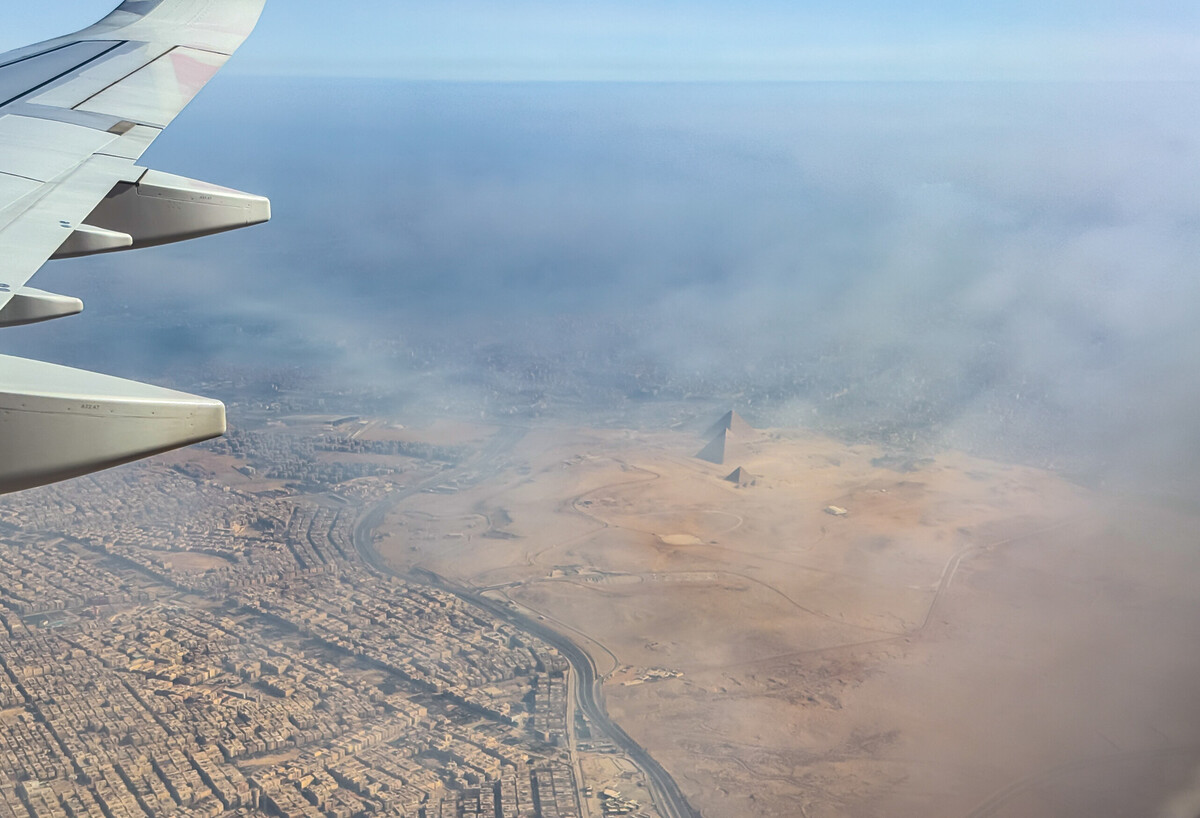
I visited several airports in Egypt, including Giza, Cairo, Hurghada, and Aswan.
Out of these, Cairo International Airport is the largest and best equipped. However, you shouldn’t expect airports similar to those in Western Europe or North America.
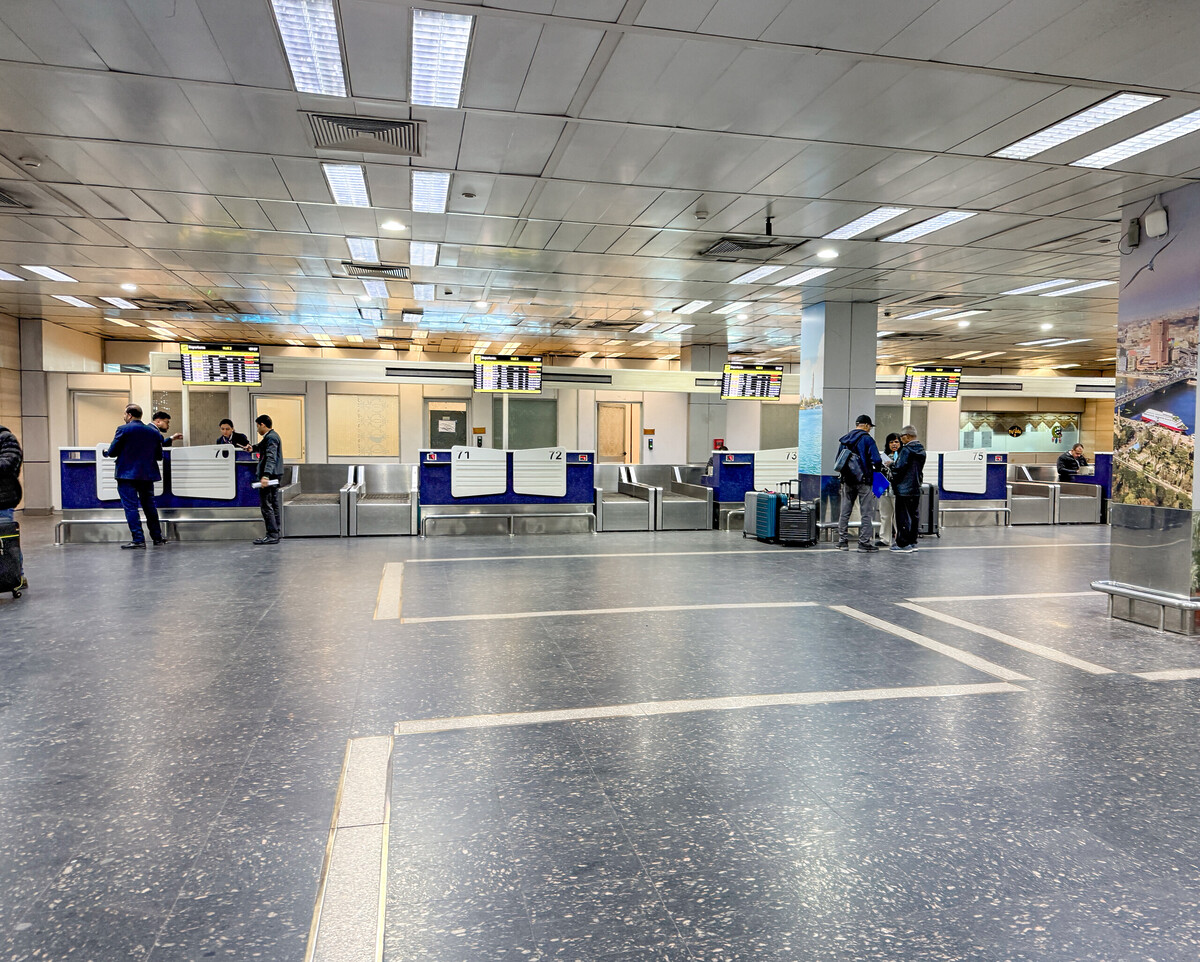
Many airport buildings feel quite outdated, cleanliness can be inconsistent, and there are police and security officers everywhere who frequently check documents.
Security procedures can also be very strict and time-consuming. For example, when we passed through Hurghada Airport, we had to go through three scanners, two physical security checks, and around four or five passport inspections before we finally reached the gate.
Even though there are many staff members, the process often moves very slowly, and the overall work culture and efficiency can feel quite different from what travelers may be used to in Europe or North America.
Where to stay during this 7-day trip
Although I already mentioned the hotels I recommend earlier in the article, here is a quick summary of the places where I suggest staying during this trip:
- In Giza: Hyatt Regency Cairo West
- In Cairo: Le Méridien Cairo Airport
- In Abu Simbel: Azal Lagoons Resort Abu Simbel
- In Luxor: Steigenberger Resort Achti
- In Hurghada / El Gouna: CREEK Hotel & Residences El Gouna.
How to get around Egypt
This is one of the most exciting questions if you are organizing your trip on your own. All the usual transportation options are available in Egypt, and I have to admit that this was one of the most difficult parts of planning our trip.
It really matters how you travel from one place to another, and there are many factors you need to consider when deciding what works best for you.
Driving in Egypt
I have to admit that almost everyone tried to discourage us from driving in Egypt.
People who wanted to sell us tours claimed that you can’t travel around Egypt by car without special permits, that the police would constantly stop us, and that driving there is extremely dangerous.
None of this turned out to be true.
We still decided to take the risk and drive ourselves, and we didn’t regret it at all. Both of us are experienced drivers and already familiar with the driving style in southern countries, so the situation wasn’t completely new to us.
As long as you have your rental car documents, an international driving license (Geneva Convention format), and your passport, you should be able to pass police checkpoints without problems.
Police checks are common, especially at governorate borders, city entrances, and near tourist sites. However, during our 2000 km road trip, we were stopped only twice. The officers simply asked where we were from and then let us continue.
At dozens of other checkpoints we were waved through without any questions.
There are, however, a few important things to keep in mind.
For example, the road between Aswan and Abu Simbel closes after 5 PM, and I would not recommend driving anywhere in Egypt at night. Traffic is chaotic, and roads often have speed bumps, potholes, and unexpected obstacles that are much harder to see in the dark.
There are also occasional toll roads, mostly around Cairo, but the fees are very small.
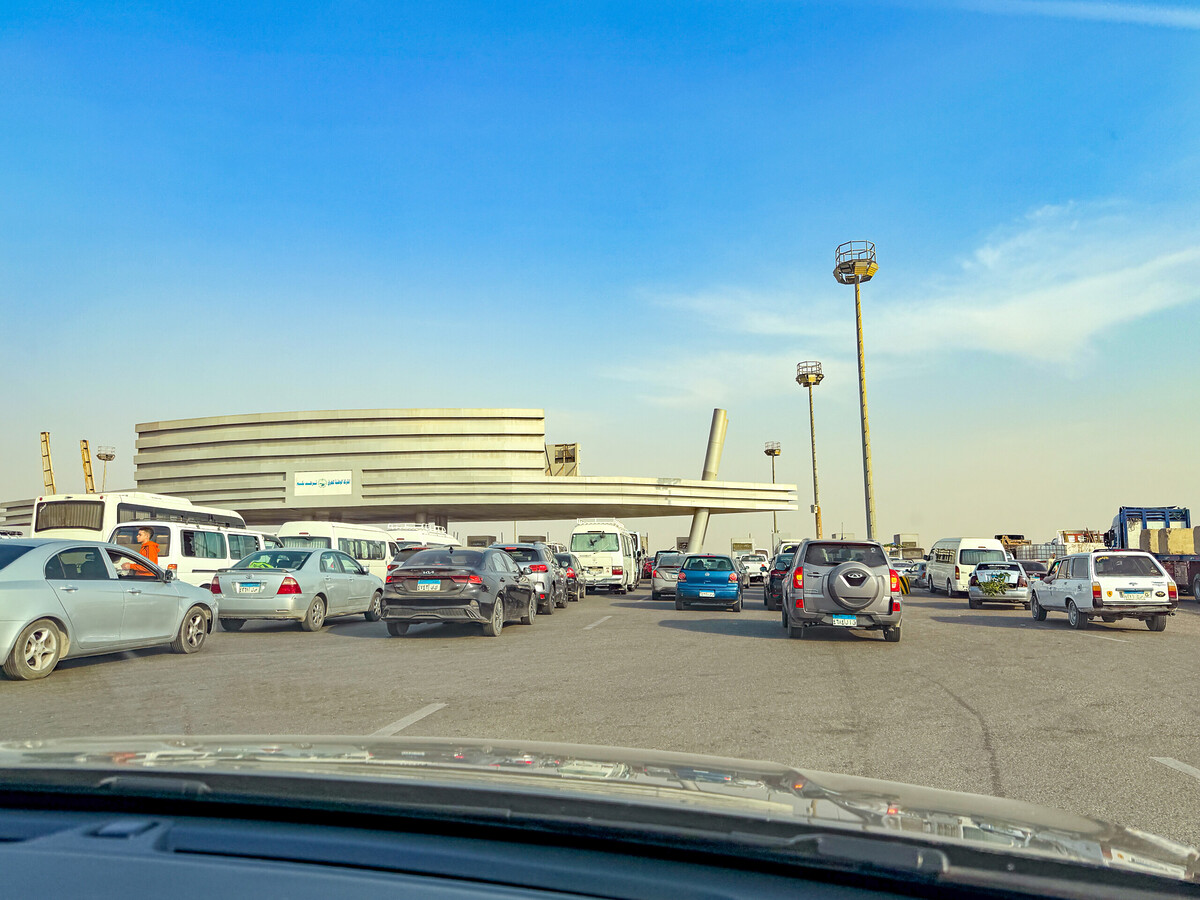
The real challenge is the driving style and road conditions.
Things you should be prepared for:
- Speed bumps and potholes are extremely common.
- It helps if you follow a local driver who already knows where the obstacles are.
- Driving is slow almost everywhere, so expect longer travel times than your GPS suggests.
- Don’t argue with local drivers. Many people drive aggressively, honk constantly, and ignore right-of-way rules.
- Cars sometimes drive against traffic without caring about the rules.
- There is no strict right-lane driving on highways, and overtaking happens from every direction.
- On highways you will often see special left-side lanes for turning around. These are normal to use.
- Turn signals are rarely used, and locals communicate a lot through honking.
- Speed limits are often ignored, although road conditions usually prevent very fast driving.
- Focus on moving with the traffic rather than strictly following every rule.
- Expect tuk-tuks, overloaded trucks, donkey carts, horse carts, motorcycles, and sometimes aggressive drivers. At one point we even saw children directing traffic during a traffic jam.
- Fuel is extremely cheap compared to Europe. In 2026 it was around 21 EGP per liter (about 0.35 EUR).
- Don’t always trust the GPS. Avoid narrow city alleys whenever possible because it can be very difficult to turn around.
Car rental in Egypt
We rented our car from Sixt, both in Cairo and Aswan, and returned the second car in Hurghada.
Sixt has official offices in Cairo and Hurghada, but cars can also be delivered to Luxor or Aswan upon request, although this may make the rental slightly more expensive.
Another well-known company is Avis, though it is not as widely available.
Things you should pay attention to:
- Always choose full insurance coverage.
- If you follow this itinerary, you’ll need unlimited mileage starting from Aswan.
- Mobile internet and GPS work well in Egypt. I used Etisalat during the trip.
Parking in Egypt
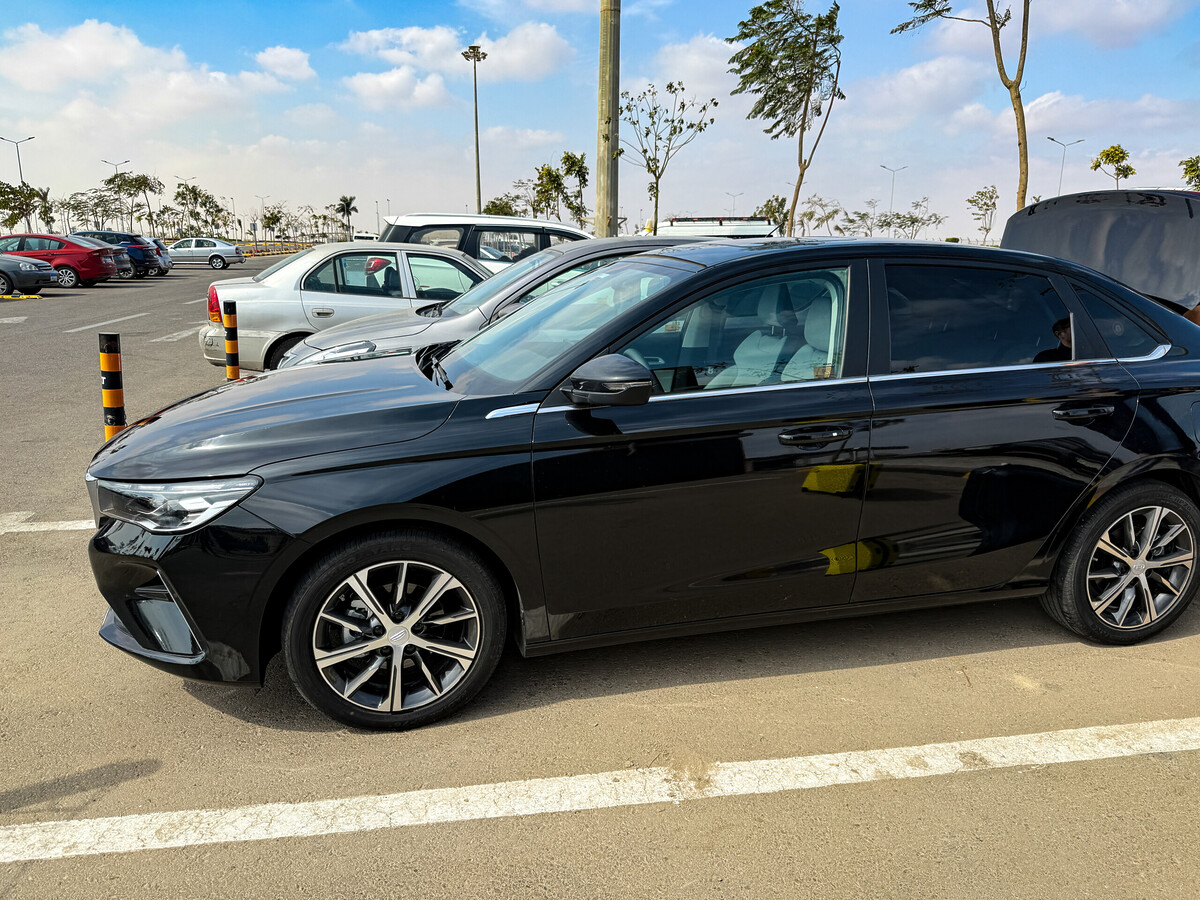
Parking in cities is usually available on the street and often free.
However, many self-appointed parking helpers approach tourists and demand money for “helping” you park. These people can be quite pushy, so it’s best to avoid them.
Most major attractions also have private parking areas, where you need to pay a small fee. Sometimes payment is by card, sometimes cash. On average we paid around 50 EGP per parking.
Overall, we didn’t have serious problems with parking apart from the occasional people asking for money.
Flying in Egypt
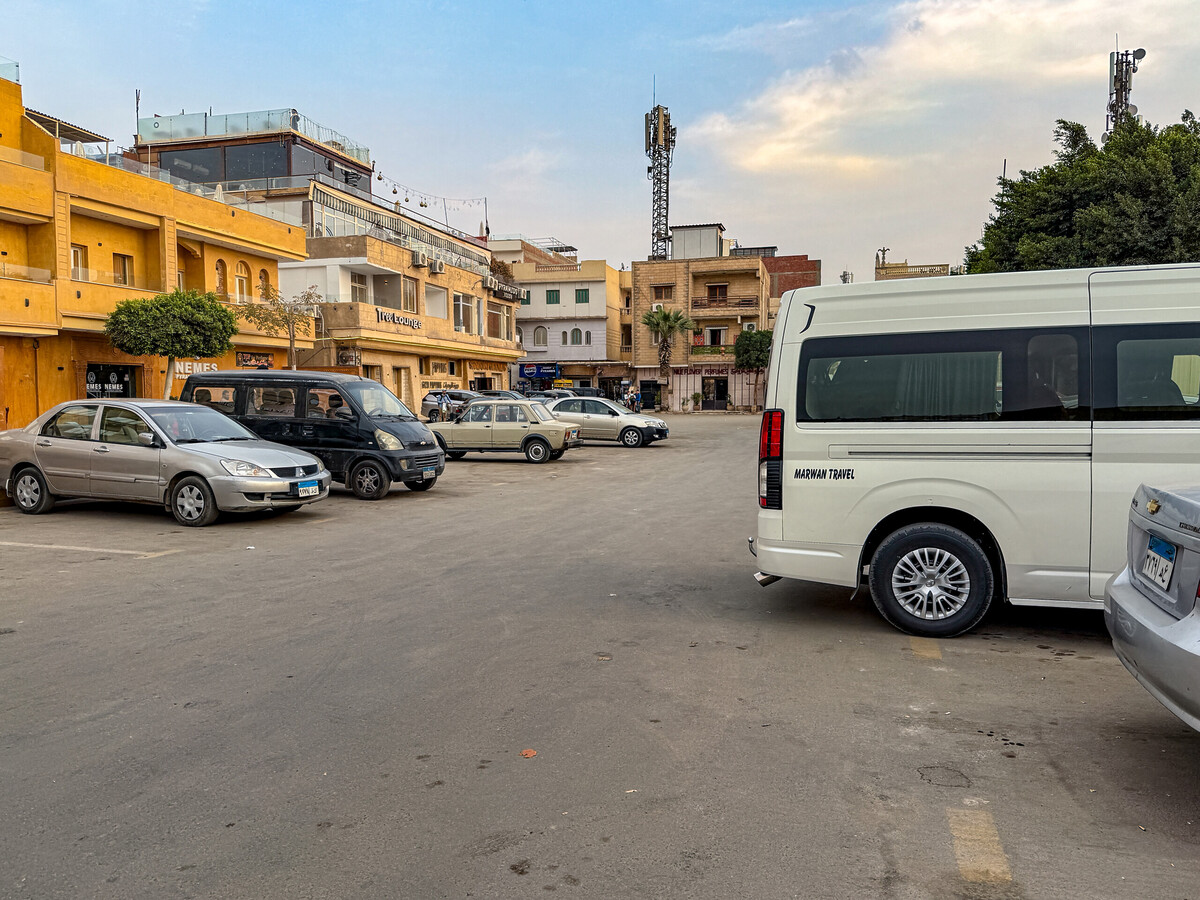
According to this itinerary, we flew from Cairo to Aswan, which saved a lot of time.
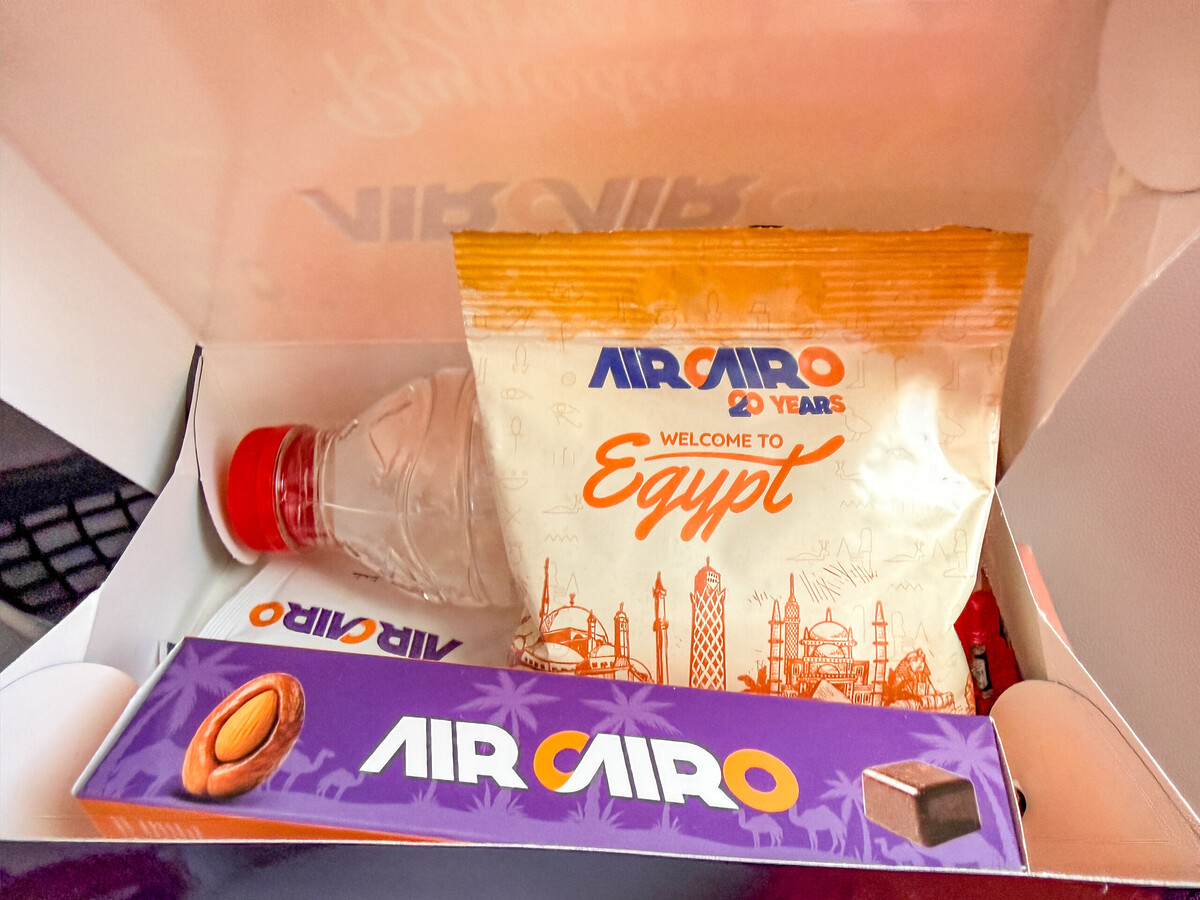
Domestic flights are common in Egypt, and most major cities are connected by air. The main airlines are EgyptAir, Air Cairo, and Nile Air.
Airport procedures for domestic flights are usually simpler than for international flights, but still more complicated than in the EU.
I recommend checking options on Google Flights and also looking directly at the airline websites.
Traveling by bus in Egypt
Bus travel is popular in Egypt and usually the cheapest way to get around.
The most common companies are GoBus and BlueBus, which operate several daily routes between major cities.
However, there were two issues for us: neither company runs routes to Aswan or Abu Simbel, and traveling with large luggage can be inconvenient.
For this reason we decided to rent a car.
If your goal is to travel as cheaply as possible, buses can still be a good option. Just keep in mind that some travelers report long stops, smoking drivers, or less clean vehicles, so this option may require some compromises.
Traveling by train in Egypt
There is also train service along the Nile, connecting cities all the way to Aswan, with several departures daily.
Buying tickets online can be difficult, so it may be easier to purchase them locally at the station.
However, luggage storage can be uncertain and many signs are only in Arabic, which is why we chose not to rely on trains.
That said, trains between Cairo, Luxor, and Aswan are generally considered safe and comfortable if you prefer not to fly.
Using taxis in Egypt
Taxis are a common and flexible way to travel both within cities and between nearby destinations. Prices are usually reasonable.
You can also use apps such as Uber and Careem in many places.
Some taxi vehicles were not in the best condition, but overall they remain one of the easiest options if you don’t want to drive yourself. Private transfer services are also widely available for longer distances.
Group tours in Egypt
Group tours are the most popular option among tourists, and they are also the easiest since someone else handles the organization and logistics.
You can find many tours in Egypt travel Facebook groups or on platforms like GetYourGuide.
The downside is that tours are not flexible. They often follow strict schedules, sometimes visiting attractions at inconvenient times, and overnight bus travel is quite common.
For these reasons I personally wouldn’t choose this option, but if you prefer a simple, fully organized trip, group tours can still be a good choice.
Another option is Nile cruises, which are also very popular. However, I only recommend them if you have enough time, as they are quite slow when traveling between cities. If you simply want to experience the Nile, you can also find shorter boat trips within the cities themselves.
Best time to visit Egypt
The main tourist season in Egypt generally runs from September to April.
If you’re planning a sightseeing trip, I especially recommend the winter months, when you can avoid the extreme heat. From November to March, the weather is usually very pleasant for sightseeing, with daytime temperatures between 18 and 30°C and almost no rain.
If your main goal is beach time, late summer and autumn are better choices. From August to November, the Red Sea is pleasantly warm, making it a great time to visit destinations like Hurghada.
However, keep in mind that during these months the cities can still be very hot during the day.
Early risers definitely have an advantage in Egypt. Many attractions open very early, sometimes around 6–7 AM, and most close by the afternoon, often around 5 PM.
Because of this, sightseeing is usually best planned for the morning and early afternoon, while evenings can sometimes feel quieter, with fewer activities available.
Traveling to Egypt during Ramadan
In the coming years, Ramadan often falls during the peak tourist season, so it’s important to check the dates before planning your trip.
Personally, I wouldn’t recommend traveling during Ramadan. Many restaurants remain closed during the day, and attractions often close earlier than usual. Some places may even shut as early as 3 PM, which can make planning your itinerary more difficult.
I actually traveled to Egypt during Ramadan myself, but based on that experience, I wouldn’t choose to visit again during that period.
That said, in some other Arab countries, such as the UAE, Ramadan usually causes fewer disruptions for travelers.
What to pack for a trip to Egypt
Besides the usual travel equipment, make sure to pack these as well:
- A hat and sunscreen against the strong sun
- Comfortable shoes that you can walk in even in dust and sand
- Layered clothing: during one day you can be in strong sunshine and cold wind as well
- Cash: tips are expected almost everywhere
- Disinfectant wipes or gels: since tap water is not clean and many things are quite dirty, it’s worth disinfecting frequently
- Swimwear and possibly snorkel/diving gear (although the latter is often available for rent).
Where to eat during the 7 days
I already recommended a few places above, but in general I advise relying on 5-star hotels and well-known restaurants.
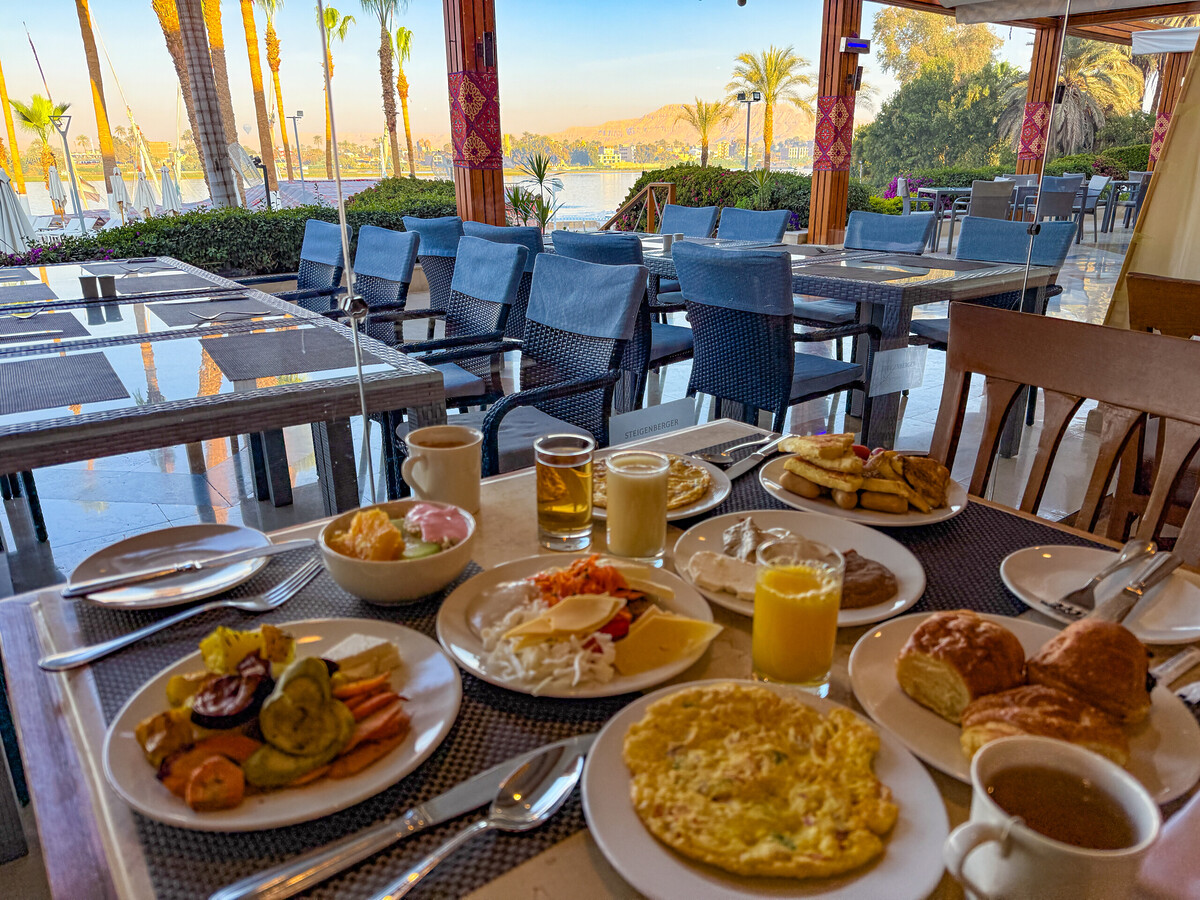
During our trip we almost always had a large breakfast at 5-star hotels, then during the day we either stopped at McDonald’s or KFC, or ate snacks we brought from home. In the evening we either went to a well-known restaurant or had the buffet dinner at the hotel.
If you want to save money, you can also go into a shop and buy some food, but the selection is very poor, so you will have to make serious compromises.
If you are looking for hypermarkets, you will only find them in larger cities. Carrefour and Spinneys are the biggest ones, but they are quite rare and their selection is limited.
Dietary options in Egypt
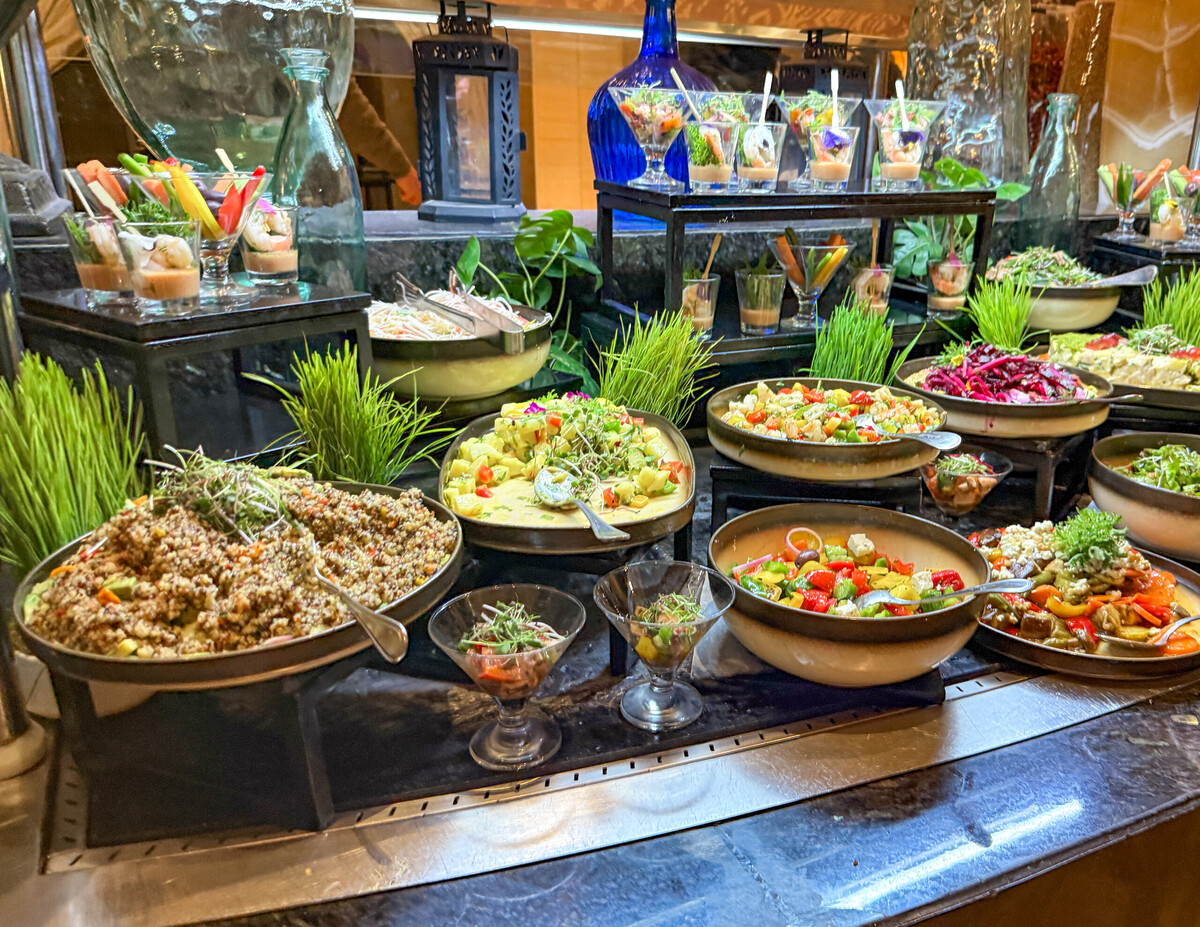
Since I follow a gluten-free and lactose-free diet, this was also a challenge in Egypt.
I knew I had to prepare in advance, so I brought enough bread from home for each day, plenty of snacks, and also things like tuna, jam, etc., so that I wouldn’t stay hungry.
Many times I had to rely on these foods because it was difficult to manage dietary eating.
The only advantage is that Egyptian cuisine uses a lot of rice and grilled meats, which are often allergen-free. So in restaurants, with some compromises (and of course with the risk of cross-contamination) I was able to manage my meals.
In shops you can find almost nothing gluten-free, not even bread! Among the hotels, only a few offered gluten-free options.
In shops I found a few sugar-free soft drinks, but even those had a limited selection.
Products that are lactose-free, dairy-free, or egg-free are almost impossible to find.
So if you have dietary restrictions, make sure to prepare well with food from home.
Travel costs in Egypt
When it comes to travel costs, many people would probably think that Egypt is a cheap destination.
However, since I explained above that it’s often recommended to stay in 5-star places, that kind of safer travel will not be cheap even in Egypt.
Honestly, our 7-day trip to Egypt was more expensive than a 7-day trip in Europe.
Why? Because 5-star places in Egypt correspond roughly to Western European 3-4 star standards, yet they are still quite expensive. On average we spent around 200 euros per night for a hotel room for two people.
Plus transportation, entrance tickets, tips, food… all of this became so expensive that during our Egypt trip we spent 300–400 euros per day.
Add the flight tickets, and our 7-day trip ended up costing around 3500–4000 euros.
Of course you can solve this cheaper with lower-category hotels, but many of those have a lot of complaints, and cheaper food vendors are also often recommended to avoid because of the higher risk of getting sick.
How to pay in Egypt
The official currency in Egypt is the Egyptian pound (EGP), and it’s worth carrying some cash with you.
However, in most places euros (EUR) and US dollars (USD) are also accepted. If you pay with dollars, keep in mind that many places reportedly only accept dollar bills issued after 2006.
Tipping in Egypt
What frustrates most tourists is that tips are expected almost everywhere:
- They carry your luggage at the hotel — tip.
- They show you where to park — tip.
- You use a toilet — tip.
- Someone gives you directions — tip.
- Hotel cleaning — tip.
- Restaurants, taxis, and other services — tip.
Unfortunately, tourists in Egypt are often seen as easy sources of money.
For example, when we were looking for street parking in Luxor, locals surrounded our car and demanded money for what was supposed to be free parking. We gave them 120 Egyptian pounds just to leave us alone and avoid any damage to the car, but they still wanted more. In the end we simply drove away because we didn’t even feel safe getting out.
Another time, a parking guard took a bribe to let us enter a place that had actually already closed.
After experiences like these, we learned to be much firmer.
One important lesson: never stop for random people on the street and never give money without a real service.
Common tourist scams in Egypt
Although I already told a few examples above, here is a general summary of what to watch out for in Egypt:
- There are friendly people, but many only want to help you for money, and they stay friendly only as long as they expect payment.
- Don’t stop for strangers on the street who try to get your attention. Often they want to pull you into paying them. They may even lie, for example claiming a street is closed and offering to guide you around it for money.
- Stay in proper, reputable places: five-star hotels and their restaurants, international restaurant chains, and a few well-known places I recommended.
- Always check your bill, as overcharging is common.
- Think carefully about which currency you use. In my experience, surprisingly, things were often cheaper in USD than in EGP. Their exchange methods are quite strange, so always calculate what is better.
- You can rely on the police, who are present everywhere, but remember one thing: they are also Egyptians. Although more reliable, they sometimes support local vendors in smaller situations.
- Bargaining is mandatory with street vendors. And be careful: once we bought a souvenir for 10 euros, later saw it for 5 euros, and in another city it was 4 euros in a shop.
- With taxis, stick to the agreed price.
- We even heard cases where a taxi driver dropped tourists at a bazaar and refused to continue until they bought something in a shop.
- Sometimes bribes solve problems, but sometimes they just take the money and you still don’t get what you wanted.
- If you drive at night, police may offer a police escort, which is usually unnecessary and often just about money. Politely refuse it.
- I also heard stories that some locals may hit tourist cars and then pretend to be victims, trying to get money from the tourist. I only heard this as rumors, but it’s interesting to know.
Basically that’s it about tourist scams in Egypt.
Unfortunately the whole system often feels designed to extract as much money as possible from tourists. Hotels, entrance tickets, car rentals and many other things are already expensive, and on top of that people expect tips everywhere.
This did leave us with a slightly bitter feeling during our trip.
That said, I don’t want to discourage you from visiting Egypt. There are many incredible experiences waiting for you there.
I just want to prepare travelers for what they might encounter, so you won’t face unpleasant surprises during your trip.
Planning a trip to Egypt can feel overwhelming at first, especially if you want to organize everything on your own. But with the right preparation, it’s absolutely possible to explore the country independently.
This 7-day Egypt itinerary shows that even in one week you can visit many of Egypt’s most iconic places, from the Pyramids of Giza and the temples of Luxor to Abu Simbel and the Red Sea.
Of course, one week goes by quickly, but it’s still enough time to experience the country’s most famous highlights.
I hope this guide helps you plan your first trip to Egypt more easily and avoid common mistakes.
And if you’re still wondering whether Egypt is worth visiting, my answer is simple: yes, absolutely. Just be prepared, stay flexible, and enjoy one of the world’s most fascinating travel destinations.

Hi! I’m Adri, the creator of Traveltipzone.com and Italianwanderlust.com.
I’ve explored over 30 countries so far and travel to around 15 each year — some new places and others I love returning to. I’m especially passionate about Southern Europe, particularly Italy, and the United Arab Emirates.
Follow my journeys for firsthand travel tips and inspiration!


