
Egypt is visited by millions of tourists every year, but one question always comes up: how should you get around the country?
Distances between the main attractions are huge, so getting around is not always simple. Traveling between places like Cairo, Luxor, and Aswan takes time, and choosing the right transport can make or break your trip.
Many travelers choose organized bus tours or domestic flights. But there are also travelers like us, who prefer to explore at our own pace, follow our own route, and travel independently.
For this, renting a car and driving in Egypt might seem like a good idea. But it also raises many questions.
Can tourists drive in Egypt? Is it worth it? Is it safe? What should you expect from Egyptian traffic?
If you are thinking about driving in Egypt as a tourist, but still have doubts, this guide is for you.
In this article, I’ll show you everything you need to know about driving in Egypt, including car rental, traffic conditions, safety, costs, and what to expect on the road. I’ll also share my personal experience and practical tips to help you decide if driving in Egypt is the right choice for your self-driving trip.
Let’s go step by step and answer the most important questions.
Is it worth traveling to Egypt independently?
One of the biggest questions travelers have is whether it’s worth traveling to Egypt independently or booking an organized tour.
Group tours are very popular, and that’s understandable. Egypt can feel unfamiliar, and a guided tour is easy, comfortable, and saves time. Everything is planned for you, and there’s always someone helping you during the trip.
But organized tours are not perfect. Many travelers end up feeling rushed, restricted, or disappointed with the experience.
If you enjoy a bit of adventure, have travel experience, and can handle unexpected situations, independent travel in Egypt can be much more rewarding. You can follow your own plan, travel at your own pace, and visit the places that really interest you.
Can tourists drive in Egypt?
This is one of the most misunderstood topics.
You might have read online that tourists are not allowed to travel freely in Egypt. This is simply not true!
Some travel companies and online forums spread this idea, but it’s often based on confusion. For example, tour buses need special police permits when transporting groups between cities or regions. However, this rule applies to tour operators, not to individual tourists.
As a tourist, you can travel freely in Egypt, including driving between cities.
You will pass police checkpoints, but if you have your documents and everything is in order, you can continue your journey without any issues.
Is it worth driving in Egypt as a tourist?
In my opinion, yes. If you want flexibility, independence, and the freedom to explore Egypt at your own pace, driving can be a great option.
This way, you can visit the places you choose, stop whenever you want, and avoid the limits of organized tours.
Driving in Egypt is not easy, but with enough experience and preparation, it is absolutely doable as a tourist. We chose this way of traveling, and overall, we were very happy with the experience.
Is it safe to drive in Egypt as a tourist?
I can’t say a full yes, but it can be done safely with the right preparation.
You are driving in the Middle East and in Africa, where many things work differently compared to what most Western travelers are used to.
Driving in Egypt is not considered safe in general. Road conditions can be poor, traffic can be chaotic, and some drivers behave unpredictably.
You may also come across unofficial “parking helpers” asking for money to watch your car.
Because of this, you need to stay alert at all times and be prepared for situations you might not expect.
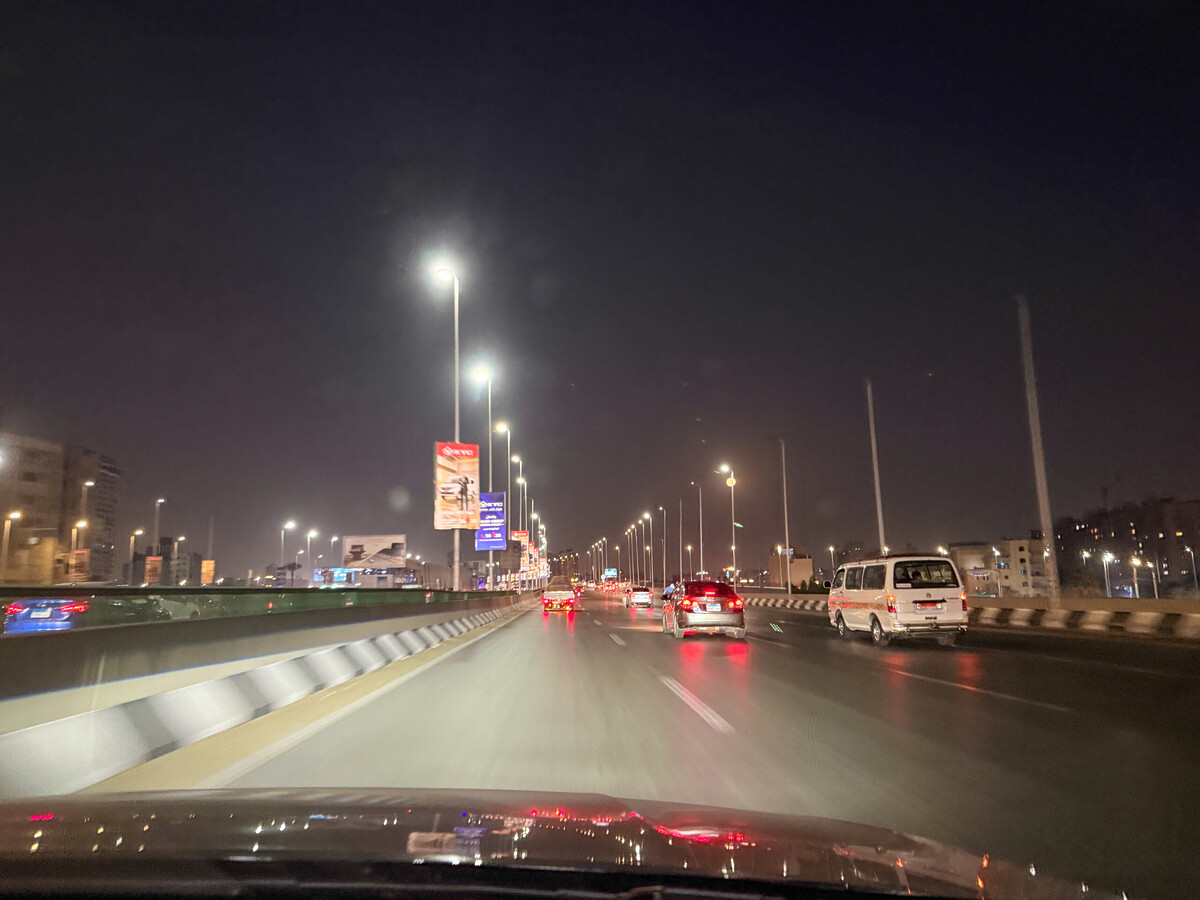
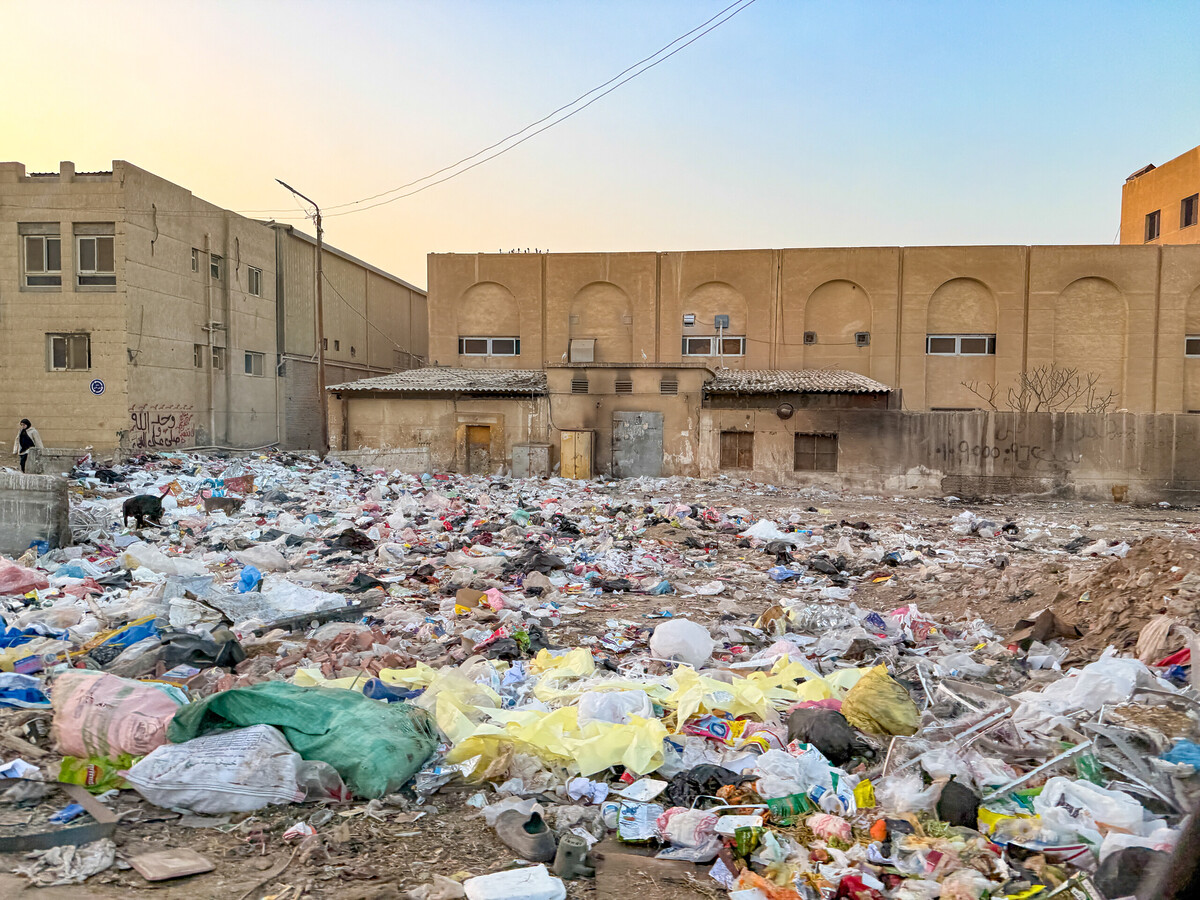
What is driving in Egypt really like?
One thing is certain: driving in Egypt is not easy.
There are traffic rules, but as a Western tourist, you won’t always be able to follow them. Not because you don’t want to, but because they don’t really fit the local driving culture.
At the same time, there are also many “unwritten rules” that locals follow. If you understand these, driving in Egypt becomes much easier.
That’s why it’s important to know what to expect before you get behind the wheel.
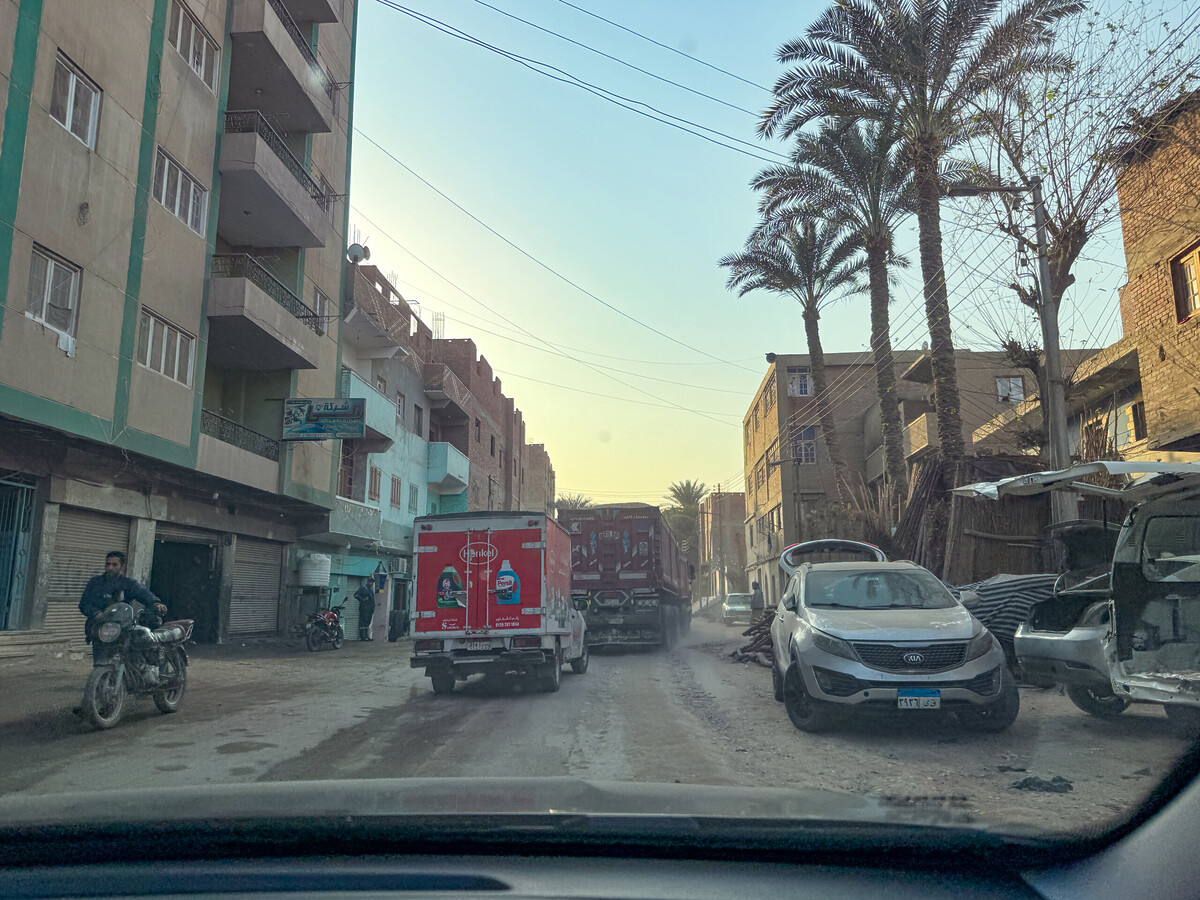
Egyptian traffic explained
Egyptian traffic can feel overwhelming at first.
Imagine around 120 million people using a road network that is not designed for this level of traffic. Roads can be crowded, signs are often missing, and drivers move in every direction.
Traffic rules are not always strictly followed. The main goal is simple: get from point A to point B safely.
At first, this may feel chaotic and stressful. But once you start to understand how it works, you realize that there is actually a kind of flow in the chaos.
Driving in Egypt is not easy, but it can be a unique and adventurous experience.
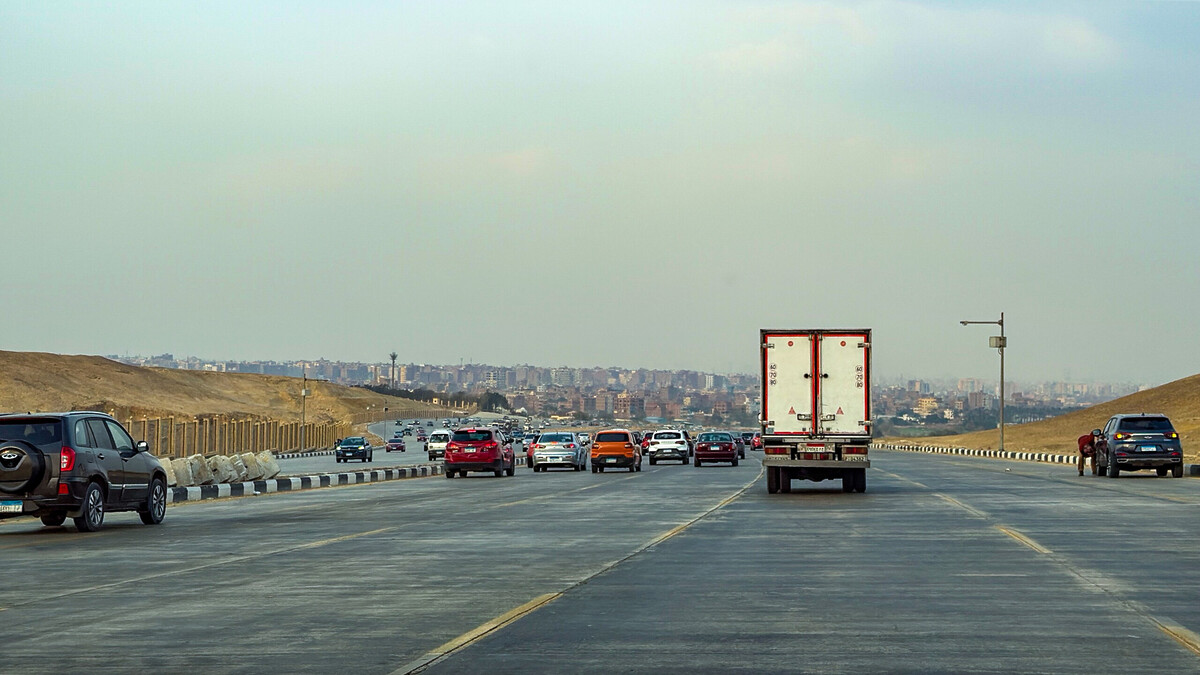
Driving in cities: Cairo, Luxor, Aswan
Driving in Egyptian cities is difficult for several reasons:
- First, there is simply too much traffic. There are cars everywhere.
- Second, the traffic is not well organized. There are not enough signs, traffic lights, or roundabouts.
- Third, road quality is often poor. Many roads are full of potholes, dust, and speed bumps.
Cairo is by far the most chaotic city, and you should be prepared for it.
Many drivers behave unpredictably, and traffic rules are often ignored.
Navigation is also not always reliable, so always use a good GPS and pay attention to where it is taking you. At one point, our GPS tried to lead us into a military area.
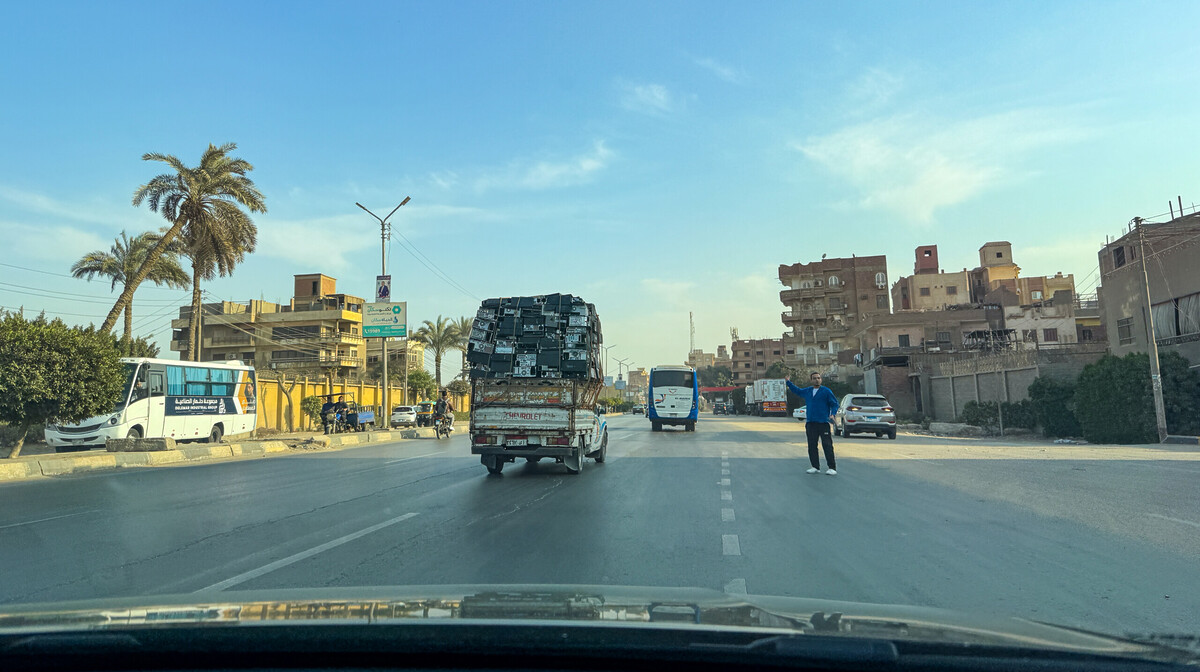
Traffic in Cairo is massive. There is a lot of dust and smog, and you will see everything on the road: pedestrians, motorbikes, horse carts, trucks.
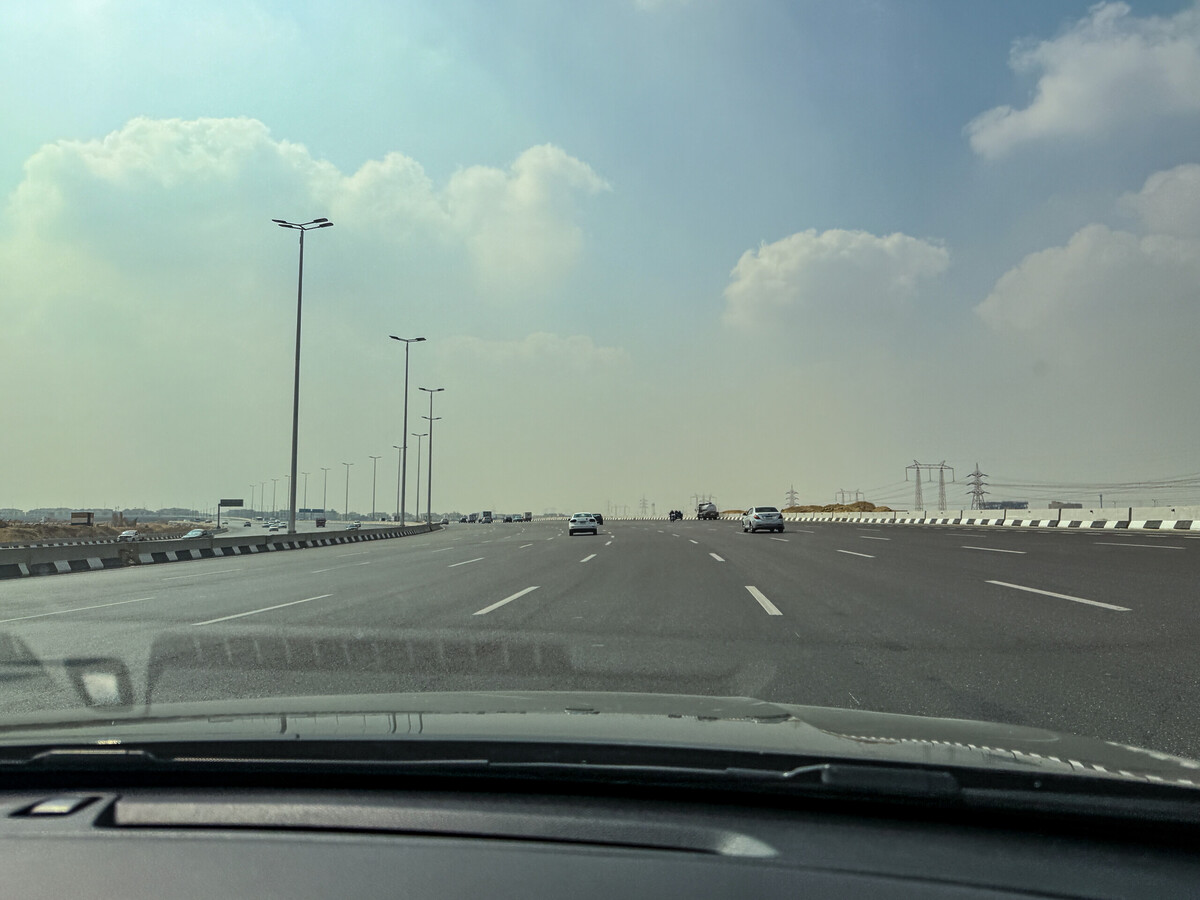
There are ring roads and highways around the city. These are wider and in better condition, but even here, drivers can be aggressive. You may still see pedestrians or even cars driving in the opposite direction.
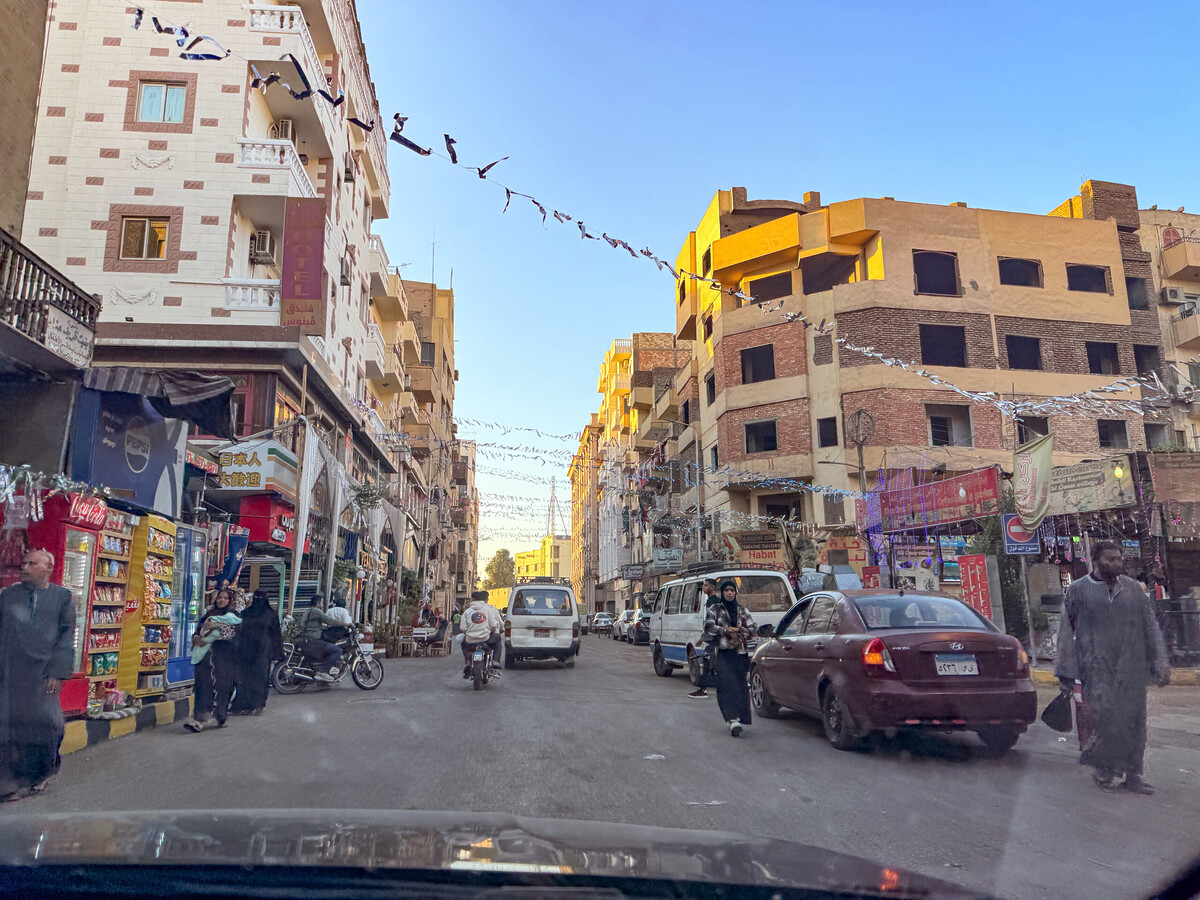
In smaller city streets, traffic is very slow. There are many pedestrians, motorbikes, and speed bumps. These speed bumps are not just frequent, but sometimes extremely high. In some places, our car actually hit the bottom because they were so tall.
If the road is dusty, be careful, because it can be slightly slippery.
We also had situations in Cairo where people came up to the car at night at an intersection and started knocking on the window, asking for money or trying to sell something. As a European, I did not feel completely safe in these situations.
Because of this, we mostly stopped at tourist attractions, hotels, and restaurants, often using guarded parking areas. If the parking was not guarded, there were usually locals already waiting and watching for tourists.
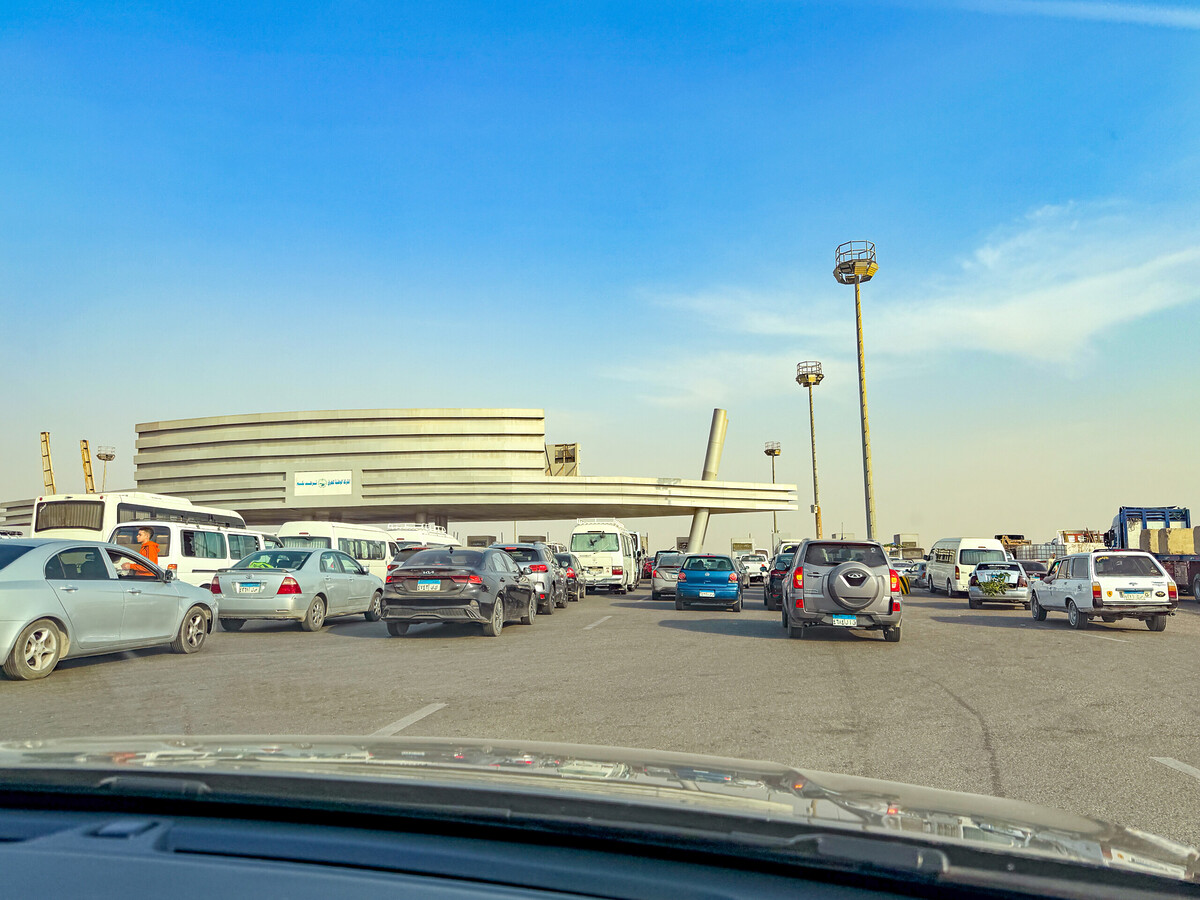
Cities like Luxor, Aswan, or Hurghada have less traffic, so driving is a bit easier. However, you should still be careful.
Avoid very narrow old town streets and stay on main roads. GPS can sometimes take you into places where you simply cannot continue.
Also, be prepared that some locals will try to approach you and act like unofficial parking attendants or try to direct traffic without any authority. Only stop for police. It’s better to ignore civilians in these situations.
Street parking was usually free. If there is a guard, you need to pay them, usually in cash, sometimes by card. But it’s not always clear who is official and when the payment is actually justified.
Driving outside cities
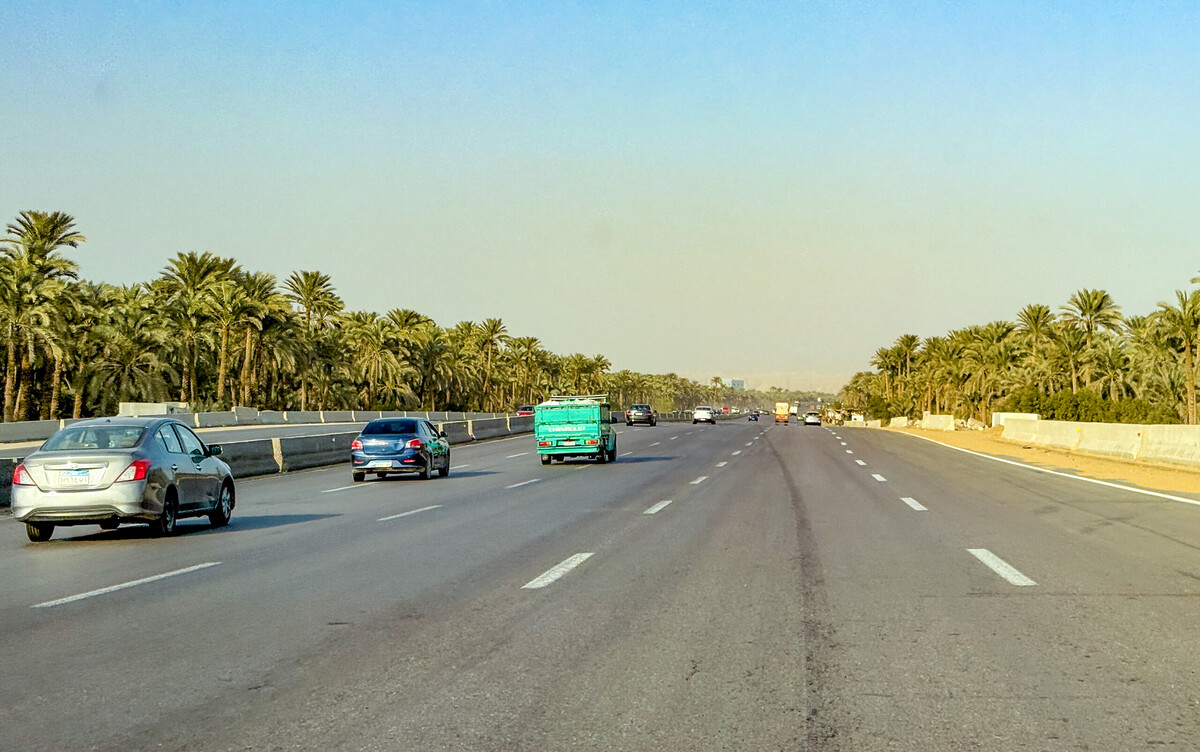
Cities in Egypt are connected by main roads and highways.
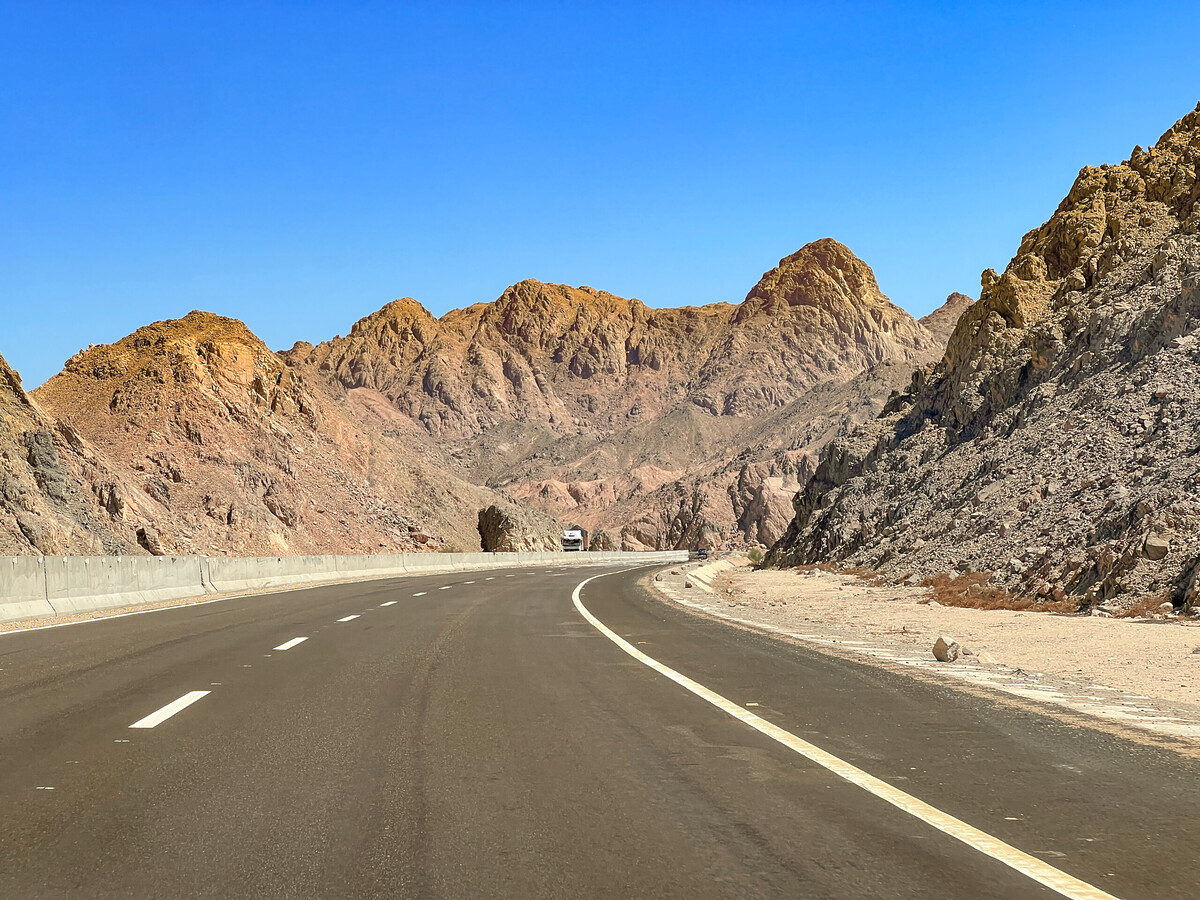
These are usually wide roads, often with multiple lanes. However, road quality varies a lot. In some places, you can drive at 90–100 km/h, while in others, you have to slow down to 50 km/h to avoid large potholes.
On longer drives, it helped us a lot to follow a local driver, especially trucks. They often see obstacles earlier and sometimes even signal when you should avoid something on the road.
Although the speed limit on highways can be around 110 km/h, we rarely felt it was safe to drive that fast because of road conditions. Local drivers often go much faster, but they are used to it.
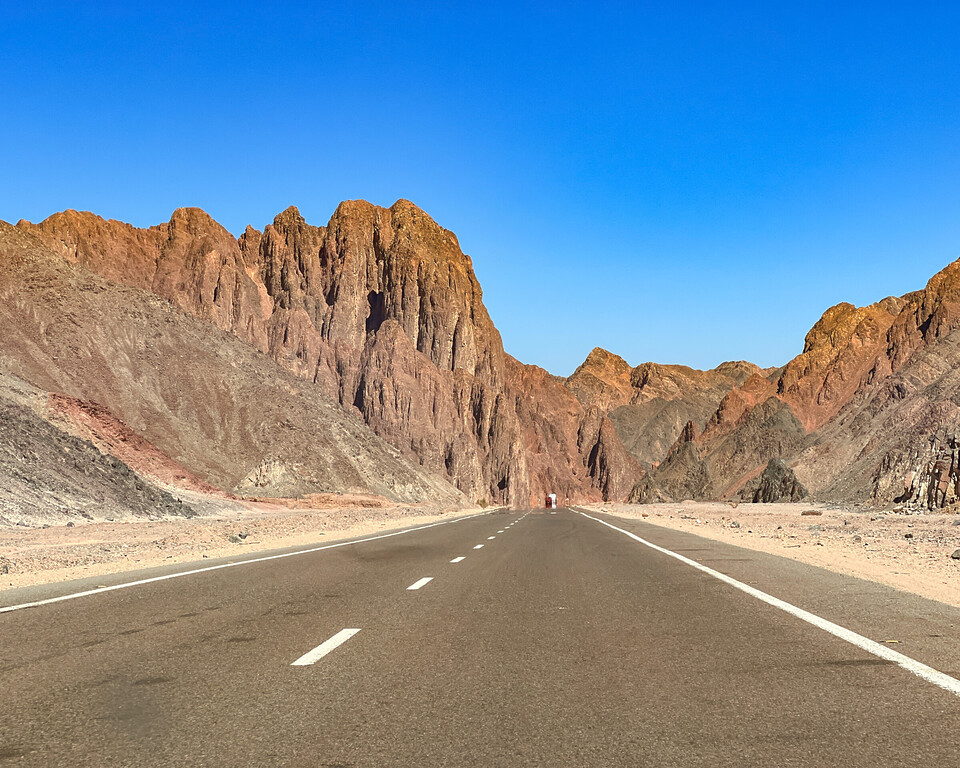
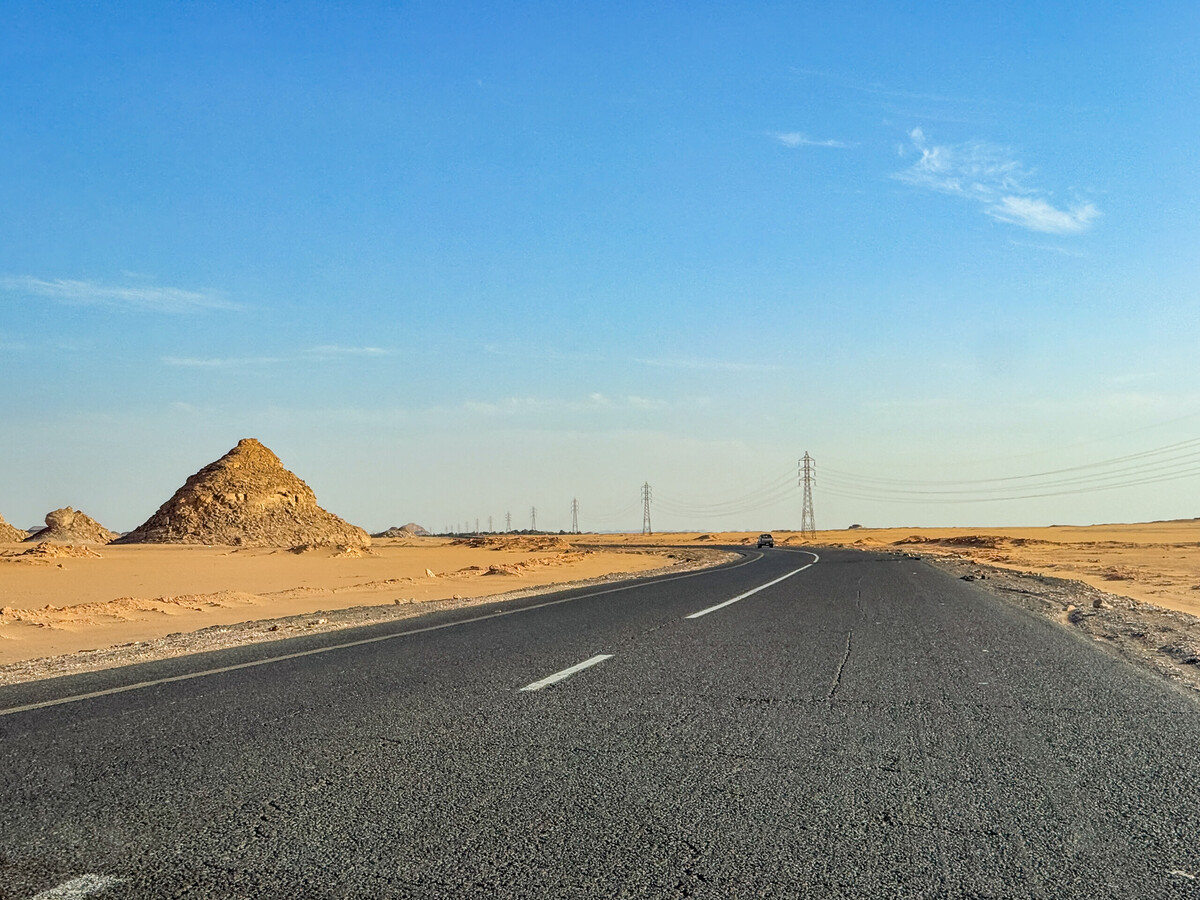
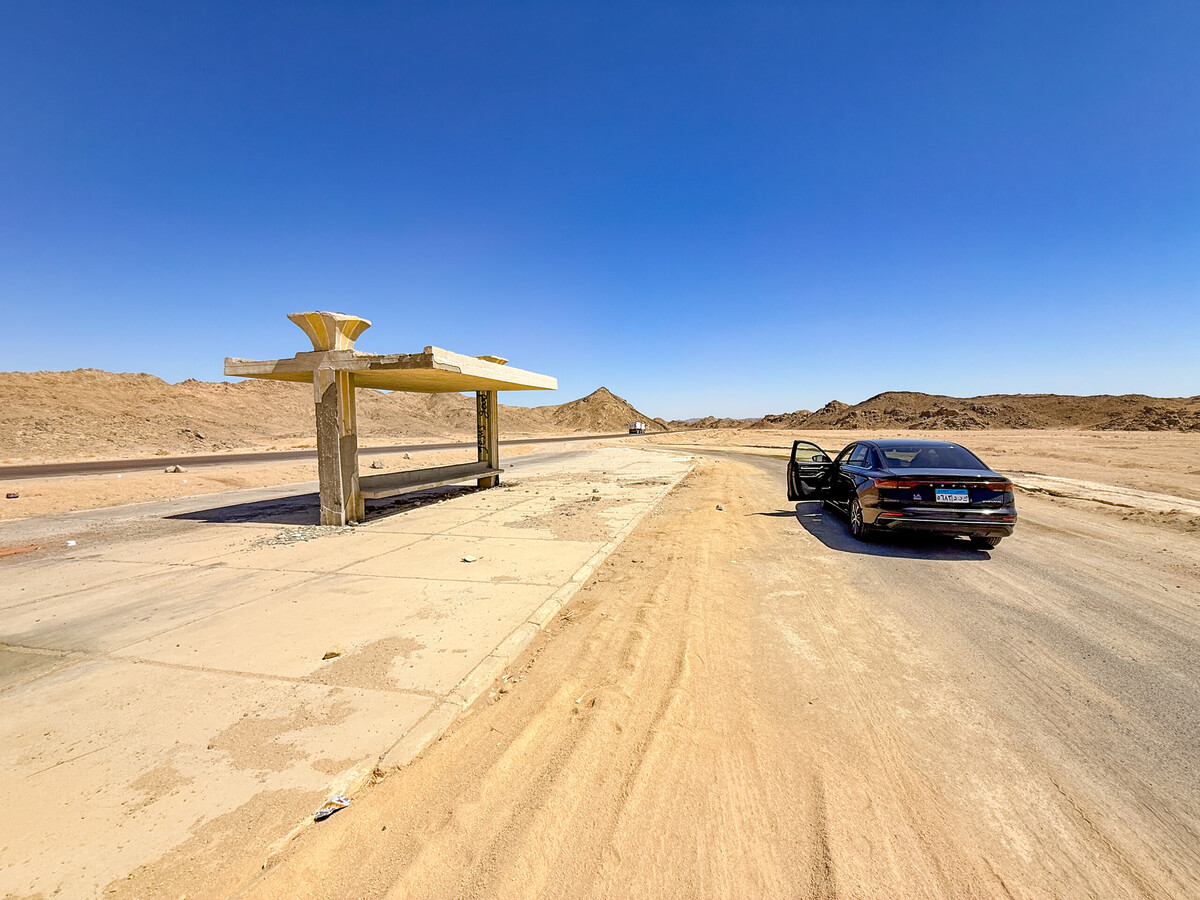
The landscape between cities is mostly desert, with sandy or reddish mountains. Personally, I enjoyed the views during the drive, but some people may find it monotonous.
And one important thing: do not drive off-road into sandy areas unless you have a 4×4 vehicle.
Biggest challenges of driving in Egypt
To sum up the biggest challenges you may face when self-driving in Egypt:
- Traffic rules are often ignored
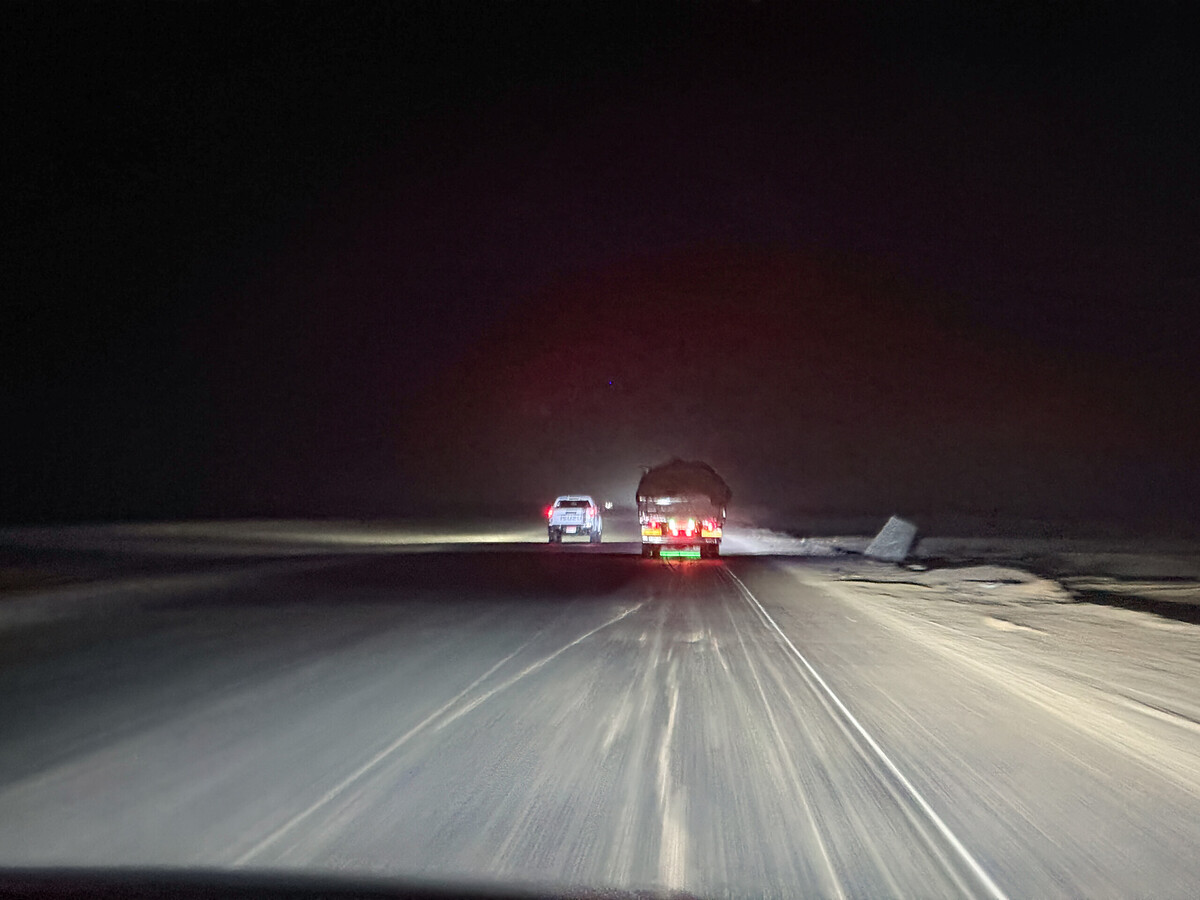
Most drivers don’t really follow rules or signs. Stopping at a red light can feel optional. For example, in Cairo, many drivers didn’t care about red lights, while in Luxor they actually stopped. Speed limits are rarely followed, although in many places road conditions don’t even allow fast driving, and speed checks are uncommon. At night, many drivers don’t use their headlights. Seatbelt is also optional. Plus, there is no keep-right rule on highways, and everyone uses them, even horse carts.
- Road quality is a real challenge
Speed bumps, obstacles, and huge potholes make driving difficult. You need to pay attention all the time. Follow local drivers: if they avoid something, you should too. Some obstacles are so big that you could seriously damage your car.
- Traffic jams and aggressive driving
If you want to drive in Egypt, you need to accept one thing: you have to push your way into traffic. Yes, it feels uncomfortable at first, and it may seem like cars will hit you, but most drivers don’t actually want accidents. The key is to adapt, follow the flow, and move with the traffic.
- Not all roads are always accessible
Some roads in Egypt are restricted or only open at certain times. For example, the road to Abu Simbel is only open between 5 AM and 5 PM, so you need to plan your departure carefully.
There are also roads with stricter police control, where access can change without clear explanation. We experienced this between Luxor and Qena, where a highway was completely closed during the day, and the police simply turned us back without any clear reason.
- Rest stops are very rare
On long drives, you may not find proper places to stop. Sometimes the only option is to pull over on the side of the road or in the emergency lane and rest there.
- Language can be a challenge
People working in tourism usually speak English, but the accent can be difficult to understand for European travelers. However, many people don’t speak English at all.
- You will be noticed as a tourist
Locals often recognize tourists immediately, and this can lead to unwanted attention. This can happen with police, but also with unofficial parking attendants. Some people may try to stop you, give directions you didn’t ask for (for money), find you parking (for money), or even offer unnecessary escort services (for money).
We sometimes avoided this by wearing sunglasses, and I even wore a headscarf as a woman. Surprisingly, it often worked.
- Driving times are much longer than expected
Always plan more time than what GPS shows. In reality, you can rarely drive at the speed calculated by navigation. It’s better to multiply travel time by 1.2–1.5 to avoid stress.
- Traffic violations are often ignored by authorities
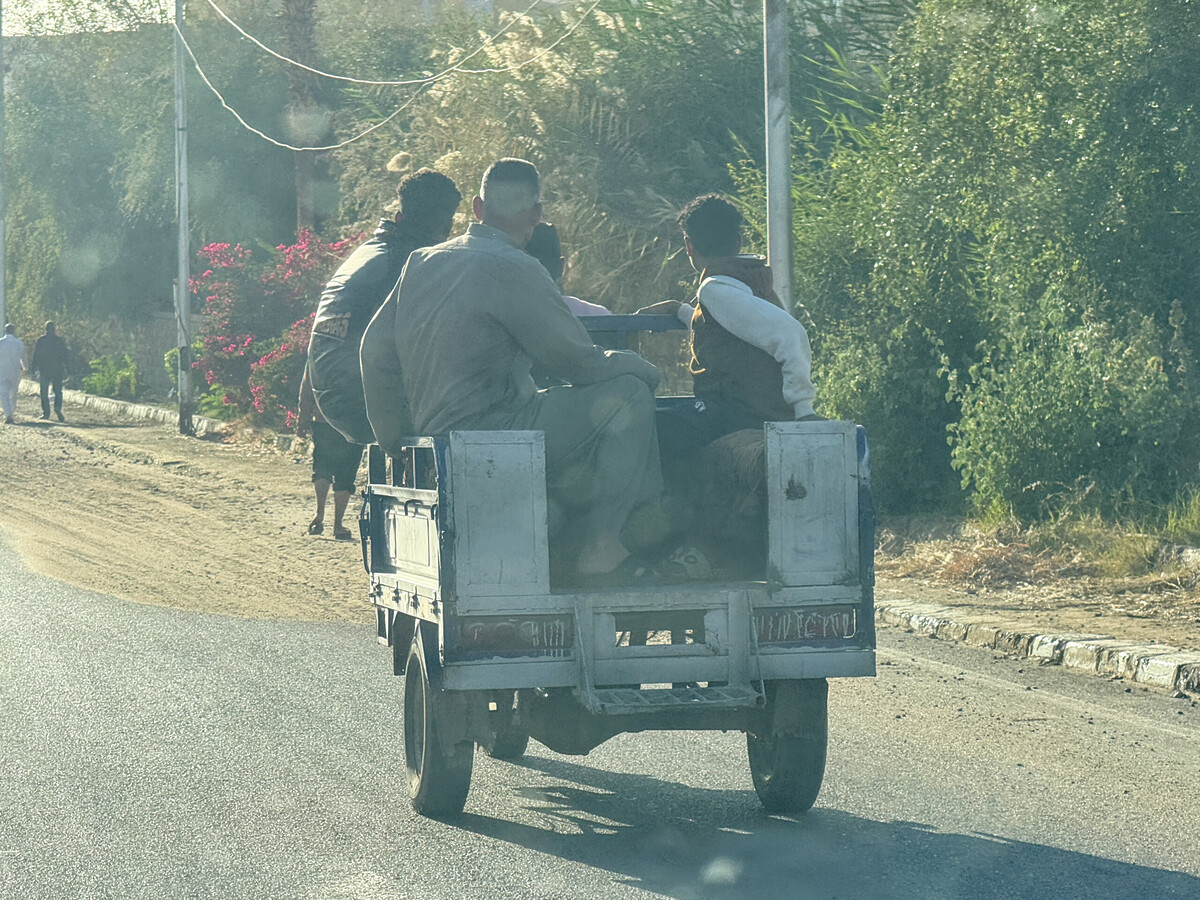
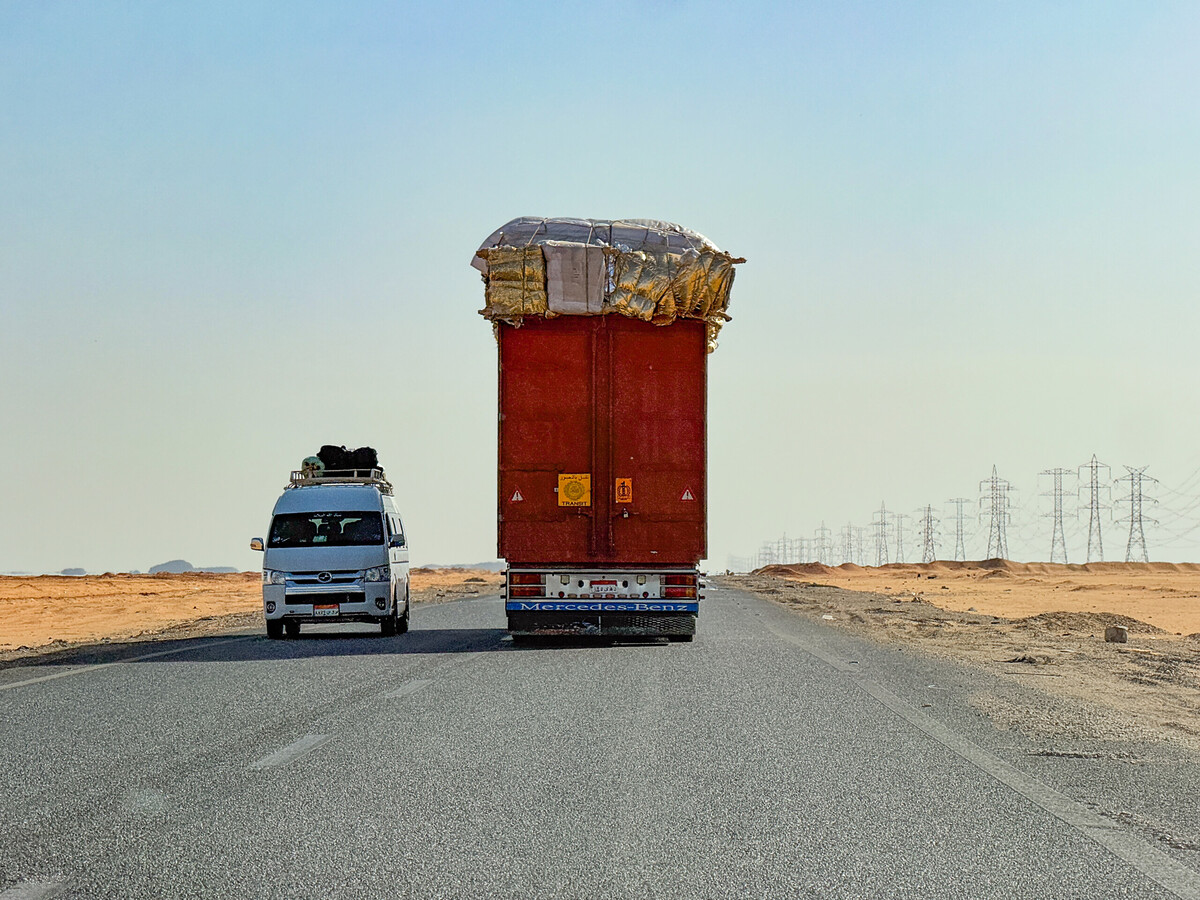
In many cases, even near police checkpoints, obvious violations are ignored. Overloaded trucks, three people on one motorbike without helmets, or even small children traveling in trailers: all of this can happen without consequences.
Driving in Egypt comes with many unusual and sometimes absurd situations.
But if you are adventurous and good at solving problems, it can also be an exciting and memorable experience.
Car rental in Egypt
If you want to do a road trip in Egypt, you will need to rent a car.
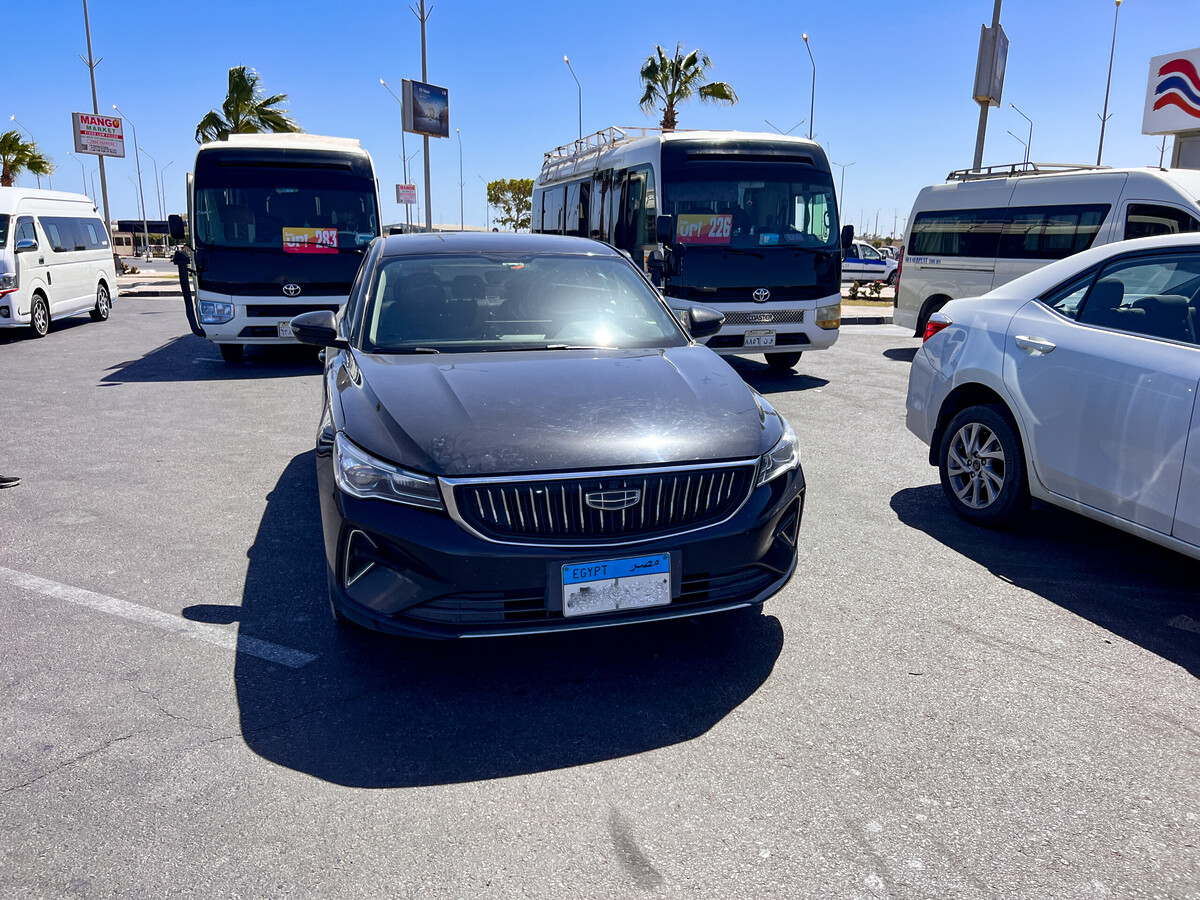
We rented from Sixt, which is one of the biggest car rental companies in Egypt with many locations across the country.
However, there is something important to know. If you don’t pick up the car from a main office, for example not in Cairo or Hurghada, the company will deliver the car to you (for example to Luxor or Aswan). This can make the rental significantly more expensive.
Another large company in Egypt is Avis. At first, they may seem cheaper, but if you need unlimited mileage or full coverage insurance (which I highly recommend), their pricing can become less clear.
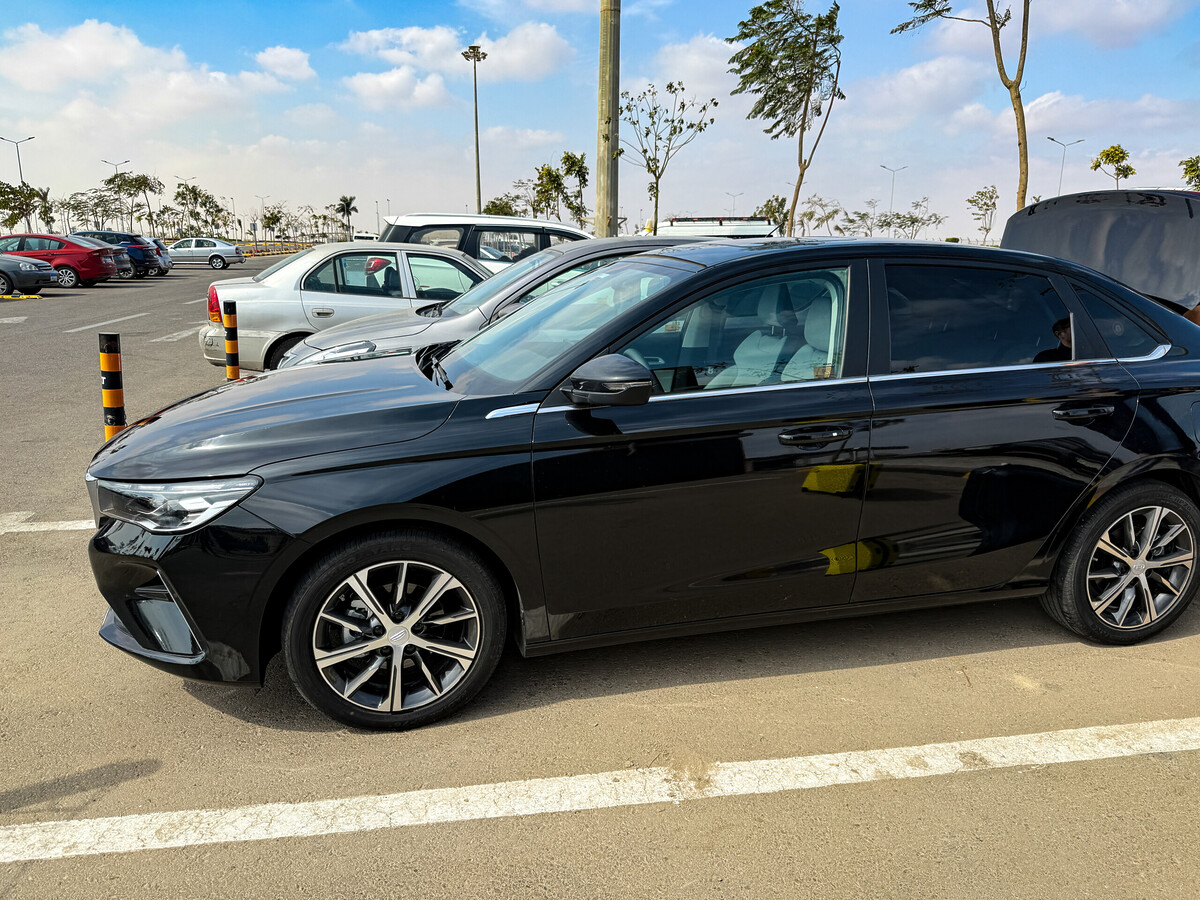
Overall, we were satisfied with Sixt. Everything went smoothly, the staff was helpful, and the cars were in good condition. They were not perfect and had some scratches, but everything was handled fairly.
Renting a car in Cairo
In Cairo, you will find several car rental companies, not just Sixt and Avis, so you have more options.
Use Google Maps reviews and always choose full coverage insurance.
You can pick up your car in multiple locations, including Cairo International Airport or Sphinx Airport in Giza. It is also possible to pick up and drop off the car in different locations, but this usually comes with an extra fee.
Renting a car in the countryside
There are rental offices outside Cairo as well, especially in tourist areas like Luxor, Hurghada, and Sharm El Sheikh.
In Luxor and Hurghada, you will find many companies, including smaller local ones. However, always check carefully where you are allowed to drive the car and what kind of insurance is included.
In Aswan, we only found Sixt, but it turned out they don’t have a real office there. Cars are delivered from Hurghada, which makes rentals more expensive.
What to check before renting
Here are the most important things to know before renting a car in Egypt:
- Always choose full coverage insurance
The risk of minor accidents, scratches, or flat tires is high in Egypt, so this is not something you should save money on.
- Consider unlimited mileage
You may not need it in Cairo, but if you plan to drive between cities, it can be worth it.
- SUV can be a better choice
Because of the many speed bumps, a regular car can easily hit the bottom in some places.
- Check all documents
Make sure you receive the car’s official papers. Police may ask for them during checks. Also have your rental contract and a contact number in case of problems.
- Check for a spare wheel
A flat tire can happen, so make sure the car has a spare.
- Document the car before you drive
Take photos and videos of the car from all angles when you pick it up. This helps you avoid problems later and protects your deposit.
Road conditions and tolls in Egypt
Let’s go through what you need to know about Egyptian road conditions, traffic rules, and costs:
Road quality
Road quality is one of the biggest challenges in Egypt.
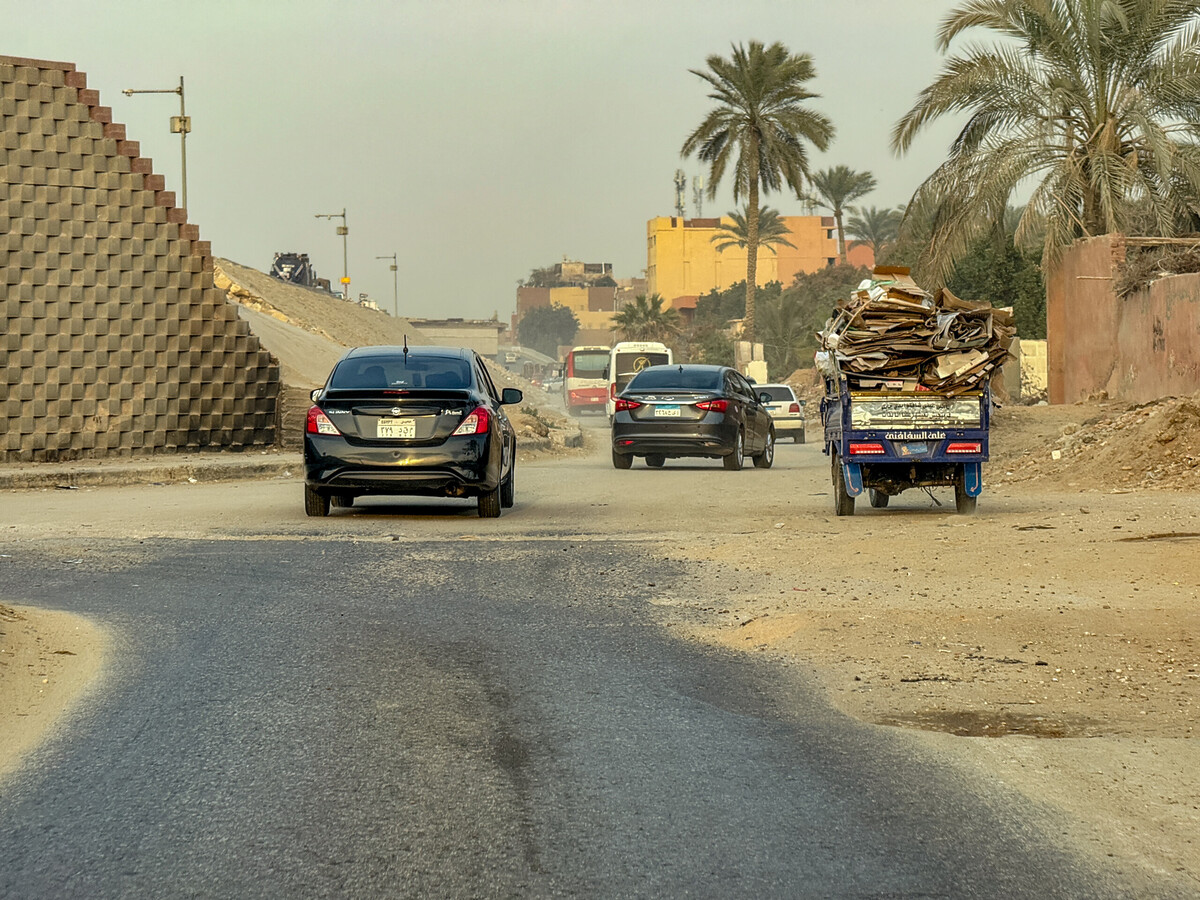
Even though many roads are wide, potholes, damaged asphalt, dusty surfaces, obstacles, and speed bumps are very common. All of these slow down traffic and make driving more difficult.
In cities and smaller areas, you will often find unpaved, dusty roads. I recommend avoiding these whenever possible.
Speed limits
In cities, the speed limit is usually around 60 km/h, but it can be lower in some areas.
That said, as a tourist, it’s often hard to even reach 60 km/h because of all the obstacles.
Between cities, speed limits are usually 90, 100, or 110 km/h. In reality, road conditions often don’t allow you to drive this fast safely.
At police checkpoints (for example at city entrances or between regions), you need to slow down, and in some cases stop if the police signal you.
Speed limits are not strictly enforced. There are very few cameras, and police speed checks are also rare.
To be honest, this gave us a strange sense of freedom compared to Europe, where speed limits change constantly and cameras are everywhere.
Road signs
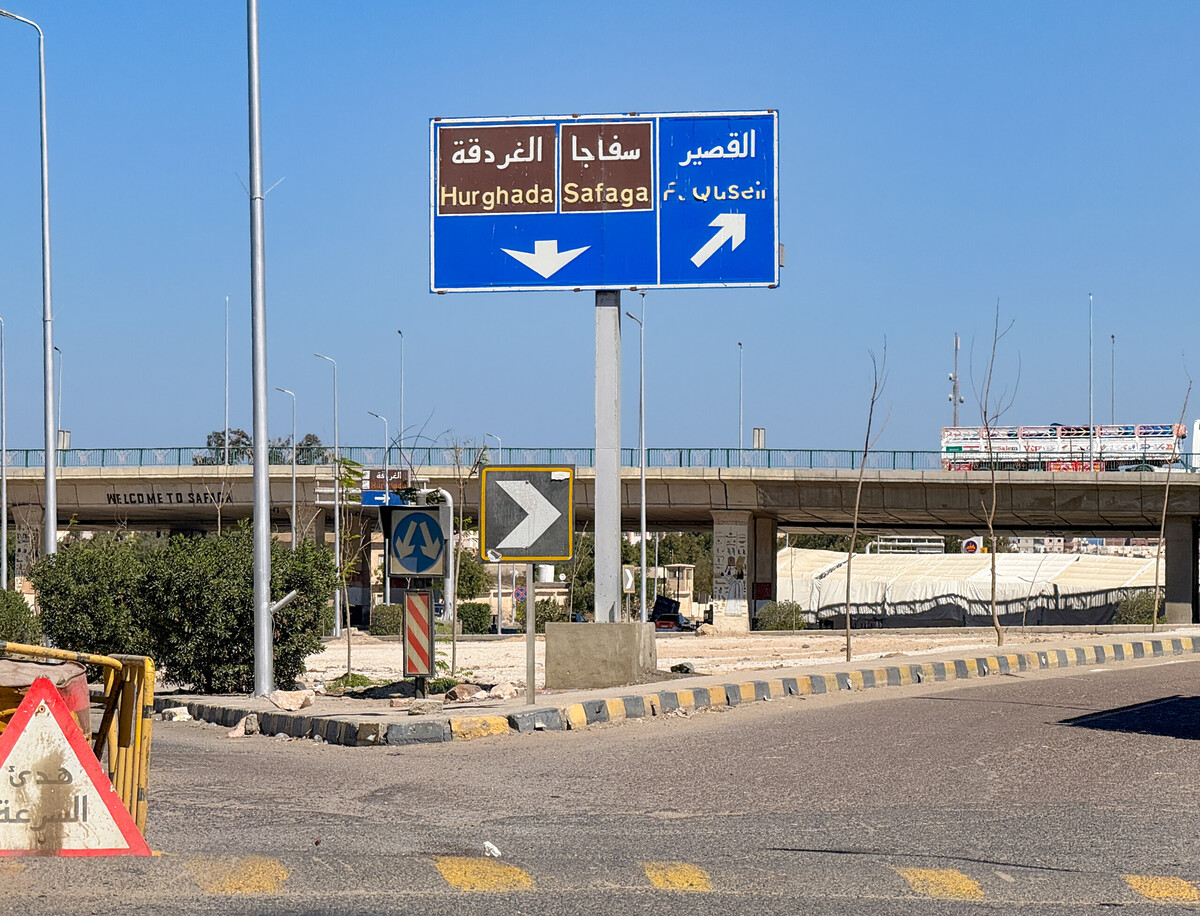
Road signs are inconsistent. Sometimes they are there, sometimes they are not.
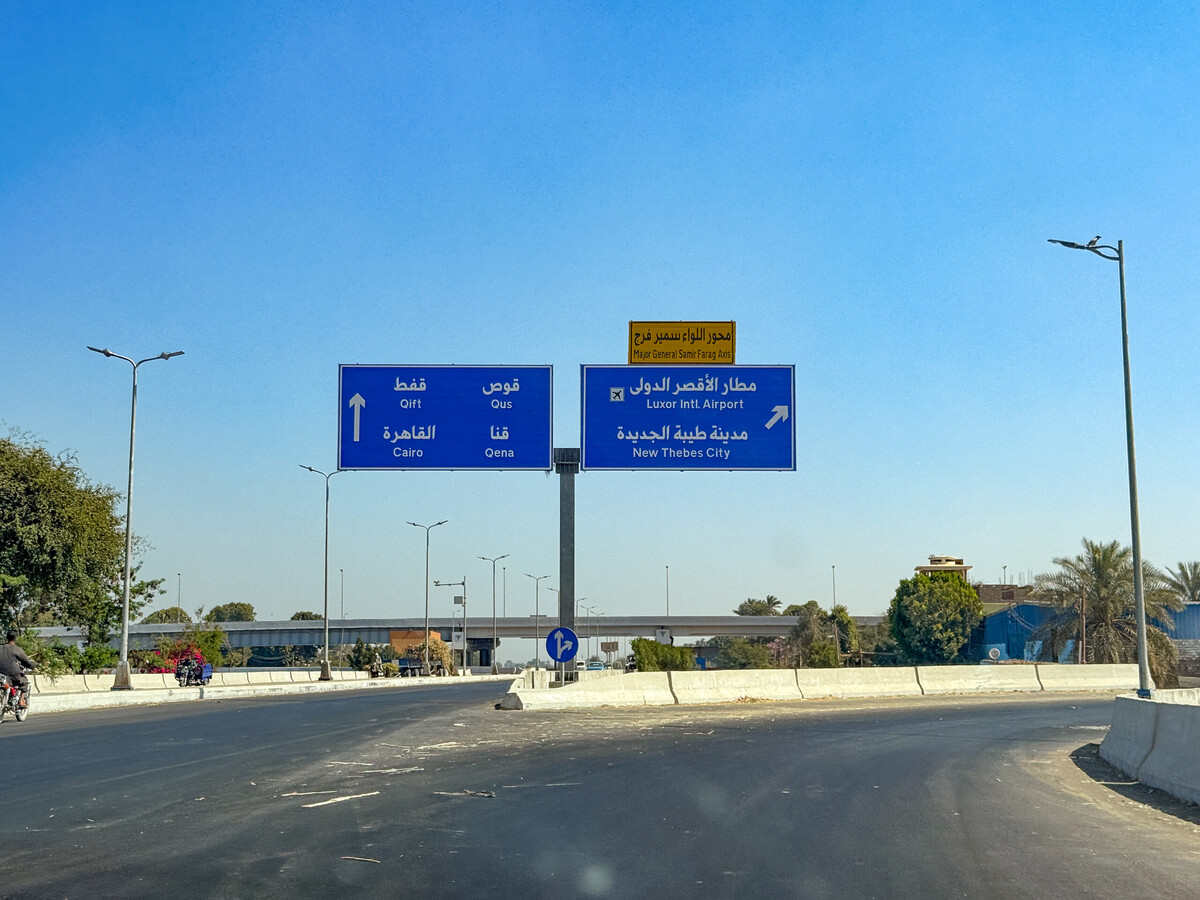
Numbers are written using Arabic numerals (the same ones used in Europe and the US), but text signs may only be in Arabic in less touristy areas. In more tourist-friendly places, you will usually see English as well.
Road markings are also inconsistent. Sometimes you see clear lane markings, sometimes nothing at all.
One important difference compared to Western countries: on highways in Egypt, you can legally turn around. There are signs showing that you can make a U-turn from the left lane. In these situations, it’s a good idea to use your indicator.
Also, there is no real “keep right” rule in practice. Overtaking from the right is completely normal.
Police checkpoints in Egypt
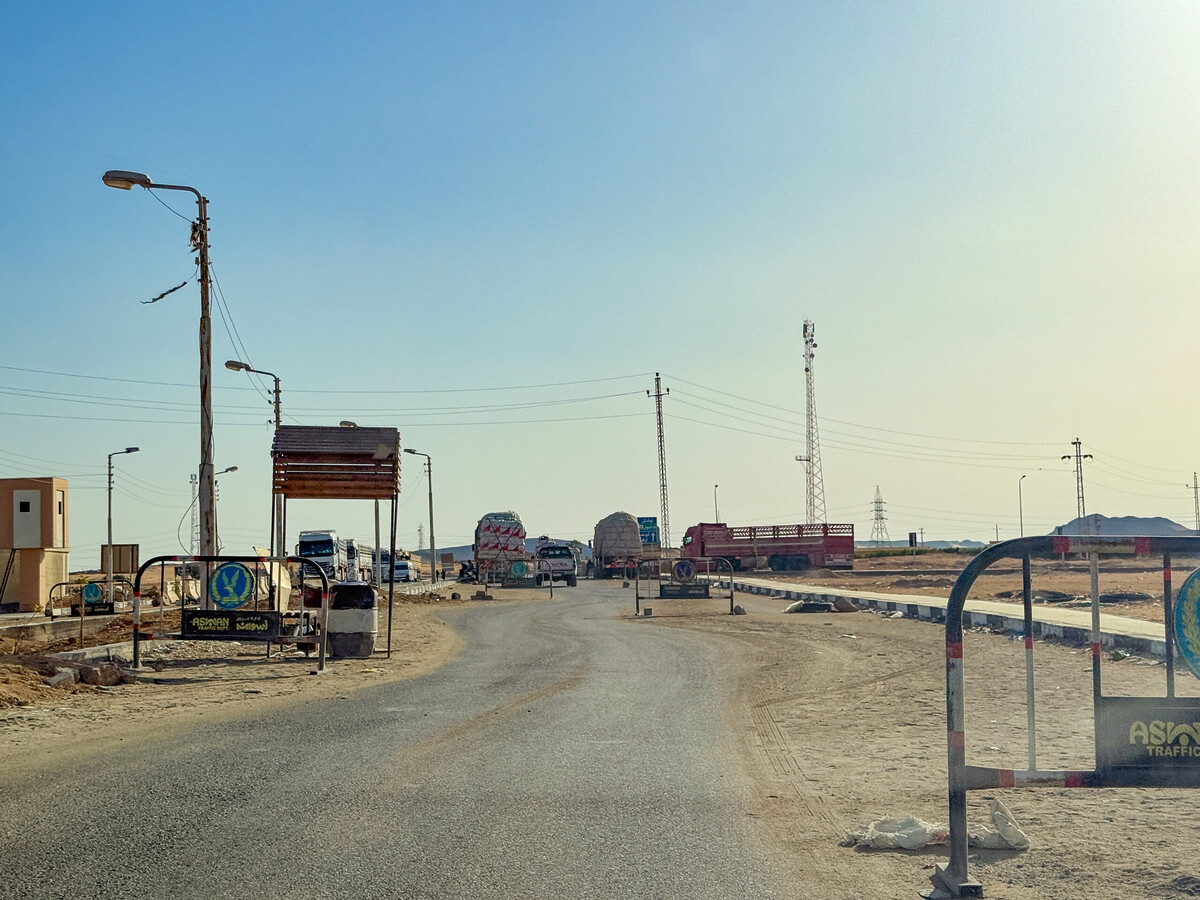
There are many police checkpoints across Egypt, but honestly, there is nothing to worry about.
Most are located at governorate borders, city entrances, and in the cities. You will recognize them by metal barriers and police signs.
Slow down when approaching, and stop if needed.
We passed dozens of checkpoints, but were only stopped once or twice. They asked where we were from, then let us go. If they stop you, they may check your documents, but that’s usually all.
Sometimes they may offer a police escort if they see you are a tourist. You can politely decline, but if they insist, it’s better to accept.
One important thing: police authority in the Middle East is different from Western countries. They have strong authority and are not afraid to show it, sometimes even overstep it. So always stay respectful and never argue.
Pedestrian traffic
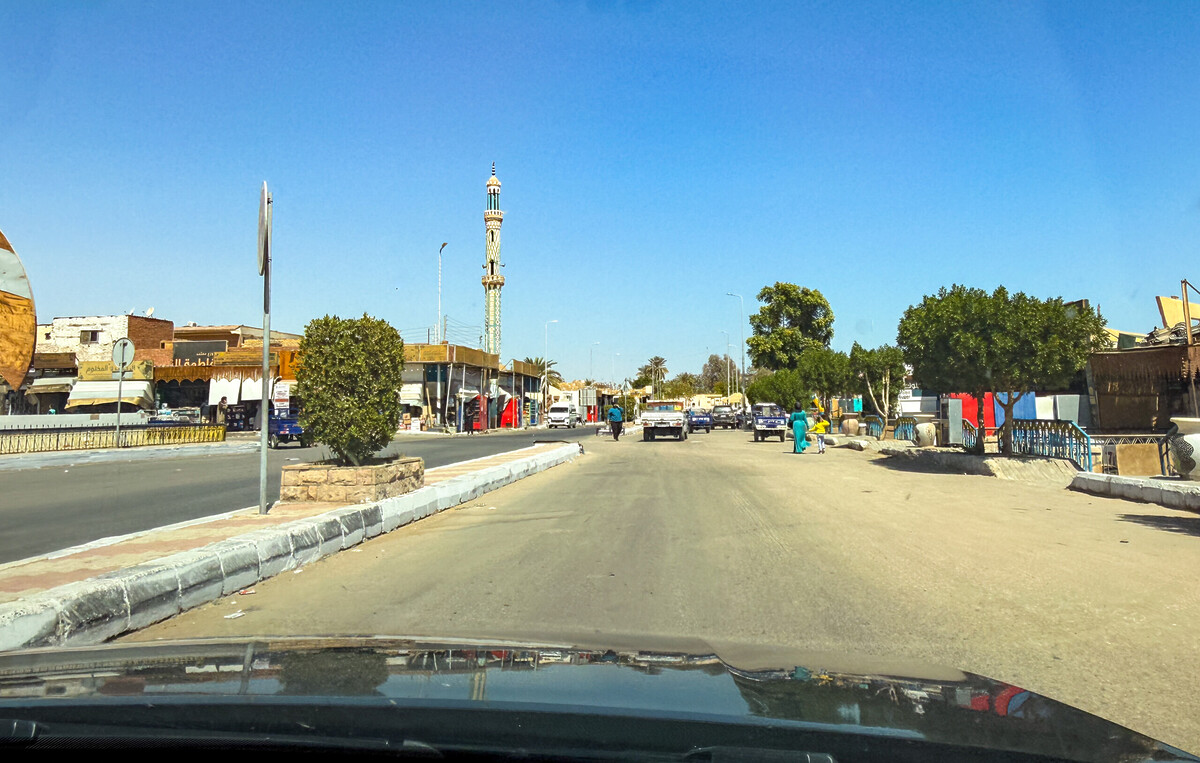
This is something that shocks many tourists: pedestrians are everywhere.
You can see people walking in the middle of highways, buses picking up passengers directly from the road, and even hitchhikers appearing in the middle of the desert.
It feels strange at first, but the most important thing is: always stay alert. A pedestrian can step in front of you at any moment.
In general, locals seem to handle this well, but you should always drive carefully.
Honking culture
Honking is part of everyday driving in Egypt.
A short honk often means “watch out, I’m coming,” while a longer honk can mean “move faster.” There are probably more variations, but honestly, I never fully understood all of them.
And as a tourist, you don’t need to.
The important thing is: don’t be afraid to use your horn. It’s part of communication on the road, and sometimes it actually helps avoid dangerous situations.
Also, be prepared: driving in Egypt is loud. Very loud. But in a strange way, it adds to the overall experience.
Tolls and fees
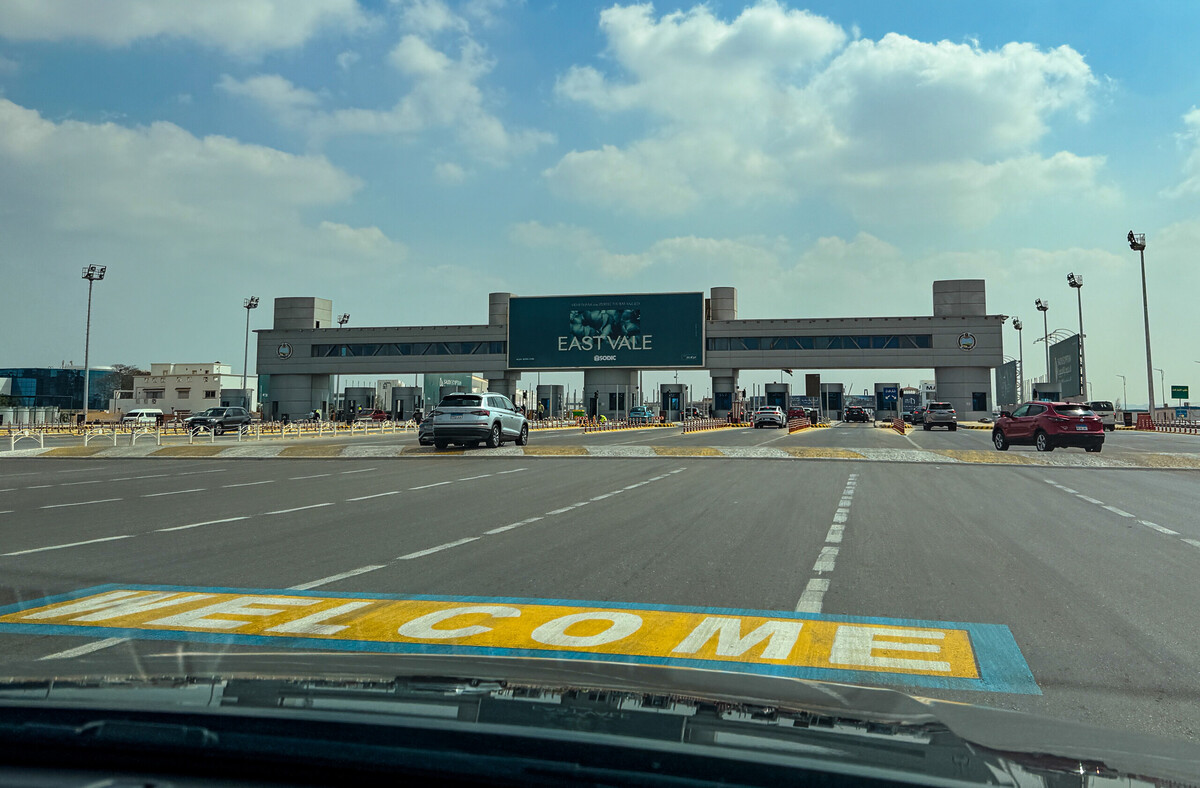
Honestly, we only experienced toll roads around Cairo.
These were similar to European toll gates. You can usually pay in cash or by card, and the fees are very low (for example around 10 EGP).
The bigger challenge was communication. At many toll gates, no one spoke English, and there were no clear displays, so sometimes we didn’t even know how much to pay.
Traffic jams can also happen at toll gates, so be prepared for some chaos and learn to move with the flow.
Outside of Cairo, we didn’t encounter toll roads at all. We drove routes like Luxor–Aswan–Abu Simbel and Luxor–Hurghada without paying any road fees.
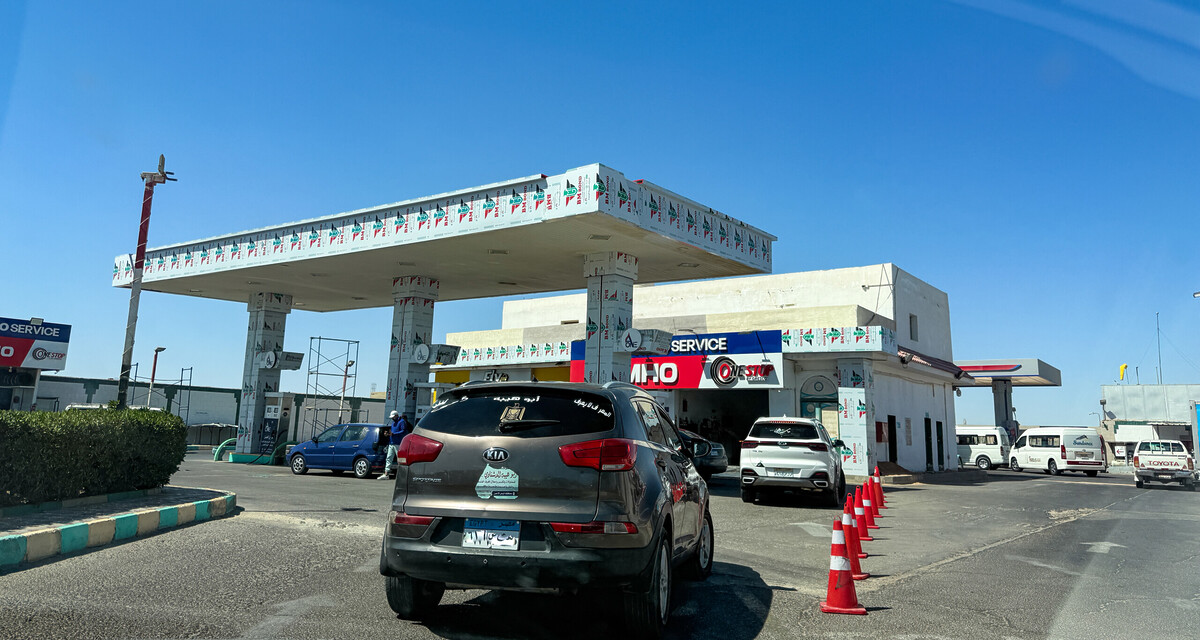
Fuel is also very cheap. In 2026, petrol was around 21 EGP per liter, which is extremely low compared to Europe. This makes road trips in Egypt surprisingly affordable. Of course, prices can change over time.
A small detail, but when fueling, you don’t need to get out of the car. The staff fills the tank for you, and you can pay while sitting inside the car, similar to other Middle Eastern countries.
What you need to drive in Egypt
Required documents
To drive in Egypt, you will need:
- Passport: You will need it everywhere. Make sure your visa is valid and stamped (you get it at the airport).
- Your driver’s license
- International driving permit: Issued under the Geneva Convention. In our case, it was only valid for one year.
- Deposit for the rental car: Unless your full coverage insurance removes this requirement.
- Travel insurance: Not required specifically for driving, but required for your trip.
Required car equipment
Most rental companies will take care of this, but you should still check:
- You have all the car documents
- You have your own documents
- The car has a spare wheel: A flat tire can happen anytime, so it’s important to check this when picking up the car.
- Other equipment is usually not required, but in some cases, a fire extinguisher may be expected.
For navigation, GPS is essential. I recommend using your phone. Mobile coverage in Egypt is quite good. I used Etisalat, and it worked well even outside cities.
My honest advice about driving in Egypt
Based on my own experience, these are the most important things to keep in mind:
- Don’t focus on strict rules, focus on safety
Instead of trying to follow every rule, focus on staying safe and adapting to traffic. Move with the flow, adjust to local habits, and try to match the Egyptian driving style as much as you can.
- Plan everything in advance
Book your hotels, car rental, and route ahead of time. Leave extra time in your schedule. Egypt is not a fast country to travel in. Transport is slow, communication takes time, and there is often waiting everywhere. Plan your days more relaxed.
- Avoid driving at night
Especially between cities. It’s harder to see obstacles, and many drivers don’t use headlights. Police are also more likely to stop tourists at night or offer unnecessary escorts.
- Try to look as local as possible
This can help you avoid unwanted attention and people asking for money.
- Be careful with unofficial parking attendants
Don’t automatically trust people who offer to “watch your car” on the street for money.
- If needed, small bribes can solve problems
It may not feel comfortable, but in some situations, it can help you avoid bigger issues.
- Always have essentials in the car
Keep a spare wheel, water, and some food with you. You never know when you might need them.
- Plan fuel for long distances
Petrol stations can be far apart outside cities. Always think 200–300 km ahead and don’t wait until the last moment to refuel.
- Tipping is expected
For valet parking, carrying luggage at hotels, parking guards, or even directions. In many situations, tips are expected.
- Know your limits
If you have doubts or don’t feel like a confident driver, it’s better not to drive. Driving in Egypt requires confidence and experience. There are many private drivers and transfer services available that can make your trip much easier.
Final thoughts: Driving in Egypt as a tourist
Traveling in Egypt is an adventure, but it’s not easy.
Everyone has the same goal: to get from one place to another safely. But the way this happens is very different from what most Western travelers are used to.
Unfollowed rules, road obstacles, constant honking, pedestrians, tuk-tuks, motorbikes: all of these are part of the experience. Sometimes even children are directing traffic in a traffic jam. Sometimes you may be offered a police escort as a tourist. Sometimes roads are closed without warning.
Driving in Egypt requires flexibility, strong driving skills, and very good problem-solving ability. That’s exactly why you often read online that tourists should not drive there.
We still chose to do it, and I would do it again on any future trip to Egypt.
We didn’t regret traveling by car at all. In fact, it gave us unforgettable memories. We loved the adventure, the challenges, meeting locals, the flexibility, and all the places we could visit that we would have missed on a group tour.
I won’t tell you whether you should drive in Egypt or not.
This guide showed you the reality, so you can make your own decision based on your travel style and experience.
I hope this helps you prepare for your trip to Egypt, and that you’ll come back with unforgettable memories. Safe travels!

Hi! I’m Adri, the creator of Traveltipzone.com and Italianwanderlust.com.
I’ve explored over 30 countries so far and travel to around 15 each year — some new places and others I love returning to. I’m especially passionate about Southern Europe, particularly Italy, and the United Arab Emirates.
Follow my journeys for firsthand travel tips and inspiration!


